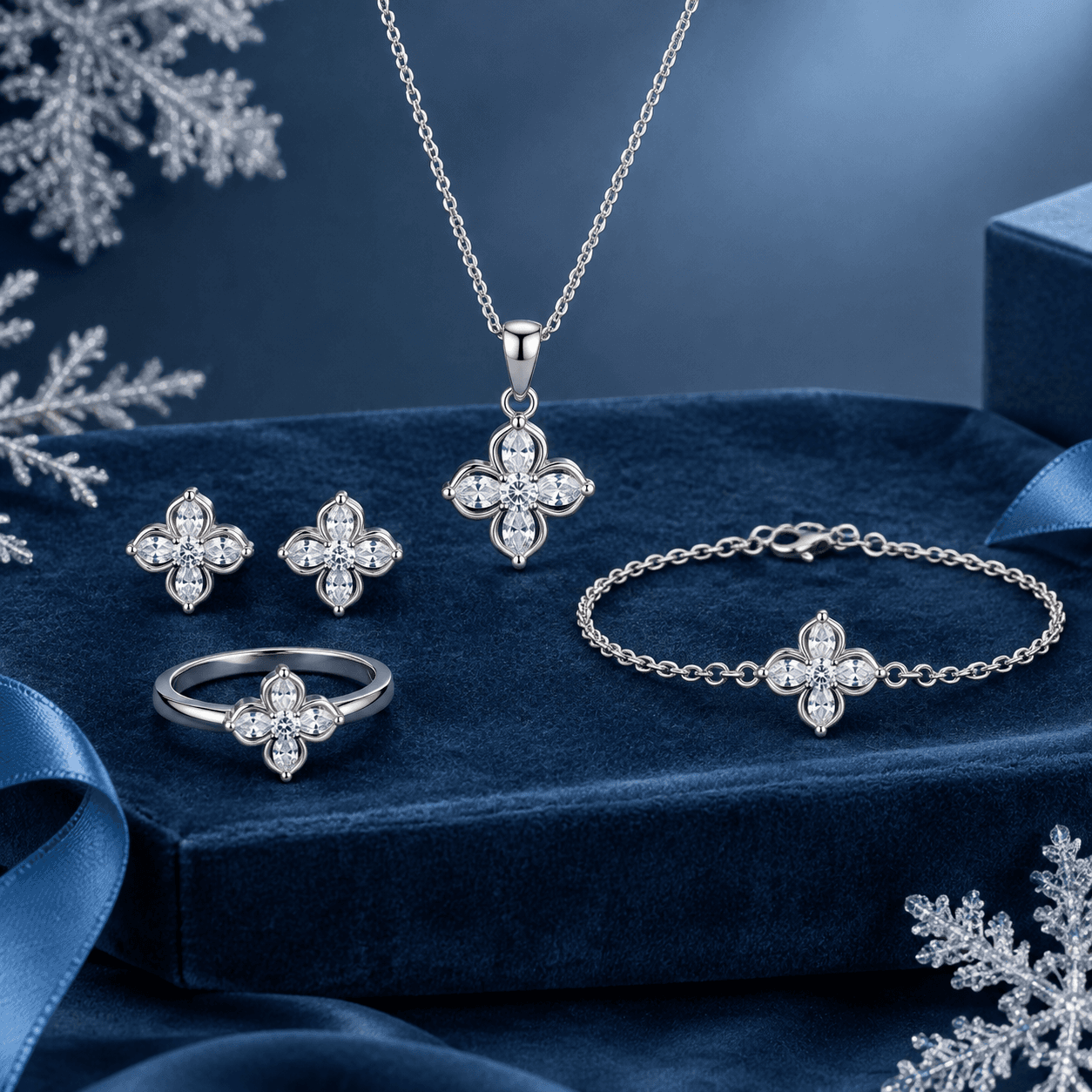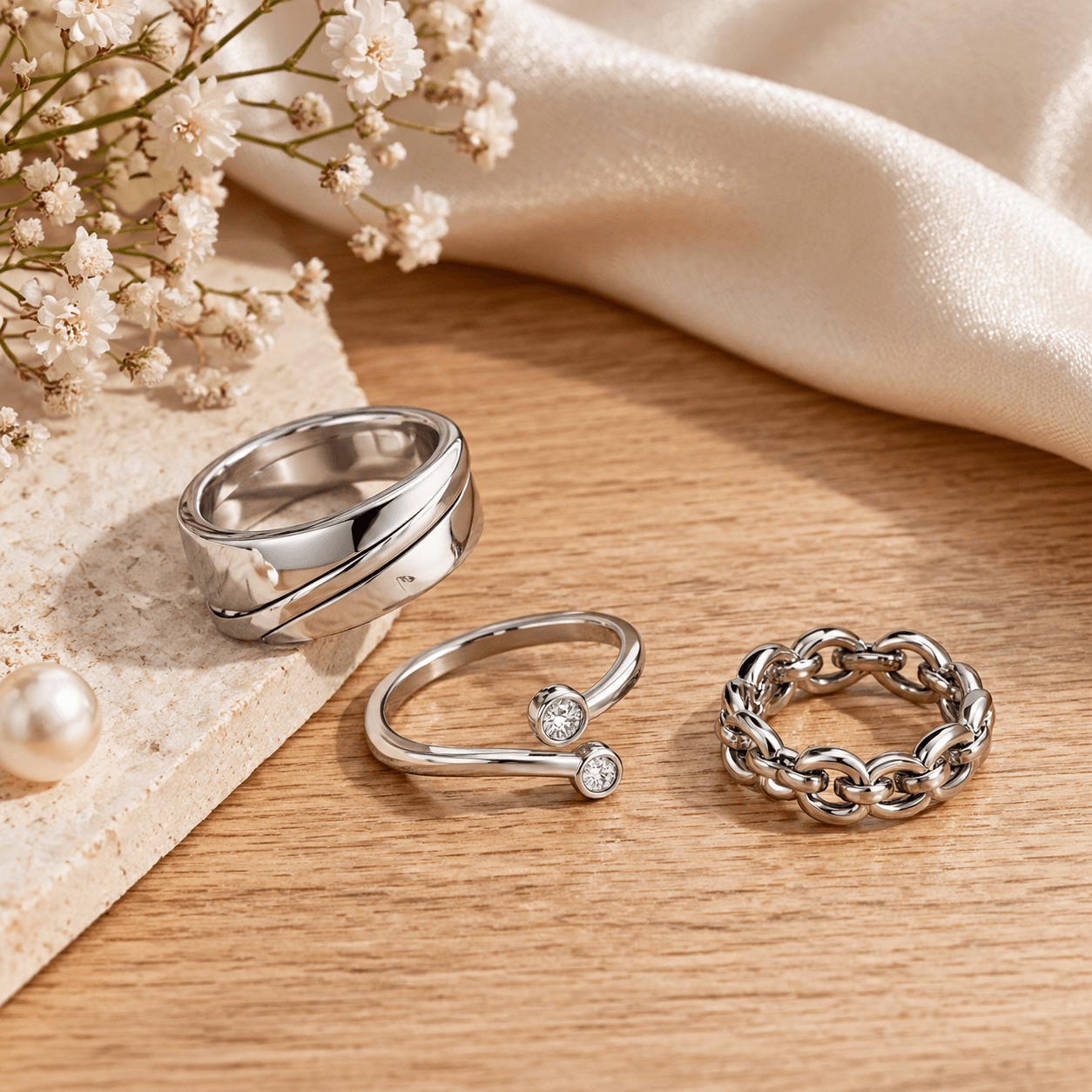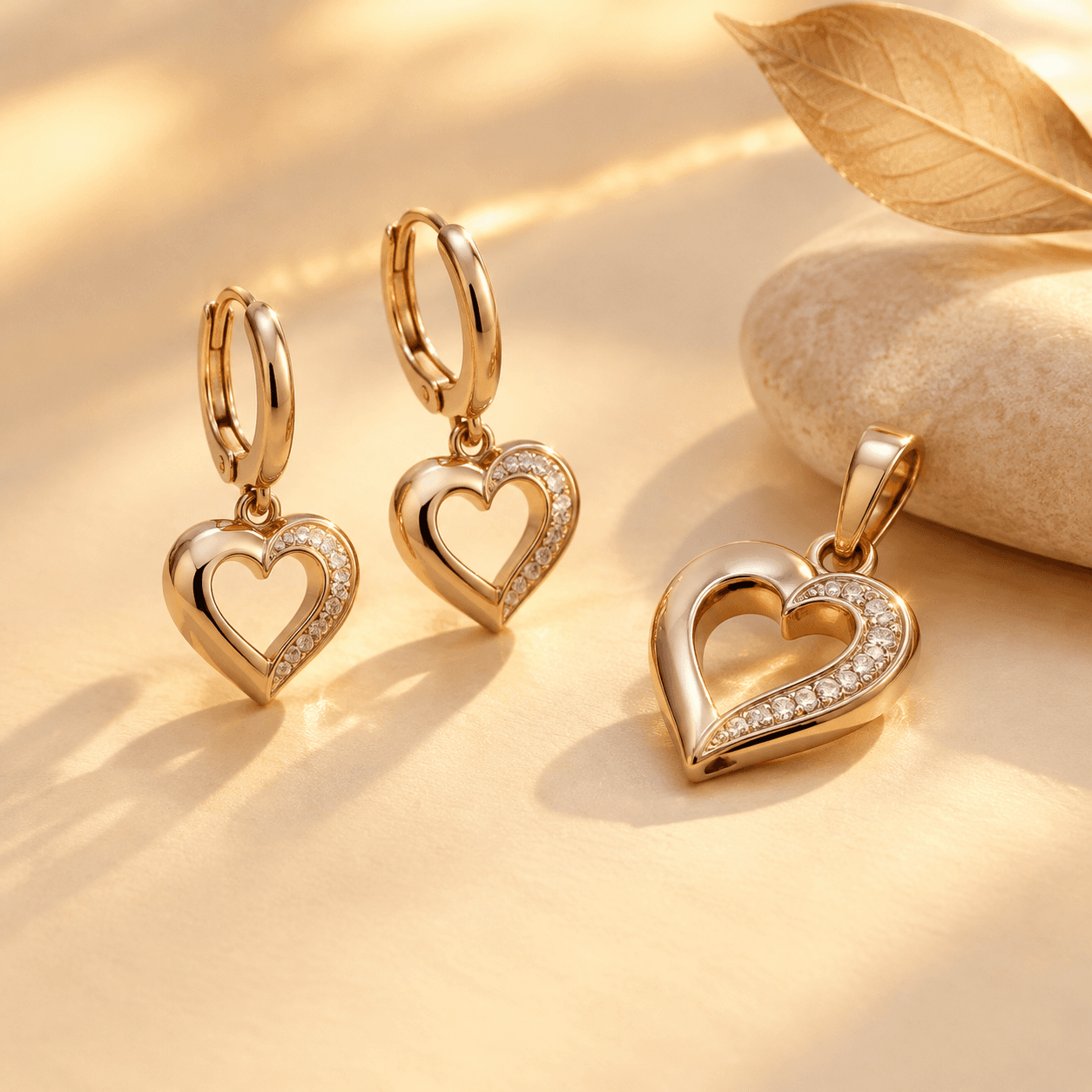
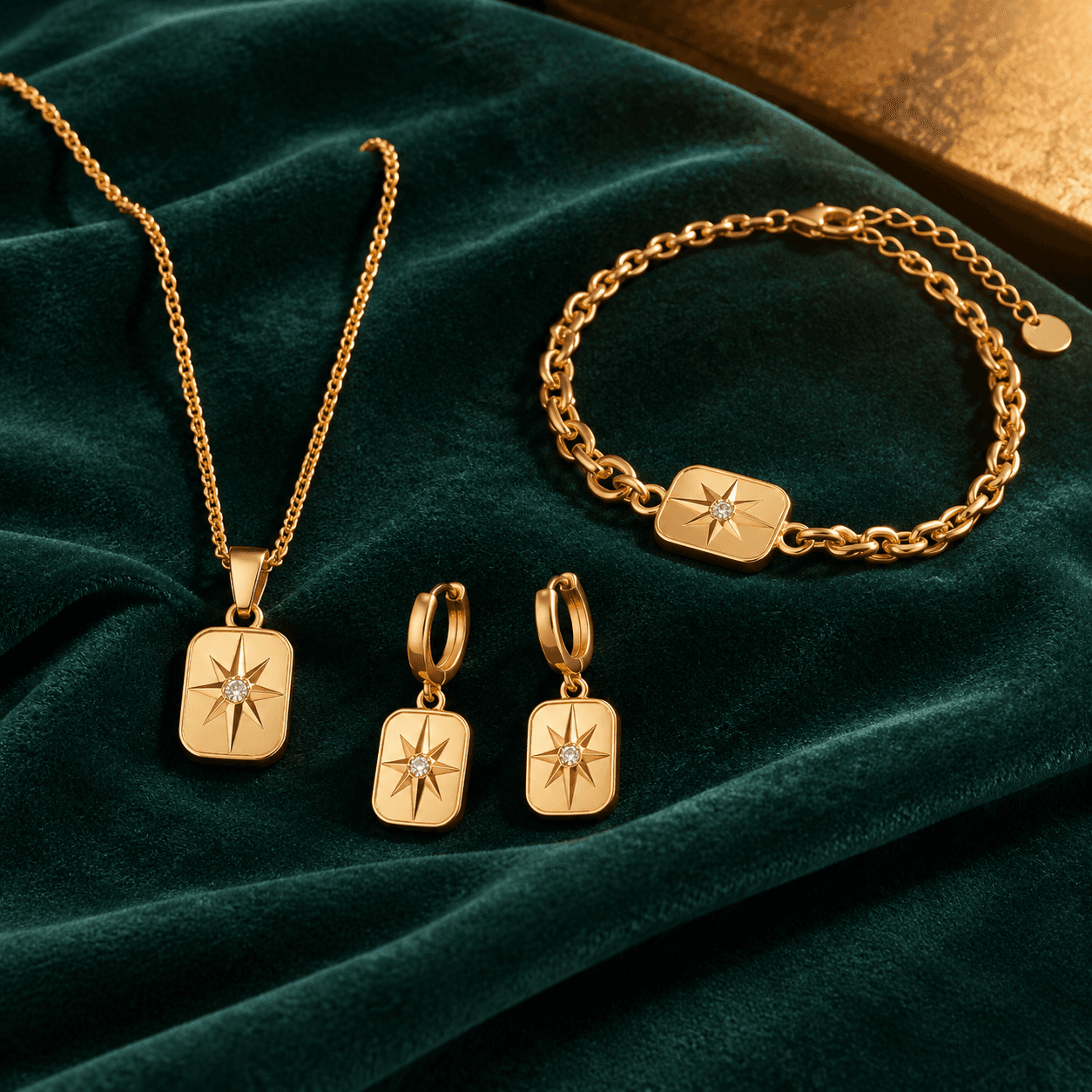
For jewelry brands pursuing OEM/ODM partnerships, affordability matters, but material integrity, finish consistency, construction quality, packaging, and production controls are equally important.
This guide helps buyers evaluate wholesale stainless steel jewelry before approving an order. It covers 304 vs 316L stainless steel, PVD gold finishes, sample inspection, quality control, private label development, and landed costs for North American markets. The goal is to translate product requirements into documented specifications that suppliers can quote, manufacture, and inspect against.
Wholesale stainless steel jewelry: what buyers should check first
Before requesting quotations, prepare a product brief that identifies the intended design, target retail positioning, material, finish, dimensions, and packaging requirements. A consistent brief makes supplier comparisons more meaningful because each manufacturer is responding to the same specifications.
- Material: Specify 304 or 316L stainless steel where applicable, and request documentation supporting the stated grade.
- Finish: Identify the required color, surface appearance, and finishing process, including PVD where specified.
- Construction: Record chain length, pendant dimensions, ring sizes, earring post details, clasp type, and other critical measurements.
- Components: Document stones, enamel, pearls, crystals, decorative elements, and any non-steel components.
- Commercial requirements: Confirm the quantity per design, packaging, logo application, destination market, and required supporting documents.
Separate confirmed requirements from preferences that may be open to discussion to help manufacturers identify constraints, quote comparable specifications, and clarify which details require sampling before production approval.
304 vs 316L stainless steel for jewelry manufacturing
Both 304 and 316L stainless steel are used in jewelry. They differ in composition and corrosion resistance, so the appropriate grade depends on the product design, intended finish, use, and commercial requirements. Neither grade should be treated as a substitute for inspecting the finished item.
316L contains molybdenum and generally offers greater resistance to certain corrosive environments than 304. This distinction can matter when selecting material, but it does not guarantee that every finished item will remain unchanged under all conditions or that it is suitable for every wearer.
When requesting a quotation, ask the supplier to identify the specified base material and provide documentation to support it. Keep the material specification separate from the finish: for example, a gold-colored stainless steel necklace should identify both the confirmed steel grade and the actual finishing process.
PVD gold finish and tarnish resistance: what to verify
Stainless steel is chosen for corrosion resistance and practical care. PVD, or physical vapor deposition, is a surface-coating process used for decorative finishes, including gold tones. The performance of a finished jewelry item depends on the substrate, coating specification, surface preparation, construction, use conditions, and maintenance.
For wholesale purchasing, avoid broad phrases such as tarnish-free, waterproof, or scratch-proof without product-specific evidence and clearly defined conditions. Ask the manufacturer to describe the actual finish and identify any relevant evaluations or test documentation available for the specified product.
- Confirm the base material and finish specification for each SKU.
- Inspect color uniformity, polishing, visible scratches, rough edges, and finish coverage around joints and settings.
- Ask which coating or wear-resistance evaluations are appropriate for the intended use.
- Review any available test reports and verify that they apply to the relevant product, material, finish, and production specification.
- Agree on visual acceptance criteria and any project-specific testing before approving production.
A sample inspection can identify visible defects, but it cannot independently establish coating thickness, corrosion resistance, nickel release, or long-term color retention. Select the test method according to the specific performance question and define the acceptance threshold before production where measurable performance is commercially important.
How to inspect stainless steel jewelry samples
Samples let buyers evaluate design, construction, and finish before committing to a larger order. For OEM/ODM projects, provide reference drawings, measurements, finish requirements, logo placement, and packaging instructions so the sample can be assessed against a defined brief.
- Material, dimensions, and finish: compare the supplied material information with the approved product specification; measure critical dimensions and record actual weight; check finish color under consistent lighting; inspect edges, soldered areas, settings, and polished surfaces for visible defects; compare matching samples for consistency.
- Construction and everyday usability: open and close clasps repeatedly and verify secure engagement; inspect chain links, jump rings, pendant bails, and extension chains; review ring profiles, hoop alignment, earring posts, and backs; assess stone settings, enamel edges, and decorative components for irregularities; ensure the product is comfortable and practical for its intended use.
Record defects, requested revisions, and approval status in writing. Keep an approved reference sample and specification for future production. If materials or dimensions change, determine whether an additional sample or verification is required.
OEM vs ODM jewelry sourcing: questions to ask a manufacturer
OEM and ODM projects vary in design input. An OEM arrangement typically uses buyer-supplied designs and requirements, while an ODM arrangement may start from a manufacturer’s existing design adapted to the buyer’s needs. Confirm responsibilities and scope before proceeding.
During supplier evaluation, ask questions that reveal how the manufacturer handles specifications, revisions, approvals, and production consistency. For example:
- Which stainless steel grades, finishes, and component options are available for the requested design?
- What drawings, reference samples, or technical details are needed to prepare an accurate quotation?
- How are sample revisions documented and approved?
- What is the MOQ for each design, finish, size, or customization option?
- Which quality inspection checkpoints and records are available for the project?
- Can the supplier provide the packaging, logo application, and export documentation required for the destination market?
- Which services are included in the quotation, and which incur additional costs?
Do not assume every manufacturer offers the same customization, testing, fulfillment, or export services. Obtain written confirmation of the scope and commercial terms for your project.
Build a practical quality control plan
A practical quality control plan defines what will be checked, how acceptance will be determined, and when inspection takes place. It should reflect the product design and the risks relevant to the item rather than applying a generic checklist.
For each SKU, document the approved sample version, material, finish, critical dimensions, functional requirements, packaging specification, and acceptance criteria. Identify which characteristics can be checked visually or by measurement and which require specialized testing or supporting documentation.
- Material verification: confirm the material and components match the approved product record.
- Appearance: compare finish, polishing, color, and visible construction to the approved sample.
- Dimensions: verify agreed measurements and tolerances.
- Function: inspect clasps, links, posts, closures, and settings as appropriate.
- Packaging: verify the approved packaging format, labeling, logo placement, and pack quantity.
- Documentation: review requested inspection records and applicable test reports before shipment.
Agree on inspection timing and the process for handling nonconforming products before production begins. Visual inspection alone does not establish material composition, coating thickness, regulatory compliance, or long-term durability. Where these characteristics matter, identify the appropriate verification method and confirm the availability of suitable evidence.
Product photography and listings for B2B and e-commerce
Accurate product presentation helps retailers communicate specifications consistently across online stores, marketplaces, and wholesale catalogs. Product photography should reflect the actual item’s proportions, color, finish, and construction, rather than claiming performance that images cannot prove.
- Photograph the complete item against a clean, neutral background.
- Include close-ups of clasps, links, earring posts, settings, and other construction details.
- Use consistent lighting and white balance within finish families.
- Show dimensions, chain length, ring sizes, and other practical measurements clearly.
- Use lifestyle photography to complement, not replace, accurate product images.
- Ensure editing does not materially misrepresent color or texture.
Product listings should distinguish base material from finish and include relevant measurements, closure details, component information, and care guidance based on the confirmed specification. Avoid unsupported claims about permanent color retention, universal skin compatibility, or unrestricted water exposure. For US/Canada markets, identify applicable product-safety, chemical-content, labeling, and advertising requirements. Request documents when questions arise about nickel release, lead, cadmium, or other regulated substances. Stainless steel construction alone does not establish compliance with every regulatory requirement. Do not describe ordinary jewelry as FDA-approved without a valid regulatory basis.
Private label packaging, shipping, and landed cost
Packaging should be specified alongside the product, including format, logo application, labels, pack quantities, and protective materials before production. For shipments to North America, confirm product descriptions, quantities, export documentation, and applicable import requirements. Duties, taxes, freight, handling, and other charges affect final cost. Compare supplier quotations using the same assumptions and ensure you understand what is included in each quote.
If your business requires dropshipping or third-party fulfillment, confirm the supplier can support the exact workflow, packaging, order handling, and shipping arrangements you need. These services are not automatically included in a standard OEM/ODM agreement.
What to record before approving a bulk order
Maintain a product record for each SKU to align purchasing, manufacturing, inspection, photography, and customer service. Include product code, drawings, approved sample version, base material and finish, critical measurements and tolerances, visual and functional criteria, testing requirements, approved photos, packaging details, order quantities, and shipment approval procedures.
If durability requirements exist, specify the testing method, acceptance threshold, exclusions, and commercial remedy in writing. An informal promise of durability is not a substitute for a documented requirement.
Explore Lefeng Jewelry OEM/ODM manufacturing services
Lefeng Jewelry offers stainless steel jewelry sampling, finishing, quality inspection, custom logo work, packaging, and export coordination. Availability and scope vary by project. With 15 years in OEM/ODM stainless steel jewelry manufacturing, Lefeng invites buyers to request capability information during supplier evaluation.
Learn more about Lefeng’s OEM/ODM services and related stainless steel necklace and bracelet offerings at /services/ or product-specific pages like /stainless-steel-necklace/ and /stainless-steel-bracelets/.
How to request an OEM/ODM stainless steel jewelry quotation
Prepare a brief identifying product category, design references, requested steel grade, finish, dimensions, logo needs, packaging preferences, estimated quantities, destination market, and required testing or documentation. Lefeng supports OEM/ODM stainless steel projects and can tailor solutions to your requirements. Contact Lefeng to discuss your project and request a quotation with a clearly defined product brief, approved sample, and agreed quality criteria.
Related resources
Compartir: