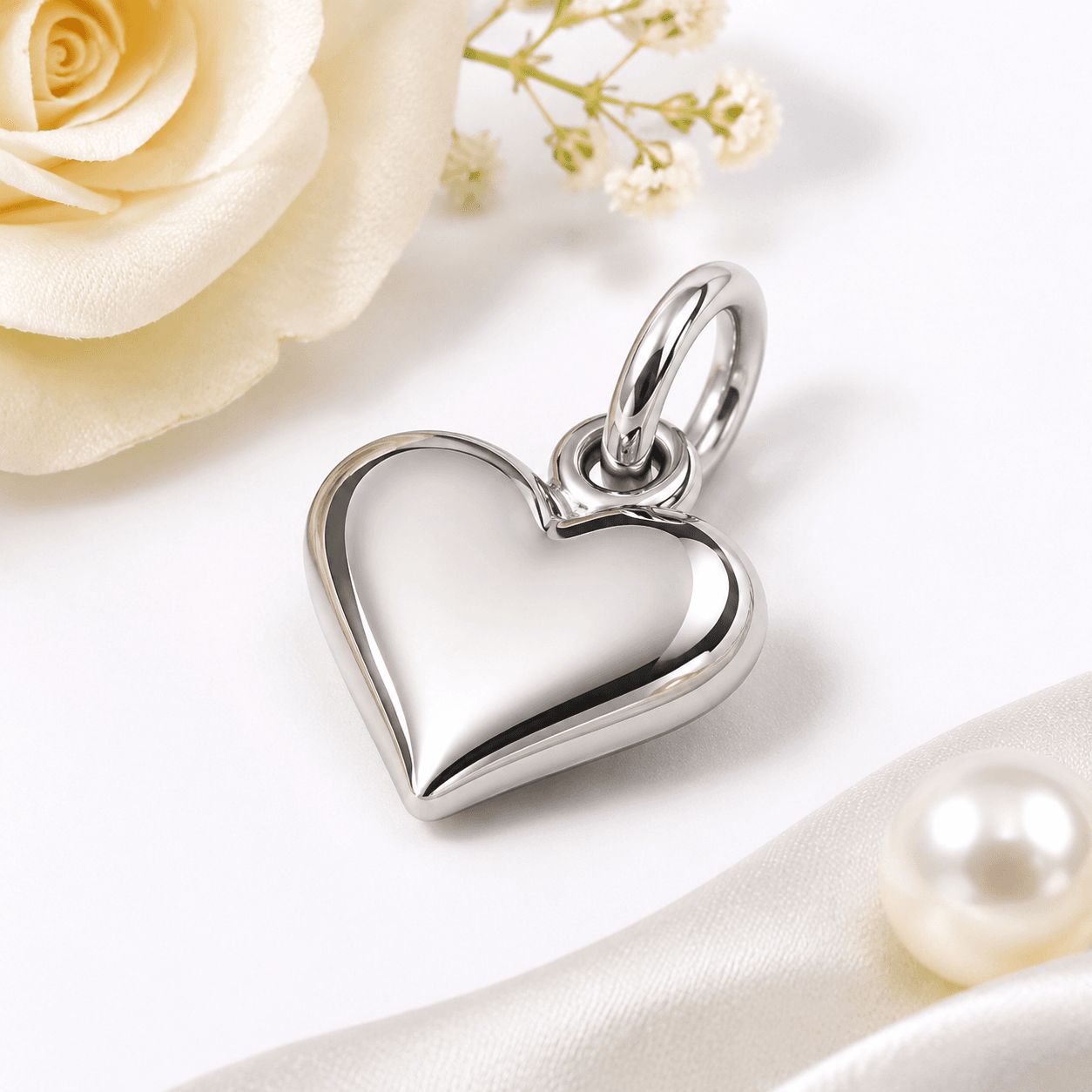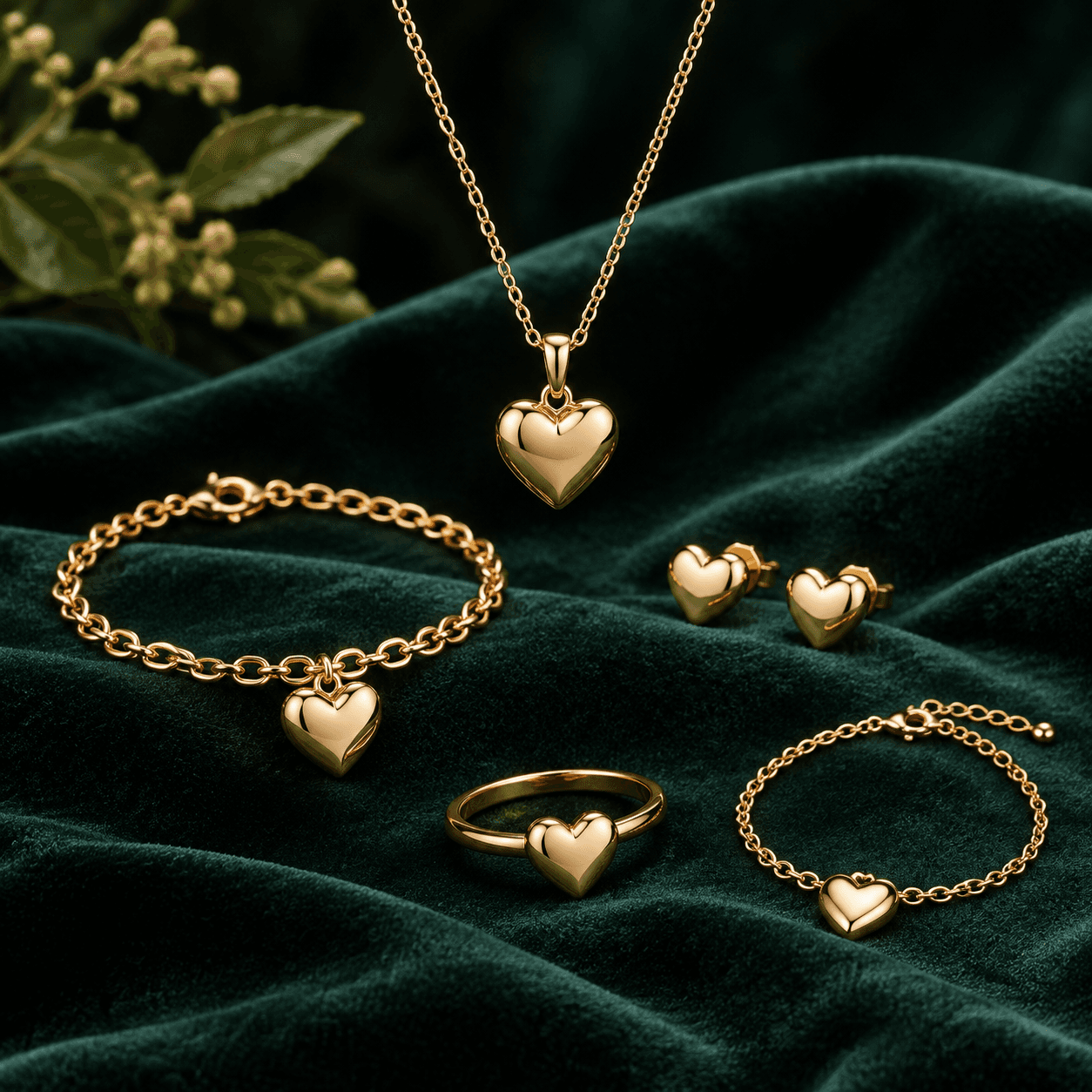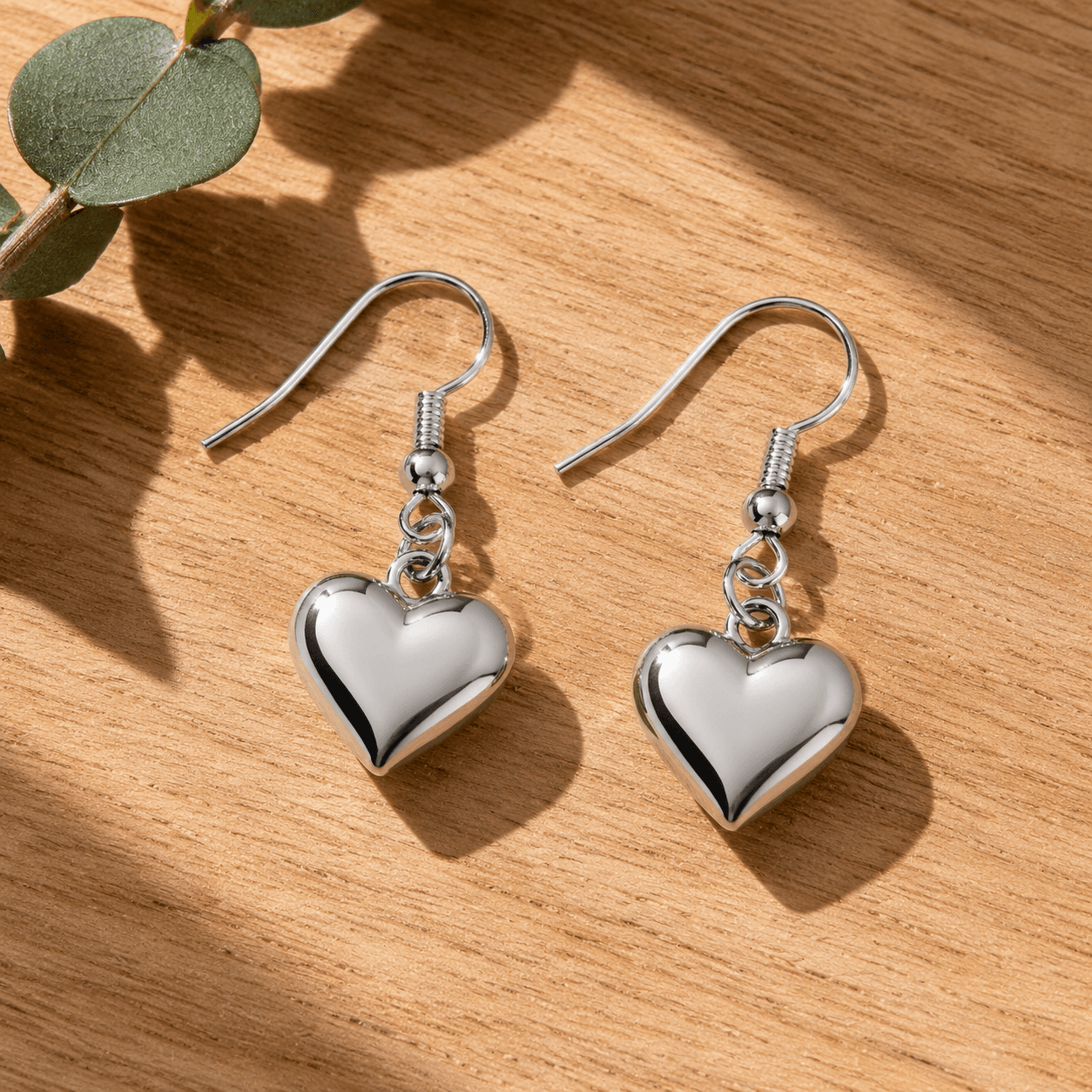
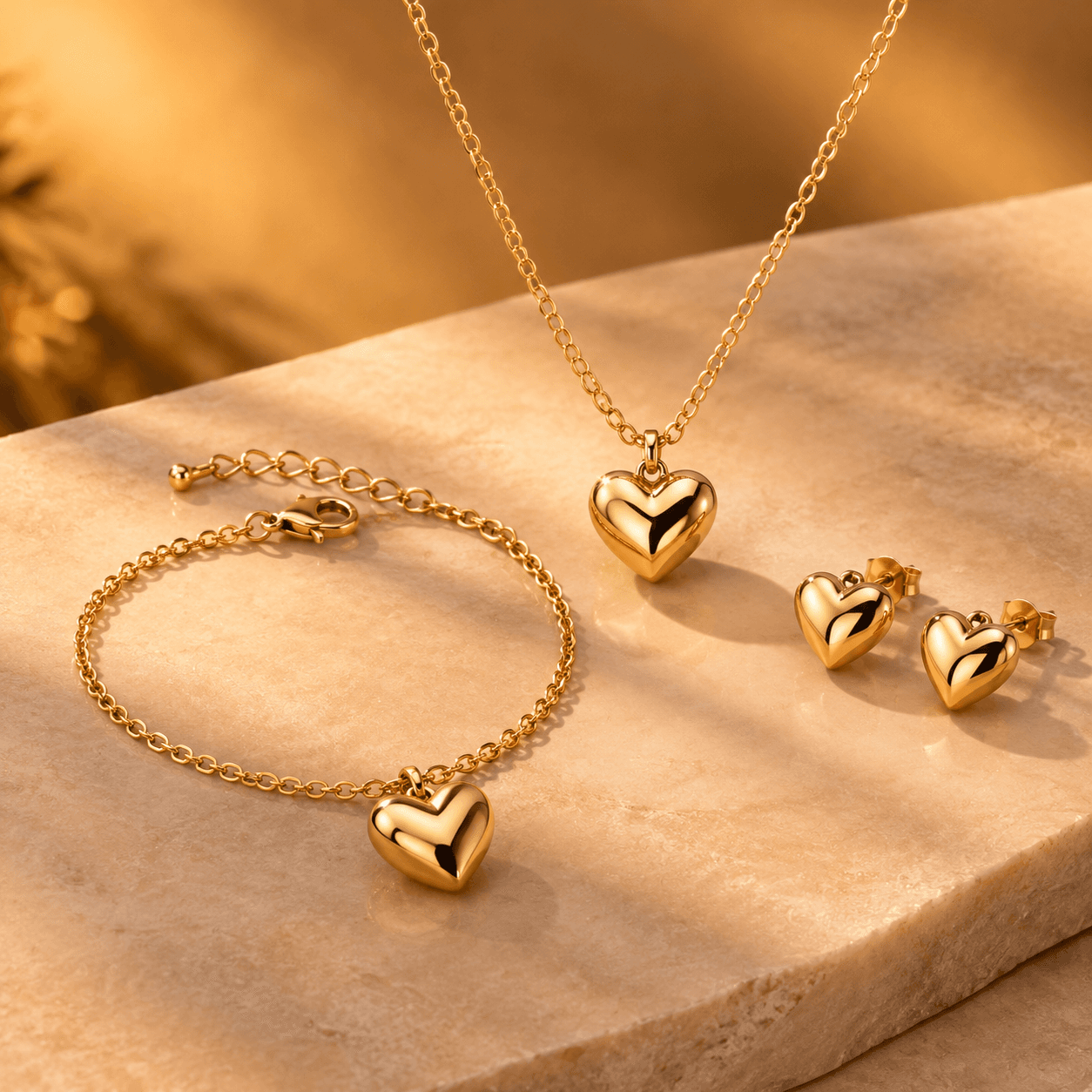
A stainless steel heart charm is often chosen for its durability and resistance to everyday corrosion. But does it tarnish? Usually, 316L stainless steel resists the visible tarnishing associated with more reactive metals. It is not immune to discoloration, localized corrosion, scratches, or changes to a decorative finish. For jewelry brands and sourcing teams, identifying the cause matters: the remedy may involve cleaning, material verification, surface preparation, or a revised finish specification.
This guide explains the role of 316L’s alloy chemistry and outlines practical development checks for OEM and ODM heart charms. Actual performance depends on the specified material, manufacturing and finishing processes, and conditions of use.
Does a stainless steel heart charm tarnish?
316L stainless steel generally resists tarnishing in ordinary conditions because chromium in the alloy supports formation of a thin, protective passive film on the surface. That film helps limit further reactions with the environment and can reform after minor damage when conditions are suitable.
“Tarnish” is often used to describe any visible change, but a dull patch, dark mark, or deposit does not by itself prove that the underlying steel has corroded. Possible causes include residue, chemical exposure, abrasion, localized corrosion, or wear to a decorative coating. These conditions are different and may require different corrective actions.
What 316L contributes to a heart charm
316L is a low-carbon austenitic stainless steel. Its corrosion behavior depends on its alloy composition and surface condition, not on any single element in isolation.
- Chromium supports the passive surface film responsible for stainless steel’s corrosion resistance.
- Nickel contributes to the alloy’s austenitic structure and associated material properties.
- Molybdenum improves resistance to certain forms of localized corrosion, including in some chloride-containing environments.
- Low carbon content reduces the risk of chromium carbide precipitation during certain elevated-temperature operations, particularly welding-related processes.
These characteristics do not make 316L corrosion-proof. Chloride exposure, deposits, surface condition, and exposure duration can all affect results. Confirm the grade required for a project with the manufacturing partner and arrange any material documentation required for the intended market rather than assuming it is available.
Why discoloration can still occur
Chlorides and localized corrosion
Chlorides can challenge the passive film under certain conditions. Perspiration and saline environments are possible sources of exposure. Concentration, temperature, duration, surface condition, and alloy all influence risk. Localized attack may appear as spots rather than uniform color change.
Residue and chemical exposure
Perspiration, cosmetics, personal-care products, cleaning agents, and manufacturing residues can leave deposits or affect surface appearance. A mark should be assessed before it is classified as corrosion. Gentle cleaning and thorough drying may remove residue; avoid recommending aggressive chemicals unless the care method has been confirmed for the finished product.
Abrasion and finish wear
Friction against other jewelry or abrasive handling can scratch or dull a charm. This is mechanical wear, not necessarily corrosion. On a colored charm, wear may affect the decorative surface while the stainless steel substrate remains comparatively unchanged.
Decorative coating changes
A gold- or rose-gold-colored PVD finish is a surface coating over the stainless steel, not the natural color of the substrate. Its appearance and wear should be evaluated separately from the base metal. Coating coverage, surface preparation, component geometry, and use conditions may influence the finished result. Specify the substrate and finish as separate elements and review both on an approved sample.
OEM/ODM development checks for heart charms
1. Specify the material
State the intended stainless steel grade, such as 316L, rather than using a general description like “stainless metal.” Confirm the specification with the manufacturer and identify any supporting documentation needed for the project.
2. Review geometry and surface access
Curved edges, recessed lettering, textured areas, openings, and attachment loops can affect finishing and inspection. Deep recesses or narrow spaces may be harder to clean and assess. Consider these features during design review, and confirm that the attachment point suits the intended chain or connector.
3. Define the finish
Describe the intended color, texture, polish, and visible finish characteristics. Natural polished steel and a colored PVD coating have different appearance requirements. Enamel, stones, or other decorative details add further design and production considerations. Use clear specifications and an approved reference sample to align expectations.
4. Review the sample and agree on inspection criteria
Before bulk production, assess the actual component against the approved design. Review:
- Heart silhouette, dimensions, thickness, and edge smoothness.
- Surface cleanliness and visible finishing marks, including on the reverse and edges.
- Attachment-point dimensions and connection suitability.
- Finish color and consistency across the component.
- Stone setting, enamel, or other details where included in the specification.
- Fit with the intended chain or connector.
Agree on visual acceptance criteria before production. If quantitative coating or corrosion-related evaluation is required, agree on the applicable method and documentation with the manufacturer in advance. Do not assume that a visual sample alone establishes a particular test result.
5. Plan care and packaging
Packaging should protect finished components from unnecessary friction and contact during transport. Care guidance can recommend gentle cleaning with a soft cloth, drying after exposure to perspiration, and avoiding prolonged contact with aggressive chemicals. Confirm that any care advice is suitable for the complete product, including its decorative finish and added components.
What to include in a product specification
A useful development brief separates the base material from the finish and describes the design features that affect manufacturing. For a custom heart charm, it may identify the required steel grade, dimensions, surface treatment, color and texture, attachment geometry, decorative elements, sample approval criteria, and any requested material or inspection documentation.
These details help buyers and manufacturing partners discuss visible issues precisely. Instead of requesting a general improvement in “tarnish resistance,” describe the affected area and observed change, then review whether the likely cause is residue, substrate corrosion, abrasion, or finish wear.
Care guidance for stainless steel heart charms
For routine care, wipe the charm gently with a soft cloth and dry it after exposure to perspiration or moisture. Avoid prolonged contact with aggressive cleaning products unless the method has been confirmed for the specific item. Store jewelry to limit scratching and friction, particularly when it has a decorative coating or other delicate details.
316L can be a useful substrate for a custom stainless steel heart charm, but no material choice alone guarantees a particular service life or appearance. A clear grade and finish specification, thoughtful geometry, sample review, and agreed inspection criteria provide a more reliable foundation for product development.