Does Stainless Steel Jewelry Tarnish? A Practical Guide for OEM/ODM Sourcing
For jewelry brands and contract manufacturers, durability is a top sourcing criterion. Buyers often ask whether stainless steel jewelry tarnishes. When specified correctly—grade, finish, and production controls—stainless steel can deliver strong wear resistance in everyday use.
However, final performance depends on more than the material name. Buyers should evaluate stainless steel grade, finishing method, design structure, supplier quality systems, and sample results before placing wholesale or OEM/ODM orders.
Key factors to evaluate durability
In B2B sourcing, durability should be defined within the complete product specification. Important factors include:
- Material grade and supplier specification.
- Surface treatment and finishing method.
- Production consistency and inspection process.
- Expected use conditions and target customer requirements.
1. Confirm the Stainless Steel Material Specification
Stainless steel jewelry can be produced with different material specifications. 316L is commonly used for jewelry due to its durability and corrosion resistance. Before ordering, buyers should confirm:
- The stated stainless steel grade.
- Whether the specification matches the intended retail positioning.
- Available alternative materials when required, such as 304 stainless steel, 925 sterling silver, copper, or zinc alloy.
A supplier should provide clear product specifications so buyers can compare materials, finishes, and target market requirements accurately.
2. Review Surface Finish and Plating Requirements
The appearance and durability of jewelry also depend on surface treatment. Natural stainless steel finishes and colored finishes may require different production processes.
Common buyer considerations include:
- Polishing consistency and surface smoothness.
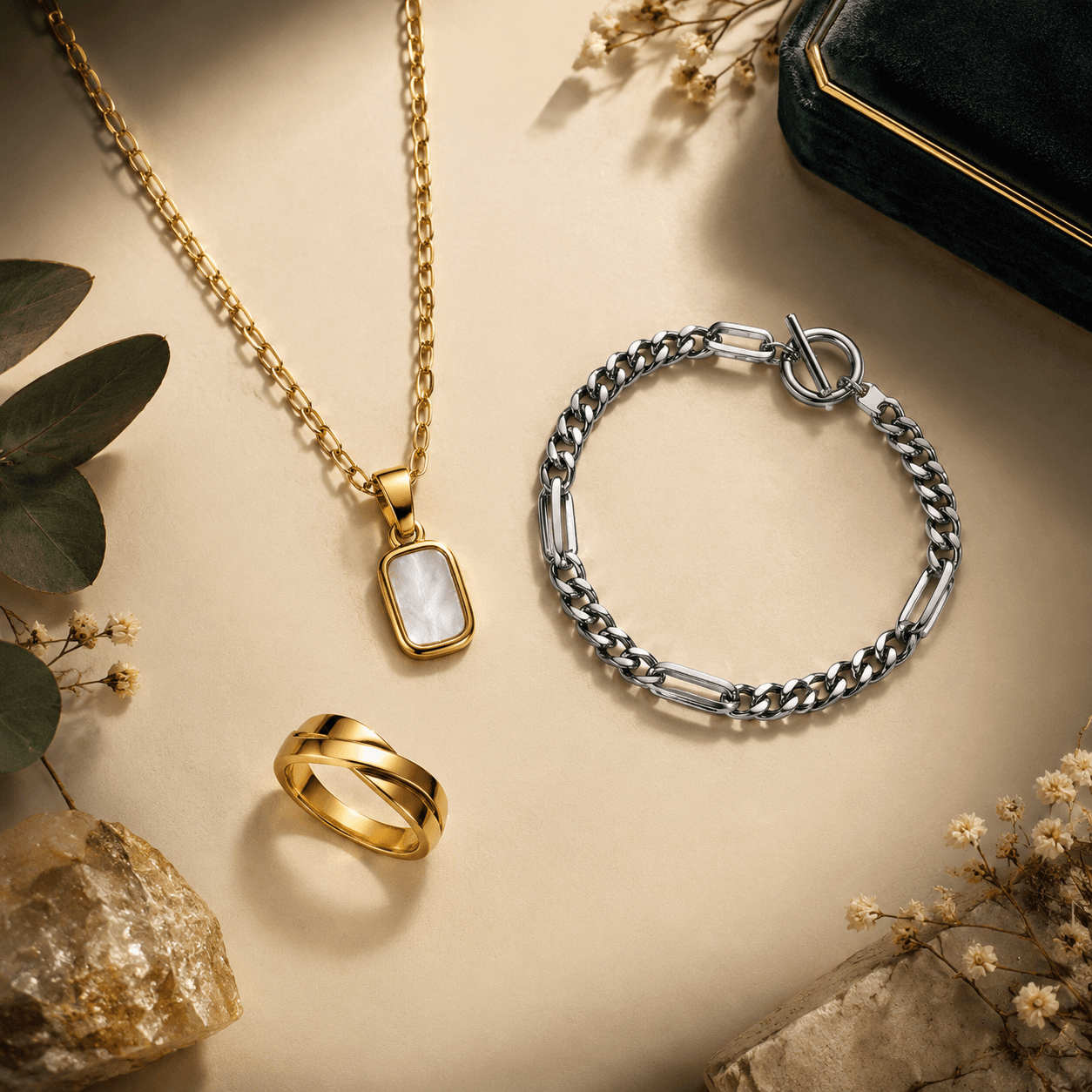
- PVD gold plating or rose gold plating requirements.
- Color consistency across production batches.
- Sample approval before bulk manufacturing.
PVD finishing is often used for colored surfaces. Buyers should evaluate samples and confirm finishing expectations with the manufacturer before production.
Why stainless steel durability matters for jewelry buyers
Support better product selection
Retail buyers need products that meet customer expectations for appearance, maintenance, and value. Understanding material and finishing options helps businesses select jewelry collections aligned with their market positioning.
Improve supplier communication
Clear specifications reduce misunderstandings during product development. Buyers should prepare details such as jewelry style, dimensions, material preference, finishing requirements, logo requirements, packaging expectations, and inspection standards. For OEM/ODM projects, this information helps manufacturers develop samples that better reflect the intended product direction.
How to evaluate stainless steel jewelry quality before bulk orders
Step 1: Prepare a detailed product specification
Before requesting samples, define design details, material selection, finish, dimensions, branding elements, and packaging needs.
Step 2: Review samples carefully
Sample evaluation allows you to verify product details before production. Key checkpoints include:
- Design accuracy and overall structure.
- Chain connections, clasps, posts, and functional components.
- Surface quality and polishing consistency.
- Finish appearance and color consistency.
- Packaging presentation.
Step 3: Discuss quality control processes
Quality review should be discussed throughout manufacturing, including material preparation, finishing, assembly, and final inspection stages. Buyers may ask suppliers about:
- Specification confirmation procedures.
- Appearance standards.
- Finishing checks.
- Packaging verification before shipment.
Step 4: Consider private label requirements
Private label projects may include custom designs, logo engraving, packaging development, and coordinated collections. Consider branding needs, collection consistency, and production planning.
Frequently asked questions
Does stainless steel jewelry tarnish easily?
Stainless steel jewelry is generally chosen for durability and resistance to everyday wear. Actual performance depends on material grade, finishing process, design, and usage conditions. Tarnish is unlikely when grades and finishes are specified correctly, but exposure to harsh chemicals or abrasive environments can affect appearance over time.
Is 316L stainless steel suitable for jewelry collections?
316L stainless steel is a commonly selected option for jewelry. Buyers should confirm specifications with their supplier and review samples based on target market requirements.
How can buyers check jewelry quality before ordering?
Review samples, confirm product specifications, discuss quality checkpoints, and align expectations with the manufacturer before approving larger orders.
Partner with Lefeng Jewelry for stainless steel jewelry manufacturing
Selecting an OEM/ODM jewelry partner requires attention to product development, communication, sampling, finishing control, and quality review processes.
Lefeng Jewelry is a 15-year OEM/ODM stainless steel jewelry manufacturer with in-house factory operations supporting sampling, QC, packaging, and export coordination for global B2B buyers.
Explore our OEM/ODM manufacturing services, review available stainless steel necklace designs, or contact us through our RFQ page to discuss your jewelry project.