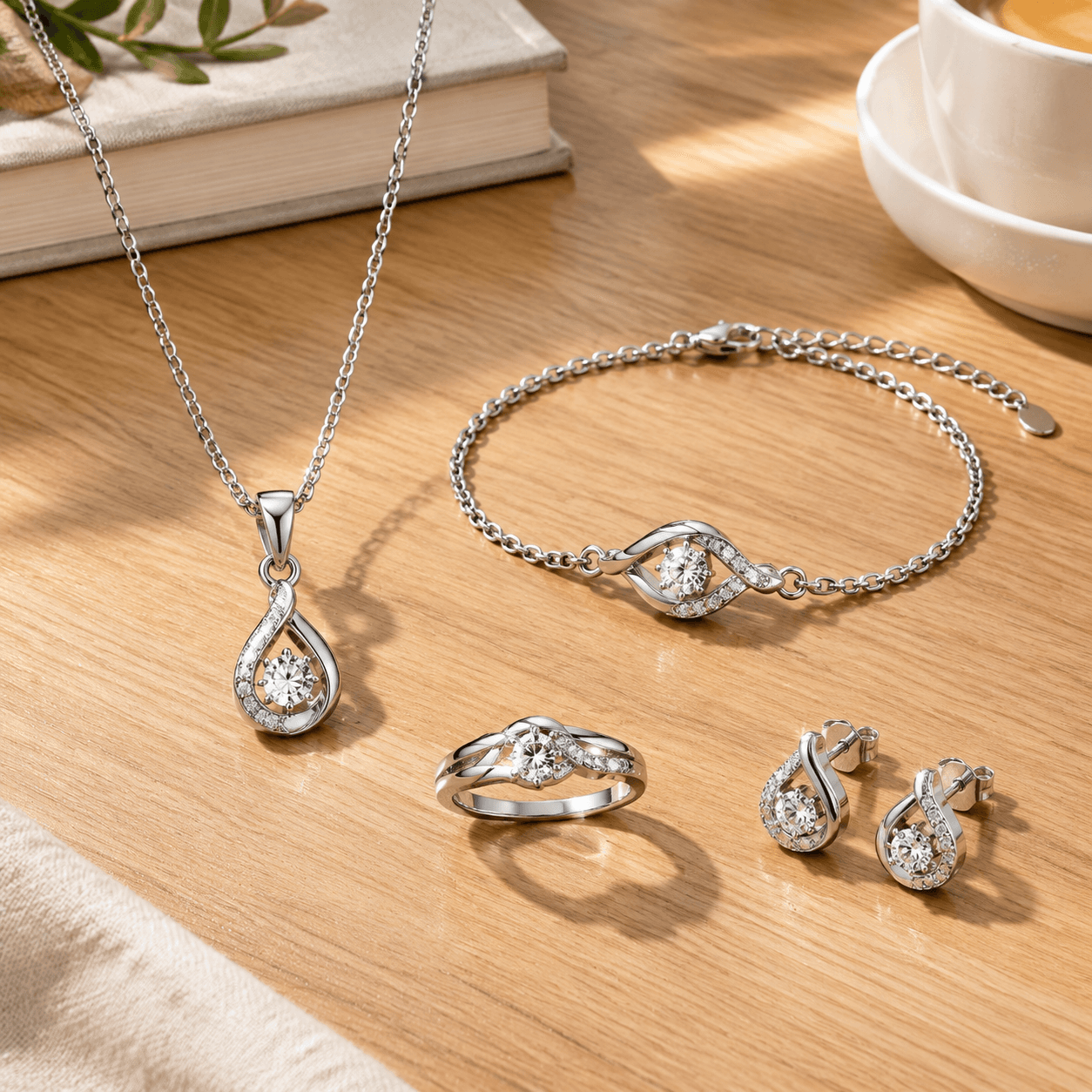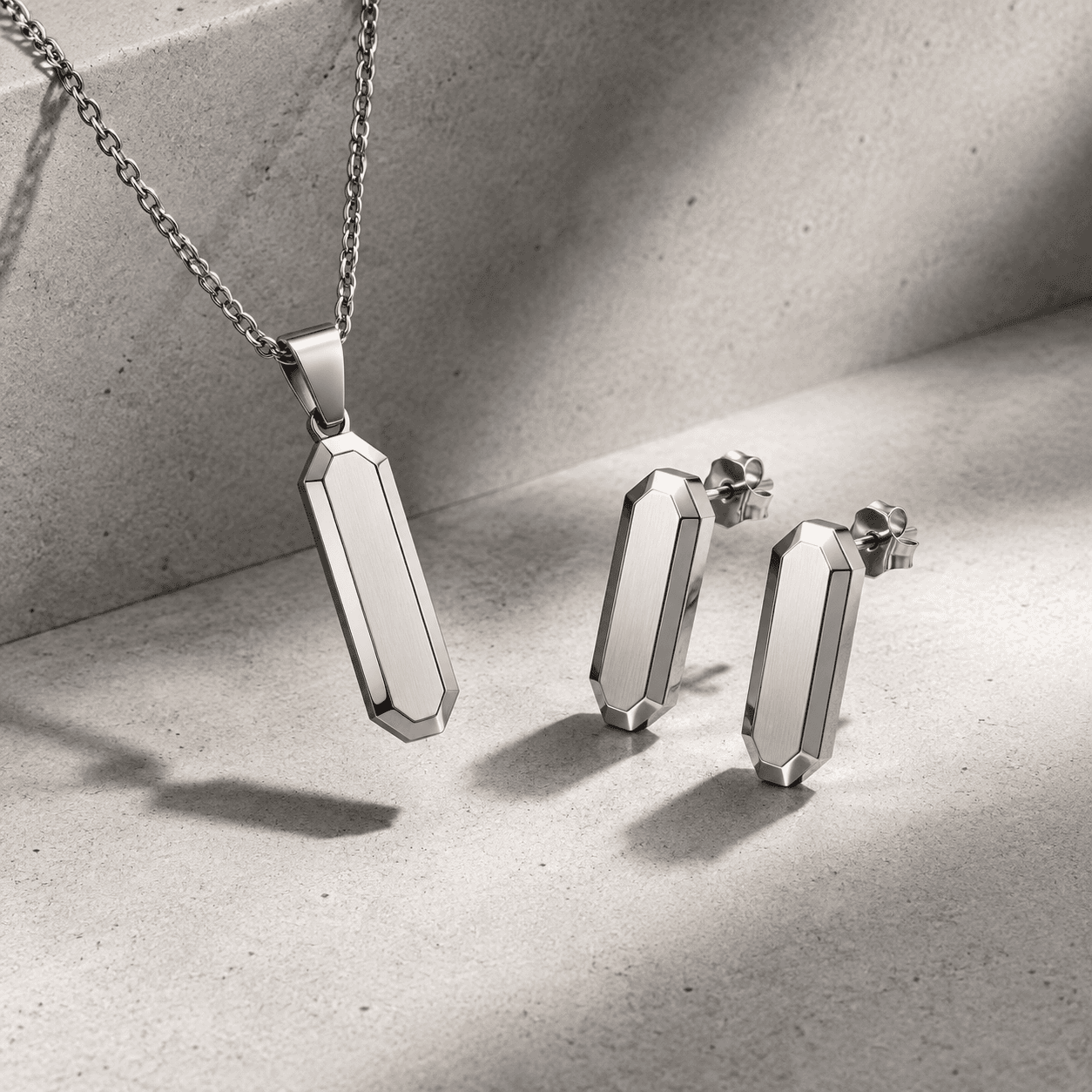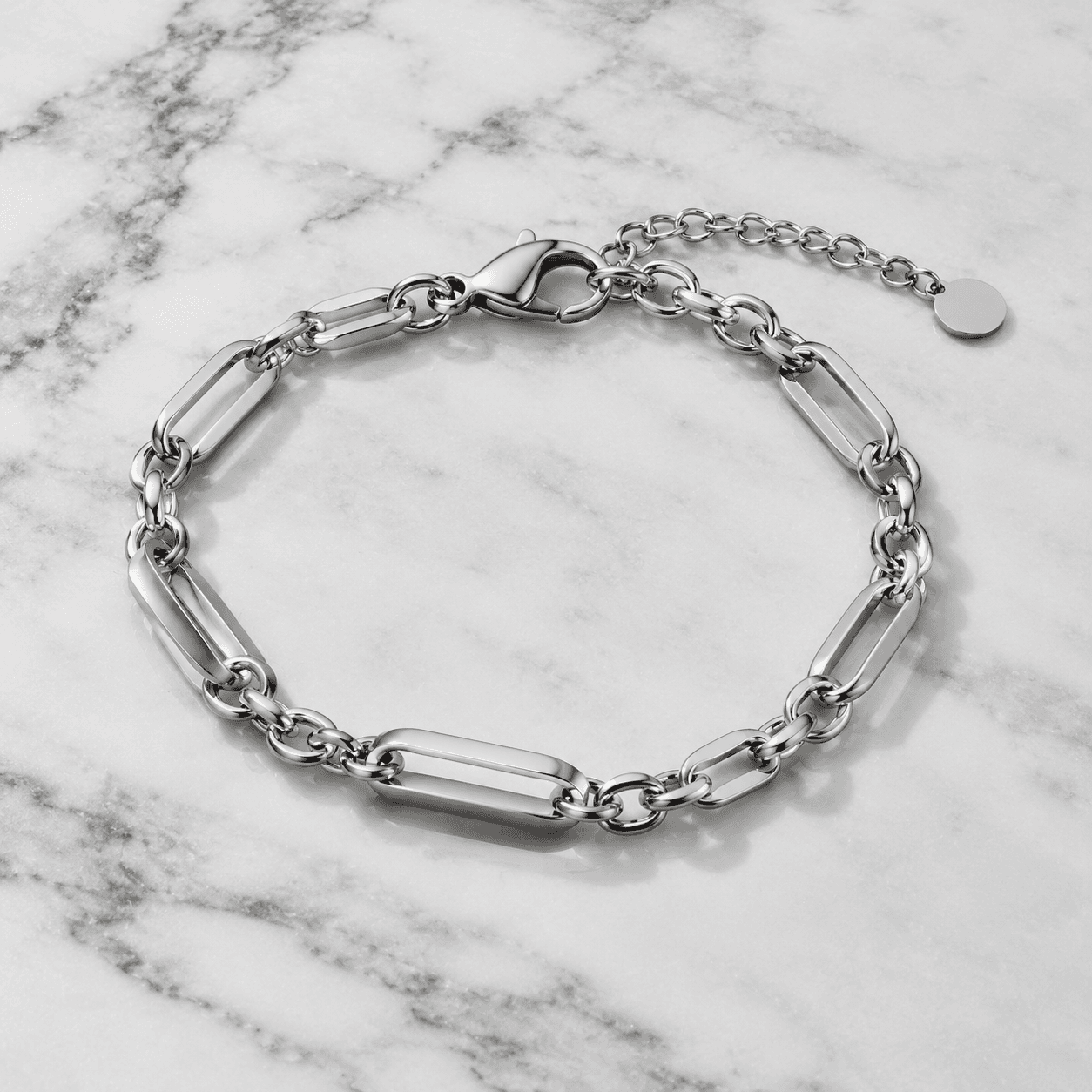
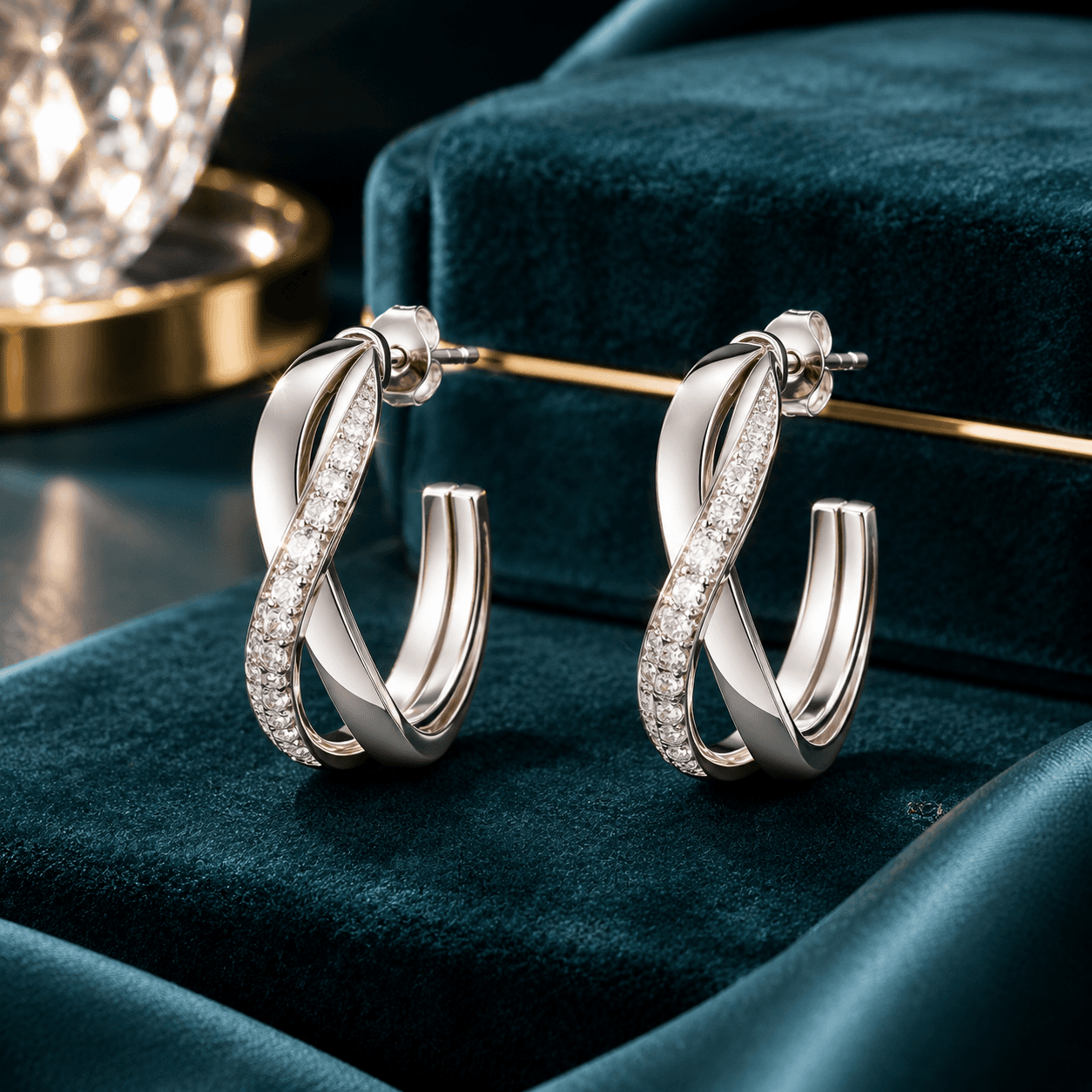
Choosing between 316L stainless steel and 925 sterling silver affects more than the material specification. For online retailers, wholesalers, and private-label brands, it also influences care instructions, product presentation, inventory handling, and customer expectations. Neither material is universally better: the right choice depends on the product, target customer, and verified finished-product specification.
Stainless Steel vs. Sterling Silver at a Glance
316L stainless steel is an iron-based alloy containing chromium. 925 sterling silver is 92.5% silver, with the balance made up of other metals. These material descriptions do not by themselves establish the performance of every finished piece. Construction, surface finish, manufacturing quality, and use conditions also matter.
| Consideration | 316L stainless steel | 925 sterling silver |
|---|---|---|
| Composition | Stainless steel alloy; confirm the specified grade with the supplier. | 92.5% silver with other alloying metals. |
| Maintenance | Typically straightforward cleaning and drying; care depends on the finish and use. | May require periodic cleaning and tarnish management. |
| Surface behavior | Generally corrosion-resistant under appropriate conditions; not immune to damage or discoloration. | Can tarnish through reactions with substances in the environment. |
| Surface wear | Often selected for practical everyday use; scratches and finish wear remain possible. | Relatively soft and susceptible to scratches and surface wear. |
| Appearance and finishes | Natural steel appearance and, where specified, applied finishes such as PVD. | Silver appearance, with other finishes subject to the product specification. |
| Commercial fit | Can suit collections emphasizing practical care and varied finishes. | Can suit collections whose customers specifically value sterling silver. |
How the Materials Differ in Use
316L stainless steel
Stainless steel is often considered for jewelry ranges where straightforward routine care is important. Its corrosion resistance can be useful in appropriate wearing conditions, but sellers should not describe every stainless steel item as identical or indestructible. Confirm the grade, product construction, and any surface treatment for the specific SKU before making material or durability claims.
For colored or coated items, ask the supplier to specify the finish and its relevant production requirements. A PVD finish is a coating process; the term alone does not establish how a particular finished product will perform.
925 sterling silver
Sterling silver has a recognized precious-metal composition and may suit customers looking specifically for silver jewelry. It can tarnish over time, so listings and packaging should set clear care and storage expectations. Tarnish is a material-related maintenance consideration and should not automatically be treated as a manufacturing defect.
What B2B Buyers Should Evaluate
Assess the finished product, not just the metal name. Before approving a sample or placing a production order, define the product specification and inspection expectations with the supplier.
| Area | What to review | Why it matters |
|---|---|---|
| Material | Specified grade, components covered by the specification, and available supporting documentation. | Helps ensure product descriptions match the supplied item. |
| Finish | Color, polishing, visible defects, and finish consistency against the approved sample. | Supports consistent presentation across SKUs. |
| Construction | Clasps, posts, links, jump rings, settings, and other functional connections. | Problems with components can affect customer experience even when the metal surface is intact. |
| Packaging | Individual protection, SKU identification, and any storage requirements for the material. | Helps manage handling, inventory, and fulfillment. |
| Testing | Any project-specific test method, acceptance criteria, and applicable documentation agreed for the order. | A material name alone does not establish a test result. |
For products requiring corrosion, coating, wear, or other performance evaluations, agree on the relevant method and acceptance criteria with the supplier before production. Do not infer a test result or guarantee from a general material description.
Photography, Listings, and Fulfillment
Show the product accurately
Use consistent lighting and neutral backgrounds, and include a complete product view, close-ups of important details, verified dimensions, and an image of the actual packaging configuration where relevant. Avoid retouching that changes the apparent color, finish, or proportions. For coated stainless steel and finished silver, photograph the approved product rather than relying on a generic material description.
Make product claims specific
For each SKU, provide the confirmed base material and grade, surface finish, dimensions, closure type, and care guidance. Include weight only when verified. Describe warranty coverage according to the seller’s actual policy, and avoid broad claims such as “lifetime durability” unless they are properly supported and clearly defined.
For North American sales, review product descriptions and advertising against applicable consumer-protection and labeling requirements. Do not describe ordinary jewelry as FDA-approved without a specific, valid basis. Seek appropriate regulatory advice if a product or claim raises questions.
Plan storage and shipping
Both materials can be affected by abrasion, impact, or unsuitable storage. Use appropriate individual protection and organized SKU labeling. Sterling silver may need particular attention to tarnish-conscious storage. For wholesale or dropshipping orders, confirm packaging options, product identification, order handling, and export arrangements for the specific supplier and order rather than assuming a standard service is available.
Choosing a Material for Your Collection
Consider stainless steel when:
- Your assortment prioritizes practical routine care.
- Your customers are interested in stainless steel products or specified finishes.
- You can confirm the material grade and finish for each product.
Consider sterling silver when:
- Your customers specifically value 925 silver composition.
- Your collection positioning centers on silver jewelry.
- Your business can communicate tarnish care and manage suitable storage.
A business may offer both materials to serve different customer preferences. Keep the specification, photography, product description, and care instructions accurate for each SKU.
Frequently Asked Questions
Is stainless steel more durable than sterling silver?
Stainless steel is generally more resistant to everyday surface wear and does not tarnish in the same way as sterling silver. Actual performance depends on the product’s grade, construction, finish, and wearing conditions.
Can 316L stainless steel jewelry change appearance?
It can be affected by abrasion, chemical exposure, surface contamination, and finish quality. For coated products, evaluate the actual finish specification rather than assuming the base material determines coating performance.
Which material is better for a wholesale jewelry business?
Neither is right for every business. Stainless steel may suit an assortment emphasizing practical care, while sterling silver may suit customers seeking its specific precious-metal composition. Consider customer demand, product positioning, inventory practices, and sourcing requirements.
What should I request before placing an OEM order?
Confirm the material and finish specifications, review and approve a physical sample, define inspection criteria, and agree on dimensions, packaging, and any project-specific testing or documentation. Put relevant requirements in the order specification rather than relying on general claims.
Develop Your Next Jewelry Collection
A clear material specification is a useful starting point for product development. Buyers developing a stainless steel or sterling silver collection can use sample review to assess appearance, proportions, construction, finish, and manufacturability before approving production.
When evaluating an OEM/ODM supplier, discuss your design requirements, target material and finish, sample process, quality-control expectations, packaging needs, and export arrangements. For a product-specific discussion, share your design or reference sample and the requirements you need the finished product to meet.
Related resources
- Lefeng Jewelry - OEM/ODM Stainless Steel Jewelry Manufacturer
- Contact Us | Lefeng Jewelry
- Hypoallergenic Silver Hoop Earrings: Material Selection & OEM Sourcing FAQ
- 2026 B2B Buying Guide: Silver-Tone Waterproof Huggie Hoop Earrings
- Oval Bezel Necklace: Silver Materials, Finishes & OEM/ODM Guide
- Emerald Cut Birthstone Charm: OEM/ODM Style & Sourcing Guide