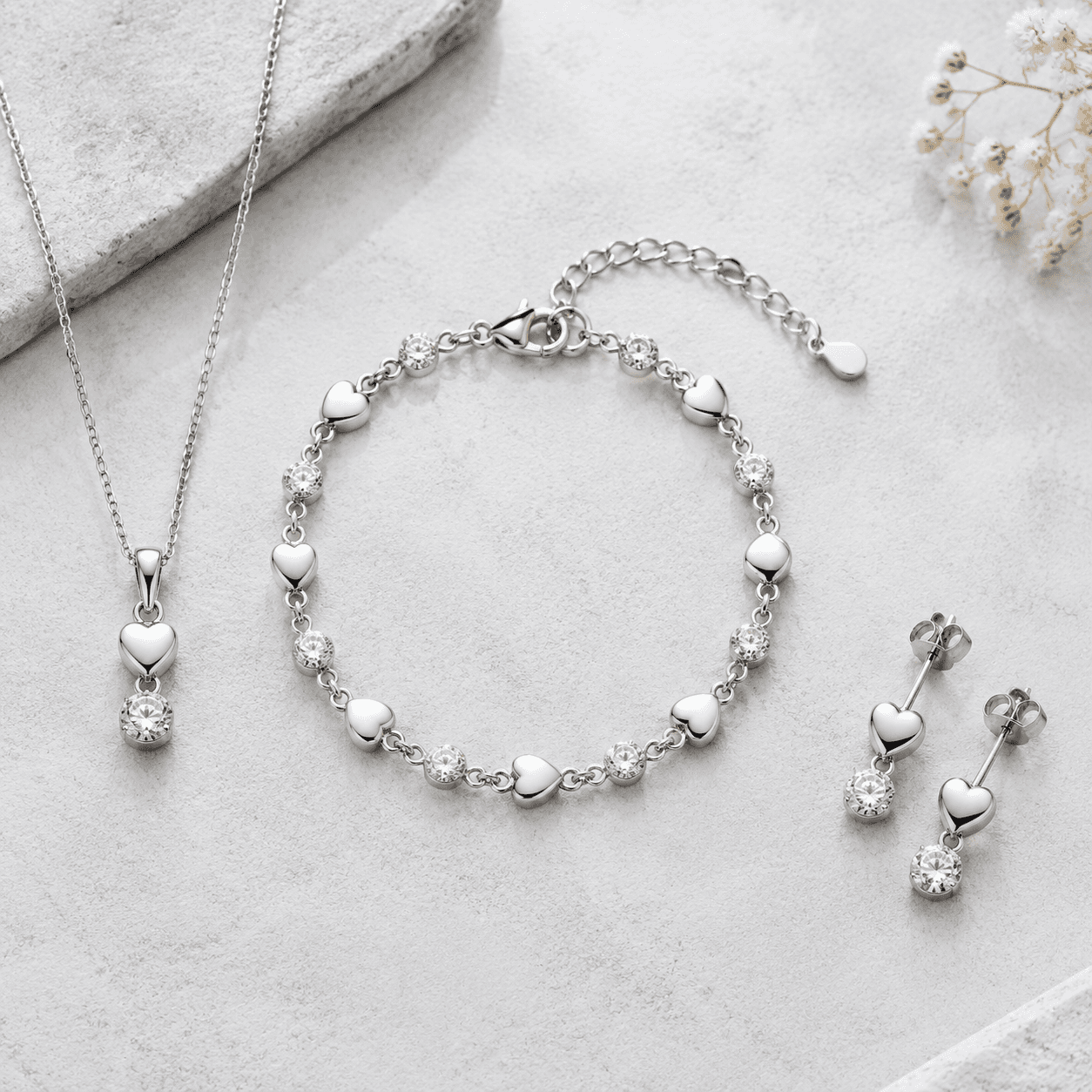
Building a bracelet for a commercial jewelry collection requires more than selecting a shape. Buyers and designers need to define the construction, fit, base material, surface finish, closure, decorative components, branding, packaging, and production requirements before evaluating a sample. Chain bracelets, bangles, cuffs, and charm bracelets have different dimensional and assembly considerations, so a clear specification helps an OEM jewelry manufacturer translate a concept into a practical prototype.
For private-label and wholesale programs, bracelet development must also account for sample revisions, inspection criteria, order quantity, and repeat-production requirements. Lefeng Jewelry supports stainless steel jewelry OEM/ODM projects, with services that may include design development, sampling, CNC and laser processing, polishing, PVD/plating, enamel and stone setting, quality control, custom logo work, packaging, and export coordination. Available processes and the production route should be confirmed for each design.
This guide explains how to develop a bracelet from the initial design brief through sample approval and bulk-order preparation. It covers 316L stainless steel, fit and dimensions, functional connections, decorative options such as enamel, zircon, crystal, and pearl, PVD finishes, private-label branding, quality checkpoints, MOQ discussions, lead-time planning, and RFQ preparation. Use these steps to organize a boutique collection, a wholesale stainless steel jewelry range, or a custom OEM/ODM development project.
الخطوة 1: تحديد تصميم السوار وبنيته ومواده
Define the product before selecting production methods
Start by identifying the bracelet type, intended wearer, target price positioning, visual direction, and expected use. Decide whether the design is a chain bracelet, bangle, cuff, or bracelet with a charm or centerpiece. Record the approximate dimensions, closure type, desired weight or visual profile where relevant, and any collection-wide design requirements. A lightweight everyday chain bracelet has different construction needs from a rigid bangle or a statement cuff.
Prepare front and side views, along with a separate drawing of the closure and major attachment points. If the bracelet belongs to a coordinated collection, document the intended metal tone, proportions, decorative style, and finish so related products can be developed against a consistent reference.
Select the base material and finish separately
For stainless steel jewelry, 316L and 304 stainless steel can be evaluated against the design specification, processing requirements, intended finish, and commercial considerations. Depending on the project, other proposed materials may include 925 sterling silver, copper, or zinc alloy. Finish and decoration may include PVD gold or rose gold tones, enamel, zircon, crystal, or pearl where compatible with the construction.
Specify four things independently: base material, surface finish, decorative components, and processing requirements. Similar visual appearances do not establish that two materials or finishes have equivalent properties. Confirm the actual configuration and any required documentation during development.
Prepare a production-oriented design brief
Include a sketch or drawing, bracelet type, target dimensions, fit, material, finish, closure, decorative details, logo requirements, packaging expectations, estimated order quantity, target market, and desired delivery window. Flag potentially relevant processes such as CNC machining, laser processing, PVD/plating, enamel application, or stone setting so the manufacturer can assess feasibility and sampling needs.
Keep the first specification focused on the essential construction. For example, a chain bracelet can initially define its length, link geometry, closure, finish, and centerpiece before additional decorative details are finalized. Review the stainless steel bracelets collection for product references or explore OEM/ODM manufacturing services when preparing a custom brief.
الخطوة 2: قياس محيط المعصم وتحديد تناسبات السوار
Translate wrist measurements into a wearable specification
Measure the wrist at the intended wearing position with a flexible measuring tape and record the circumference in millimeters or inches. Define the desired fit as close, standard, or loose. A wrist circumference of 6.5 inches is approximately 165 mm, but it is not automatically the finished bracelet length. Wearing ease depends on the bracelet type, link geometry, closure, extension chain, and intended movement.
For commercial collections, identify the intended size range and specify how finished dimensions will be measured. Avoid relying on a single prototype measurement when multiple sizes are planned.
Account for bracelet construction
A chain bracelet needs sufficient usable length for comfortable movement and natural articulation around its links and closure. A bangle requires an appropriate opening and inner diameter to pass over the hand. A cuff needs suitable curvature and opening geometry. For a bracelet with a centerpiece, consider its weight, position, and attachment design because an unevenly balanced component may rotate during wear.
Record measurable dimensions
Specify finished length, width, thickness, inner diameter where applicable, closure dimensions, extension length, and the position of major decorative components. State whether the finished length includes the closure and whether an extension chain is included. For rigid bracelets, distinguish inner diameter from outer diameter and internal circumference. For chain bracelets, document the measurement method used for the approved sample.
Identify which dimensions are fixed and which may be adjusted during sampling. If a prototype feels too loose, determine whether the cause is the overall length, extension placement, link geometry, or closure position before requesting a revision. This creates a measurable target for the next sample and helps buyers compare products consistently. Explore stainless steel bracelet designs and the new design collection for additional references.
الخطوة 3: بناء هيكل السوار والوصلات الوظيفية
Establish the structure before adding decoration
Once the dimensions and materials are defined, map how each functional component connects. A chain bracelet may contain linked sections, end rings, an extension chain, and a lobster clasp or another specified closure. A bangle may use a continuous rigid form, while a cuff relies on its band profile, curvature, and opening. The structure should allow the intended movement without obvious binding, twisting, or separation during normal handling.
Review closures and attachment points
Check the clasp, end rings, extension connection, and other attachment points as distinct parts of the assembly. A decorative charm should connect through an appropriate bail, jump ring, side loop, drilled hole, or another construction suited to its design. Do not assume a closure can serve as a direct decorative attachment without verifying the geometry and function.
During sample review, move the bracelet gently through its expected range of motion. Look for pinching, sharp edges, collisions between components, awkward angles, or parts that interfere with opening and closing the clasp.
Match processing methods to the approved design
Depending on the design, manufacturing may involve CNC processing, laser work, polishing, PVD/plating, enamel application, or stone setting. Not every bracelet requires every process. The appropriate route depends on geometry, surface requirements, decorative features, and connection methods. Engraved areas need enough usable surface for the intended mark, while decorative settings need suitable geometry for placement, finishing, and inspection.
Maintain an assembly diagram and component list with the sample. Identify the main band or chain, end components, closure, extension chain if applicable, and decorative attachments. This gives the development team and quality inspectors a shared reference. For help evaluating a proposed construction, review OEM/ODM services or send a design brief through Contact Us.
الخطوة 4: تحسين التشطيبات والتفاصيل الزخرفية والعلامة التجارية والتغليف
Specify the finish and color reference
Define the surface finish before sample approval. A polished stainless steel surface differs visually from other surface treatments, while PVD gold and rose gold finishes create distinct color directions. Record the intended finish for each component, especially when the band, closure, and decorative elements use different treatments.
Include a written finish description and a visual reference where available. Review the sample under consistent lighting, including the underside, edges, attachment points, and areas around moving components. Specify the base material and finish independently so the approved sample provides a clear reference for subsequent production.
Define decorative details and placement
Enamel, zircon, crystal, and pearl may be used as decorative elements where the design and construction support them. Specify the size, quantity, position, spacing, and intended orientation of each component. Review the setting geometry, surrounding metal, accessibility for finishing, and ease of inspection. Check that decorative features do not create obvious pressure points or interfere with nearby links and closures.
Confirm private-label branding and packaging
Provide the logo artwork, intended location, orientation, scale, and usable marking area. Curved, narrow, or highly detailed surfaces may affect logo legibility, so review an actual sample before approving bulk production. Define packaging requirements during development, including the box or card format, insert dimensions, labels, and retail presentation needs.
Lefeng Jewelry can discuss custom logo work and packaging as part of a project, subject to the confirmed requirements. Keep the finish reference, approved logo, decorative layout, and packaging specification together. This helps sampling, finishing, branding, and inspection teams work toward the same target and reduces ambiguity when a collection contains multiple related designs.
الخطوة 5: مراجعة العينة وتحديد نقاط التحقق من مراقبة الجودة
Evaluate the physical sample against the specification
Compare the prototype with the approved drawing and record. Measure the finished length, width, thickness, and critical feature positions. Check whether the bracelet fits as intended, the closure engages and releases correctly, and links or bands move without obvious binding. Inspect the finish under consistent lighting and review less visible areas such as the underside, internal edges, attachment rings, clasp surfaces, and spaces around decorative settings.
Use observable quality checkpoints
Organize the inspection around dimensions, structural connections, surface finish, decorative placement, branding, and packaging. Look for visible scratches, rough edges, inconsistent polishing, uneven finish, misalignment, poorly attached-looking components, and closures that do not function as intended. For bracelets containing zircon, crystal, pearl, or enamel, inspect the placement and surrounding setting.
These checkpoints support sample review but do not replace project-specific material verification, laboratory testing, or formal documentation when required. Define applicable test methods, documentation, and destination-market requirements for the confirmed product specification.
Turn feedback into an approval record
Avoid vague comments such as improve the finish. Instead, describe the observed issue, identify the component, and state the requested correction. Examples include a clasp that is difficult to engage, a centerpiece that is visibly off-center, or a finish that differs from the approved reference. Classify each comment as a required correction, preferred adjustment, or open question.
After revisions, compare the updated sample against the same dimensions and inspection criteria. Keep the approved material, finish, closure, dimensions, decorative configuration, logo artwork, and packaging information in one controlled record. Lefeng Jewelry's project workflow may include sampling, finishing, quality inspection, packaging, and export coordination; the specific inspection plan and any requested material or market documentation should be confirmed for each project. See About Lefeng Jewelry and OEM/ODM services for further company and service information.
الخطوة 6: الاستعداد للحد الأدنى لكمية الطلب (MOQ)، ومدة التسليم، وطلبات البيع بالجملة، والإنتاج المتكرر
Confirm the commercial requirements for bulk production
Once the sample is acceptable, confirm the target order quantity, applicable MOQ, finish, logo treatment, packaging configuration, and desired delivery window. MOQ can vary with the bracelet design, material, processing requirements, packaging, and order configuration. Request confirmation for the specific RFQ rather than assuming another product's MOQ applies.
Discuss lead time as a project schedule covering sample development, revision and approval, production, finishing, inspection, packaging, and shipment coordination. The schedule should reflect the approved scope and the actual project requirements rather than a generic estimate.
Make the approved sample reproducible
Consolidate the approved dimensions, base material, finish, closure, decorative placement, logo artwork, packaging, and inspection criteria into one controlled specification. Where several processing stages are involved, confirm the sequence and any required approval points. For PVD finishes and decorative components, record the approved visual reference and placement so subsequent production can be evaluated consistently.
Prepare a complete RFQ
Provide the supplier with a sketch or dimensioned drawing, material and finish requirements, target quantity, branding details, packaging expectations, target market, requested documents or testing, and delivery window. Ask the supplier to clarify the applicable MOQ, sample charges if any, production schedule, packaging arrangements, inspection checkpoints, and export coordination.
Before placing a bulk order, ensure the quotation, approved sample, drawing, and production specification describe the same version of the product. If the dimensions, finish, logo, packaging, or decorative details change, update the relevant records and confirm any commercial impact before proceeding. Lefeng Jewelry can review project-specific OEM/ODM requirements and discuss the available development and production route against the submitted brief.
نصائح عملية للتصميم والأخطاء الشائعة عند صنع الأساور
Keep the first prototype focused
Separate essential construction decisions from optional decoration. Confirm the bracelet type, dimensions, closure, and base material before adding multiple decorative features or complex finish combinations. Changing too many variables at once makes it harder to identify the cause of a fit, construction, or appearance issue.
For example, evaluate a chain bracelet's length, link movement, and closure before finalizing the centerpiece, finish, and logo. This staged approach helps the buyer and manufacturer address the most important design decisions first.
Common bracelet development mistakes
- Undefined fit: Wrist circumference is not the same as finished bracelet length. Specify wearing ease, measurement method, closure inclusion, and extension length.
- Overlooking the closure: Check operation, access, movement, and end-ring connections rather than reviewing appearance alone.
- Ambiguous dimensions: Distinguish inner diameter, outer diameter, band width, thickness, and finished length.
- Premature decoration: Validate the base structure before finalizing complex settings, enamel, or a large centerpiece.
- Vague finish descriptions: Identify the base material and finish separately and approve a defined visual reference.
- Late branding and packaging decisions: Confirm logo artwork, placement, packaging format, inserts, and labeling before production approval.
- Unspecified documentation: Identify required material or destination-market documents and confirm their availability for the actual product specification.
Make revisions measurable
Use dimensioned drawings, consistent sample photographs, and a numbered correction list. Separate mandatory changes from preferences and unresolved questions. For wholesale and private-label collections, also consider how each bracelet will be identified, inspected, packed, and reordered.
Maintain one current project record covering the approved dimensions, confirmed material, finish, closure, decorative configuration, logo artwork, packaging, MOQ, schedule assumptions, and inspection criteria. Update the record whenever a specification changes. Explore jewelry manufacturing articles and buyer education topics for related sourcing guidance.
الأسئلة الشائعة حول تصميم سوار
حوّل فكرة سوارك إلى عينة جاهزة للإنتاج
Prepare a complete brief for your next bracelet project
Once the bracelet dimensions, construction, material, finish, and branding requirements are defined, the next step is to turn those decisions into a physical sample that can be reviewed against the design intent. Lefeng Jewelry supports B2B buyers with OEM/ODM design development, practical sample development, finishing coordination, quality control, custom logo work, private-label packaging, and export support. Whether you are preparing a private label jewelry launch, expanding a bracelet collection, or evaluating wholesale stainless steel jewelry, a structured specification makes the sourcing discussion more efficient.
Include these details in your RFQ
- A sketch, dimensioned drawing, or annotated photographs showing the complete bracelet and critical connection points.
- The intended base material, such as 316L stainless steel or 304 stainless steel, and requested finish, such as PVD gold plating or rose gold plating.
- Finished length, band width and thickness, closure type, extension details, decorative component positions, and important tolerances where known.
- Logo artwork and placement requirements, plus packaging format, insert, labeling, and private-label presentation details.
- Expected order quantity, requested MOQ information, target markets, desired lead time, and any documentation requirements for the confirmed specification.
- Sample review priorities covering fit, closure operation, finish appearance, component alignment, decorative settings, branding, packaging, and quality control checkpoints.
If the design is not yet complete, identify the open decisions so the sampling team can help assess practical options. If the design is production-ready, provide the approved drawing and clearly state which features must remain unchanged. Use Contact Us to discuss an RFQ, review OEM/ODM manufacturing services, or use the quote list to organize selected products for inquiry. Confirmed materials, processes, quantities, MOQ, lead time, documentation, packaging, and commercial terms can then be reviewed for the individual project.
Related resources
Related resources
- Best Stainless Steel Heart Charm Ideas: A Buyer's Design Guide
- Stainless steel jewelry gift ideas: Retail design trends guide
- My account
- Why Is Stainless Steel Heart Charm Waterproof? 316L Guide
- Why stainless steel rings outfit ideas Are Shaping Design Trends
- Stainless Steel Bracelets
- Is Stainless Steel Jewelry Waterproof? Quality Tests Guide
- Why Choose Stainless Steel Jewelry: A Retail Buyer Guide
- Dashboard
- Shop