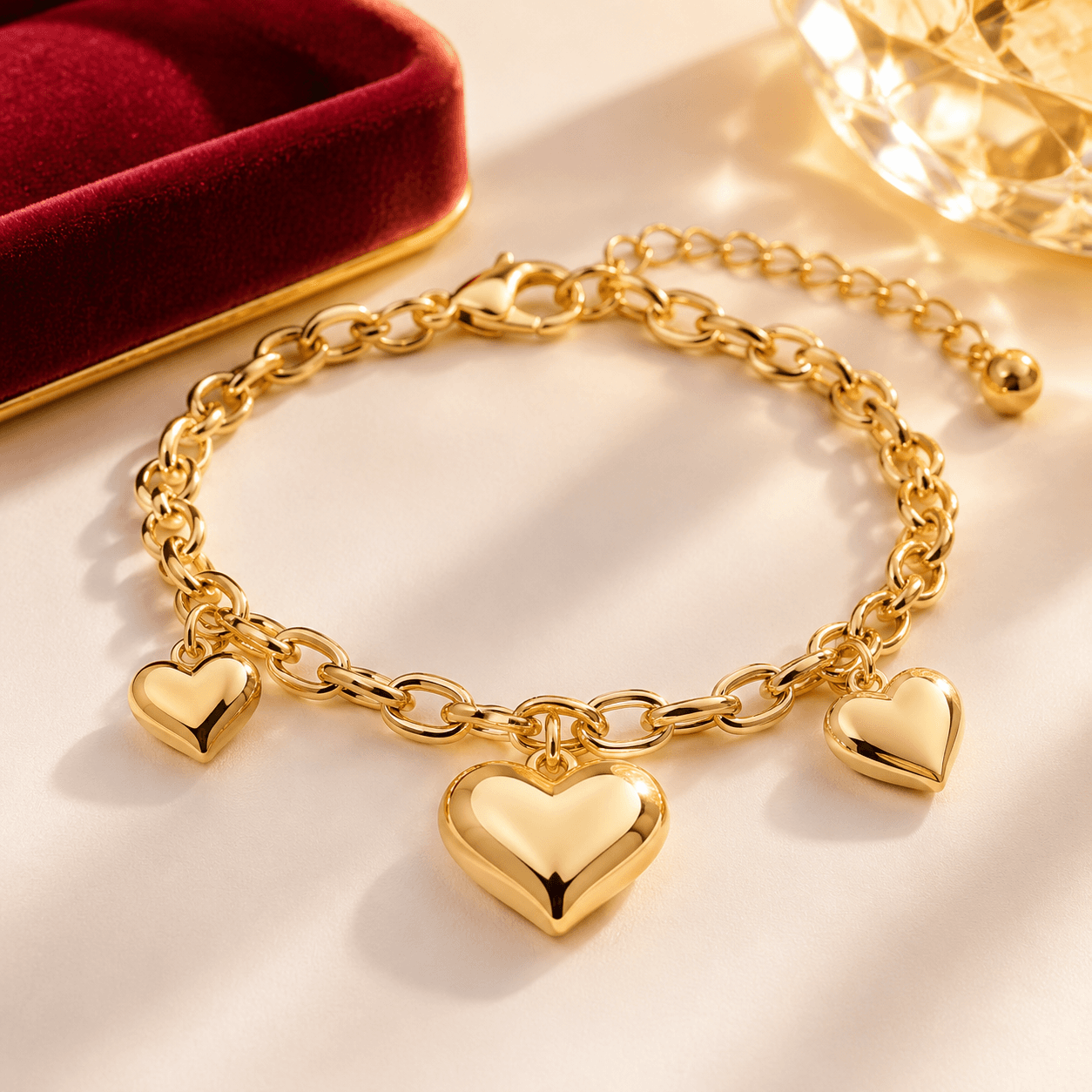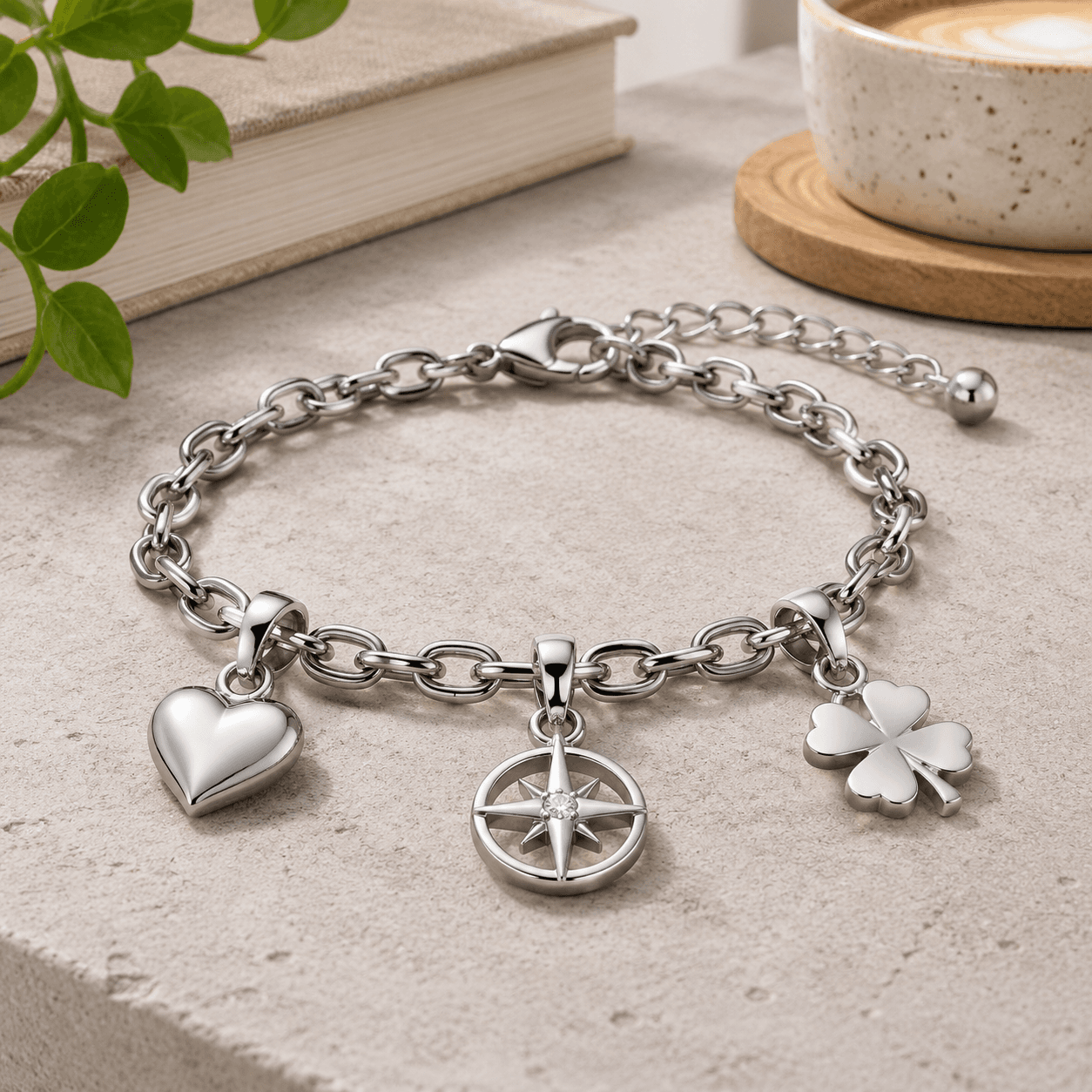
A stainless steel heart charm may look polished in a product photo, but buyers need more than appearance to assess a production sample. Surface finish, dimensions, attachment construction, and protective packaging all affect whether the finished item matches the approved specification.
This guide gives e-commerce sellers, wholesalers, and private-label buyers a practical framework for reviewing a heart charm before placing or approving a bulk order. It focuses on checks that can be observed or documented, and on agreeing project-specific test methods rather than relying on broad durability claims.
Start with a written specification
Use a written product specification as the reference for sampling and production. A reference image alone may leave important details open to interpretation. Define the product’s material, dimensions, finish, decorative elements, attachment, and packaging before approving a sample.
- Material grade for each relevant component, such as 304 or 316L stainless steel.
- Charm height, width, thickness, and target weight, with agreed tolerances where needed.
- Surface finish and, if applicable, the requested PVD color or other finish.
- Attachment type, such as a bail, jump ring, or drilled hole, and its intended use.
- Decorative details, logo placement, and packaging requirements.
Ask the supplier to confirm the specification in writing. If material documentation or other supporting records are required for your purchasing or compliance process, identify the specific documents before ordering. A material designation by itself does not establish the performance of the complete finished item.
Review the sample from every angle
Inspect the front, back, edges, and connection points under consistent lighting. Compare the sample with the approved drawing or reference, checking the heart outline, proportions, color, and gloss. Look for visible scratches, dents, pits, rough edges, uneven polishing, or other differences from the agreed appearance.
For a plated or colored finish, compare the sample with an agreed color reference. Pay particular attention to edges and areas around holes or connections. Photographs can help document a review, but a physical sample is more useful when you need to assess details that images may not show clearly.
Check dimensions and construction
Measure the charm against the approved specification and record the results. Compare more than one sample when available to check for variation in dimensions, shape, finish, and decorative placement. Keep an approved reference sample for production comparisons.
Inspect the bail, jump ring, or other attachment for alignment, gaps, deformation, and sharp edges. Connect the charm to its intended chain or component and check that it hangs as designed. If attachment strength is a project requirement, agree on a suitable evaluation method and acceptance criteria with the manufacturer before testing. Do not treat an informal handling check as a defined load test.
Agree on appropriate durability checks
Tests should reflect the actual construction, finish, intended use, and requirements of the project. Before production, discuss what will be checked, how it will be checked, and what result will count as acceptable.
- Finish appearance: Define the areas to inspect and the visible defects that are unacceptable.
- Wear evaluation: If abrasion or wear resistance matters, specify the method, sample condition, evaluation area, and acceptance criteria. Request relevant documentation if required.
- Material or corrosion evaluation: If your market or product requirements call for this, specify the applicable method and request documentation tied to the confirmed product specification.
- Assembly: Confirm that the attachment and assembled charm match the drawing and function as intended.
A test description without a method and defined result does not establish performance. Likewise, a material grade or finish name should not be presented as proof of a particular lifespan or resistance to wear.
Set production inspection checkpoints
Agree on inspection stages with your OEM/ODM supplier. Depending on the product and order, these may include incoming material review, in-process checks, finishing and assembly review, final inspection against the approved sample, and packaging review. Define the sampling approach, defect categories, and acceptance criteria for the project rather than assuming the same plan fits every item.
Record revisions to the sample or specification in writing. Changes to thickness, finish, dimensions, decorative components, or attachment can affect the finished product. Determine whether a revised sample needs approval before production proceeds.
Review packaging and listing details
Inspect the charm in its intended packaging as well as unpacked. Individual protection and separation between metal components can help reduce contact damage during handling and transport. For private-label orders, confirm artwork, logo placement, labeling, and the packed presentation before approving the arrangement.
For an online listing, use verified product details: material specification, dimensions, finish options, attachment type, and care instructions supported by the product information. Use photographs that show the actual item from useful angles, including the attachment and back where relevant. Represent the color accurately and avoid editing images to conceal defects or materially change the finish’s appearance.
Do not make claims such as “scratch-proof,” “waterproof,” “hypoallergenic,” or “lifetime durability” unless appropriate evidence supports the exact claim for the product and the intended market. Requirements for product descriptions and materials can vary by jurisdiction and customer group. Buyers should identify applicable requirements for their market and seek qualified advice where needed. A supplier’s manufacturing process or inspection plan is not, by itself, proof of regulatory compliance.
Common sourcing mistakes
- Approving from one photograph: Images may not reveal every edge, connection, or dimensional issue. Request a physical sample when the project calls for closer review.
- Leaving requirements implicit: Record material, finish, dimensions, attachment, and packaging in the product specification.
- Changing details after approval: Document changes and decide whether another sample review is needed.
- Using undefined test language: Agree on a method and acceptance criteria before treating a test as evidence.
- Checking only the unpacked item: Review the packed product to assess protection and presentation.
Frequently asked questions
Is 316L stainless steel suitable for a heart charm?
316L is one material option used in jewelry manufacturing. Confirm the specified grade for the relevant components and assess the complete finished sample against your product requirements. The grade alone does not substantiate every performance or marketing claim.
How should buyers assess a PVD gold finish?
Review the approved sample for color consistency and visible finishing defects under consistent lighting. If additional evidence of wear resistance is required, agree on a suitable evaluation method and acceptance criteria, then request documentation for that evaluation.
What should a buyer approve before bulk production?
Approve a written specification and a sample that represents it. Confirm dimensions, finish, attachment, decorative details, and packaging, and agree on inspection criteria and any required documentation before production.
Plan the review with your manufacturer
A clear specification, documented sample approval, project-appropriate inspection criteria, and a packaging review give both buyer and manufacturer a shared basis for evaluating a stainless steel heart charm. Confirm requirements early, keep records of approved revisions, and use only product claims supported by evidence for the finished item.