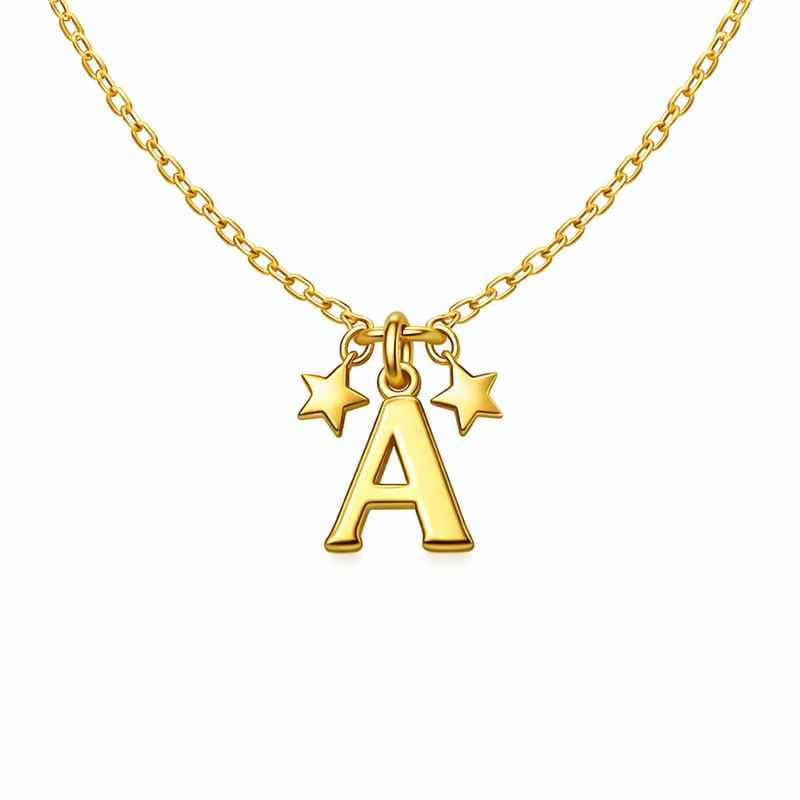
Developing a custom initial necklace charm requires more than choosing a letter and metal color. For jewelry brands, wholesalers, and B2B sourcing teams, material specification, charm thickness, letter geometry, attachment design, surface preparation, and finishing requirements all influence the finished component and its production feasibility.
316L stainless steel is a low-carbon austenitic stainless steel containing molybdenum and is commonly considered for jewelry applications. Its corrosion resistance and suitability for a finished charm depend on the actual material, processing, surface condition, and wearing environment. Material grade alone does not establish nickel-release performance, hypoallergenic suitability, or compliance with a destination market's requirements.
This guide explains how to turn initial artwork into a manufacturing specification, compare polishing and decorative finish options, assess a physical sample, and prepare a practical request for quotation (RFQ). Lefeng Jewelry describes OEM/ODM development and sampling, CNC and laser processing, polishing, finishing, inspection, custom logo work, packaging, and export coordination among its project services. Confirm the availability and suitability of individual processes for the proposed design before production approval.
Understanding 316L Stainless Steel for Initial Charms
316L stainless steel is a low-carbon austenitic stainless steel containing molybdenum. It is commonly considered for jewelry components where corrosion resistance, a defined material specification, and compatibility with the intended manufacturing and finishing processes are important. The designation does not establish a charm's dimensions, finish quality, attachment strength, or finished-product compliance.
For initial pendants, assess the material alongside the intended design. Record the letterform, overall width and height, thickness, edge profile, attachment configuration, and target surface finish. These details help the supplier assess manufacturing feasibility and identify whether engraving, colored coatings, enamel, or stone accents can be accommodated within the design.
Stainless steel corrosion resistance is associated with its chromium-rich passive surface film. Surface contamination, processing residues, finishing condition, and exposure to moisture, salts, cosmetics, or other substances can affect finished-product behavior. A 316L designation should not be interpreted as proof that a charm is corrosion-proof, hypoallergenic, nickel-free, or compliant with every destination market's regulations.
For B2B sourcing, identify the material documentation and any composition, restricted-substance, or market-specific testing requirements in the RFQ. Ask the supplier to clarify the proposed material specification and the documents applicable to the actual product configuration. Review certificates and laboratory reports against the specified material, finish, and intended market rather than relying on a grade name alone.
Letter Geometry, Thickness, and Attachment Design
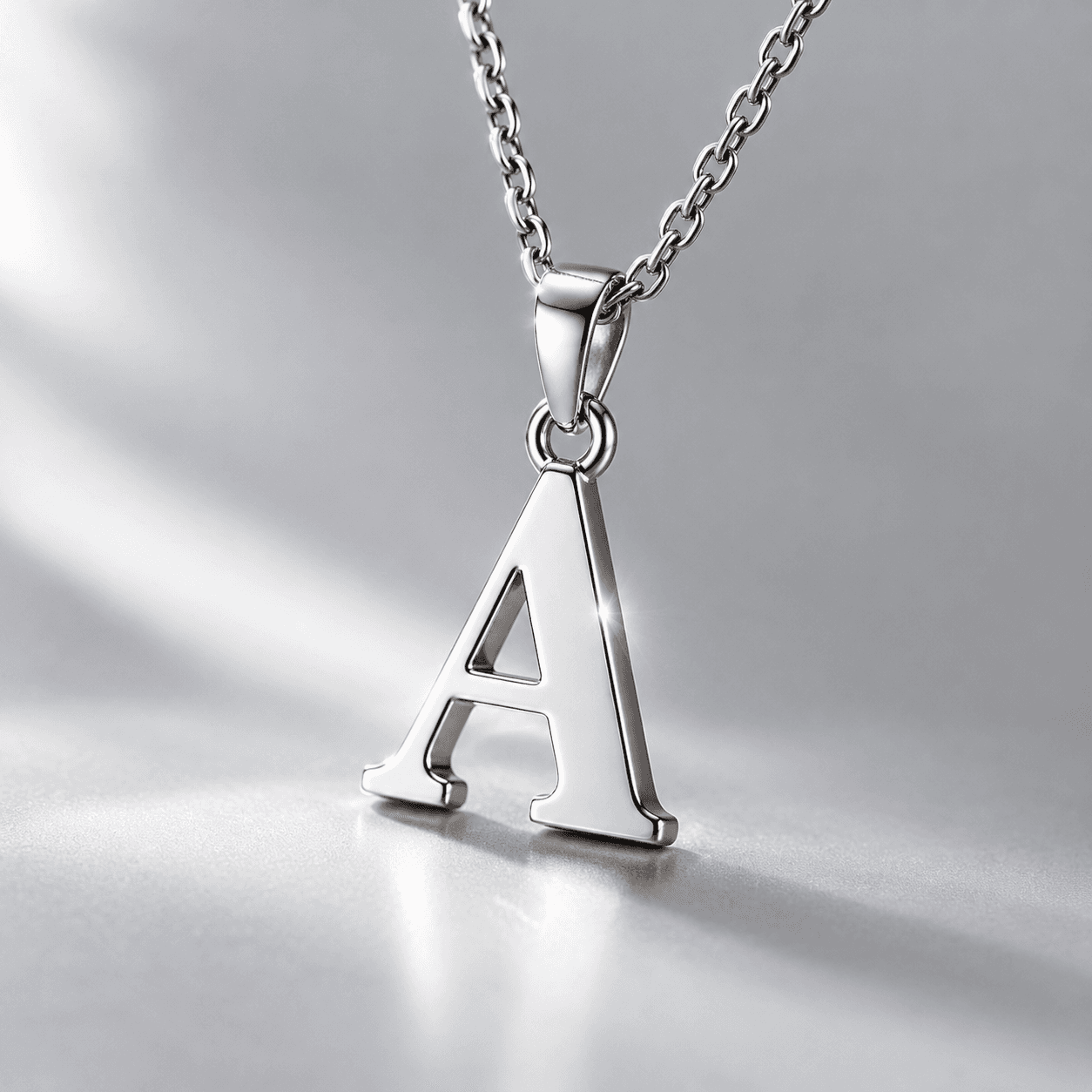
Initial charms must balance letter legibility, visual proportions, manufacturability, and attachment strength. Thin strokes, narrow internal openings, sharp corners, and delicate terminals can affect processing and finishing requirements. Supply vector artwork or a dimensioned drawing wherever possible, and specify the intended width, height, thickness, edge profile, and critical visual details.
Design the attachment as part of the charm geometry. An integral bail, separate jump ring, side loop, or drilled hole creates different requirements for spacing, alignment, movement, and hanging orientation. Identify the preferred configuration and show its position on the drawing so the supplier can assess the complete assembly.
Distinguish the pendant connection from the necklace closure. The bail or jump ring connects the charm to the chain; a lobster clasp or another selected closure secures the chain at its ends. During sample review, inspect the connection opening, alignment, movement, visible gaps, and the way the charm hangs when worn.
Use millimeters as the primary production units and state tolerances for dimensions that affect fit, appearance, or function. If dimensions remain provisional, identify the preferred proportions and request a feasibility review. Approve the silhouette, thickness, edge condition, attachment geometry, and compatibility with the selected chain before treating the drawing as the production reference.
Surface Preparation, PVD Finishing, and Decorative Details
Surface preparation and finishing determine much of an initial charm's final appearance. Polishing can create a reflective surface, while an agreed brushed or textured preparation can produce a more subdued look. Gold-colored and rose-gold-colored finishes may be considered through a proposed PVD or other suitable coating process, subject to design feasibility and sample approval.
Physical vapor deposition (PVD) is a coating process, not a standalone durability specification. The process name alone does not define the finished color, coating composition, thickness, adhesion, wear resistance, or service life. Where finish durability is commercially important, agree on the relevant evaluation method and acceptance criteria before production, and request supporting evidence when required.
Inspect the front face, sidewalls, edges, recessed areas, internal letter openings, and attachment points. Small details can make inconsistent polishing, uneven coverage, or visible transitions especially noticeable. For enamel, zircon, crystal, or pearl accents, compare placement, alignment, and finish transitions with the approved artwork and reference sample.
Keep the base material, surface preparation, coating, and decorative components separate in the specification. State the requested steel grade, target color, surface texture, proposed coating process if known, and any agreed appearance or durability checks. Approve a physical sample as the visual reference, while recognizing that additional testing may be needed to establish performance characteristics.
From Initial Artwork to an Approved Production Sample
Sample development translates a design concept into a component that can be evaluated for appearance, manufacturability, and conformity. Provide the approved letter artwork, target dimensions, thickness preference, attachment location, finish, decorative details, engraving instructions, and intended necklace configuration. Vector files and dimensioned drawings are particularly useful when the design includes narrow strokes, small openings, or precise logo placement.
For branded collections, provide the approved logo file and identify its location, orientation, and approximate size. Specify any required relationship between the logo, letterform, and charm edges. The supplier can then review feasibility and propose adjustments for discussion before the sample is finalized.
Lefeng Jewelry describes OEM/ODM design development and sampling, CNC and laser processing, polishing, PVD or other plating processes, enamel and stone setting, inspection, custom logo work, packaging, and export coordination among its project services. Confirm which operations are suitable and available for the particular design, material, and order before committing to the proposed process.
Evaluate the sample against two separate references: design preference and measurable acceptance criteria. Design revisions may concern letter proportions, color, or visual balance; quality checks should address dimensional conformity, edge condition, finish coverage, attachment alignment, and specified decorative details. Record revisions by drawing version or artwork file, then approve the final reference sample and specification before authorizing bulk production.
Quality Control for Initial Charms and Necklace Assemblies
Quality control should connect the approved drawing and material specification to identifiable inspection points throughout production. For an initial charm, define the checks that apply to the design and distinguish visual inspection from dimensional, chemical, and functional testing. The appropriate controls depend on the product configuration and the buyer's stated requirements.
For the charm itself, consider letter shape, overall dimensions, critical thickness, edge condition, surface defects, finish consistency, attachment-hole or loop position, and decorative setting. Where engraving or a custom logo is specified, include placement, legibility, and conformity to the approved artwork.
For an assembled necklace, inspect the charm-to-chain connection, jump rings or bail, chain links, extension chain if included, clasp operation, and hanging orientation. If attachment strength, coating adhesion, wear resistance, or another performance characteristic is important, define a suitable test method and acceptance criteria before production. Appearance alone does not establish performance.
Identify any required material certificates, chemical-composition reports, restricted-substance assessments, or destination-market compliance documents in the RFQ. Applicability depends on the material, finish, assembled product, intended market, and relevant requirements. Verify that each document or report covers the actual product specification and requested evaluation.
Planning Private-Label and Wholesale Initial Collections
Initial charms can support a coordinated private-label collection when shared specifications are separated from letter-specific design details. Establish common rules for material grade, dimensional ranges, thickness, attachment geometry, finish family, chain configuration, and packaging. Individual letters can then be documented within the same design framework.
For wholesale programs, distinguish fixed requirements from selectable options. Fixed elements may include the specified steel grade, chain type, attachment method, and packaging format. Variable elements may include the letterform, engraving, logo placement, enamel color, decorative setting, and finish. Mark each option as confirmed or subject to feasibility review so the supplier can identify which versions require separate samples or drawings.
A master specification can document shared requirements, while individual artwork files or drawings capture letter-specific dimensions and details. Before placing an order, confirm the applicable sampling plan, minimum order quantity (MOQ), pricing, and production arrangements for the proposed range. Commercial terms may differ between standard configurations and more customized variants.
For related sourcing information, explore OEM/ODM manufacturing services, stainless steel necklaces, stainless steel charms, and new stainless steel jewelry designs. The buyer insights section and blog offer additional context for product development and sourcing decisions.
Preparing an RFQ for Custom Initial Necklace Charms
A useful request for quotation (RFQ) enables the supplier to assess design feasibility, identify unresolved specifications, and prepare a sample-development proposal. For custom initial necklace charms, provide the following information wherever available:
- Initial artwork, reference images, or dimensioned drawings
- Requested stainless steel grade and material-documentation requirements
- Charm width, height, thickness, edge profile, and critical tolerances
- Attachment method, chain type, chain length, and closure requirements
- Surface preparation, target color, proposed coating process, and decorative details
- Logo or engraving artwork, position, orientation, and size
- Packaging, labeling, and private-label requirements
- Destination sales market and applicable compliance or testing requirements
- Sample quantity, estimated order range, and target price if available
If dimensions or processes are undecided, describe the preferred appearance and ask the supplier to review feasible options. Clearly distinguish confirmed requirements from proposals that remain subject to technical review or sample approval.
Before approving a sample, define the acceptance criteria that matter most: critical dimensions, letter proportions, edge condition, finish consistency, attachment alignment, hanging orientation, and any required functional or performance checks. State whether material documents, laboratory reports, or compliance assessments are required and confirm their applicability before production.
Sample approval and bulk-production authorization should be separate decisions. After reviewing the physical sample and commercial proposal, confirm the final drawing, material and finish specifications, assembly, packaging, order quantity, and agreed inspection criteria in writing. This creates a common reference for subsequent production without treating an unapproved proposal as a final manufacturing specification.
FAQs About 316L Stainless Steel Initial Necklace Charms
Request an RFQ for Your Custom Initial Charm
To request an RFQ or begin sample development, send your initial artwork, requested material grade, dimensions and thickness, attachment design, chain requirements, finish, decorative details, logo or engraving instructions, packaging requirements, destination market, and estimated order range. Include any required material documents, laboratory tests, or compliance reports so their applicability can be reviewed before production planning.
Lefeng Jewelry describes OEM/ODM design development and sampling, CNC and laser processing, polishing, finishing, inspection, custom logo work, packaging, and export coordination among its project services. Confirm the availability and suitability of individual processes for your design before finalizing the manufacturing specification. For additional sourcing information, visit Lefeng Jewelry's factory information or contact the team for an RFQ.
A clearly documented specification and approved sample provide a practical basis for confirming the final design, inspection criteria, and commercial terms before bulk production is authorized.
Related resources
Related resources
- 316L Stainless Steel Earrings for Sensitive Ears: A B2B Buyer’s Quality Checklist
- Stainless Steel Heart Charms: A B2B Buyer’s Guide to Premium Finishes
- Lefeng Jewelry - OEM/ODM Stainless Steel Jewelry Manufacturer
- Gold Plated Stainless Steel Jewelry: Durability and Sourcing Guide
- Why Is Stainless Steel Heart Charm Waterproof? 316L Guide
- Wholesale Stainless Steel Jewelry: Quality, Sourcing, and Private-Label Guide for OEM/ODM
- Stainless Steel Necklace
- How to Choose Hypoallergenic-Positioned Stainless Steel Jewelry for E-commerce
- Why Choose Stainless Steel Jewelry: A Retail Buyer Guide
- What Buyers Should Know: Does Stainless Steel Heart Charm Tarnish