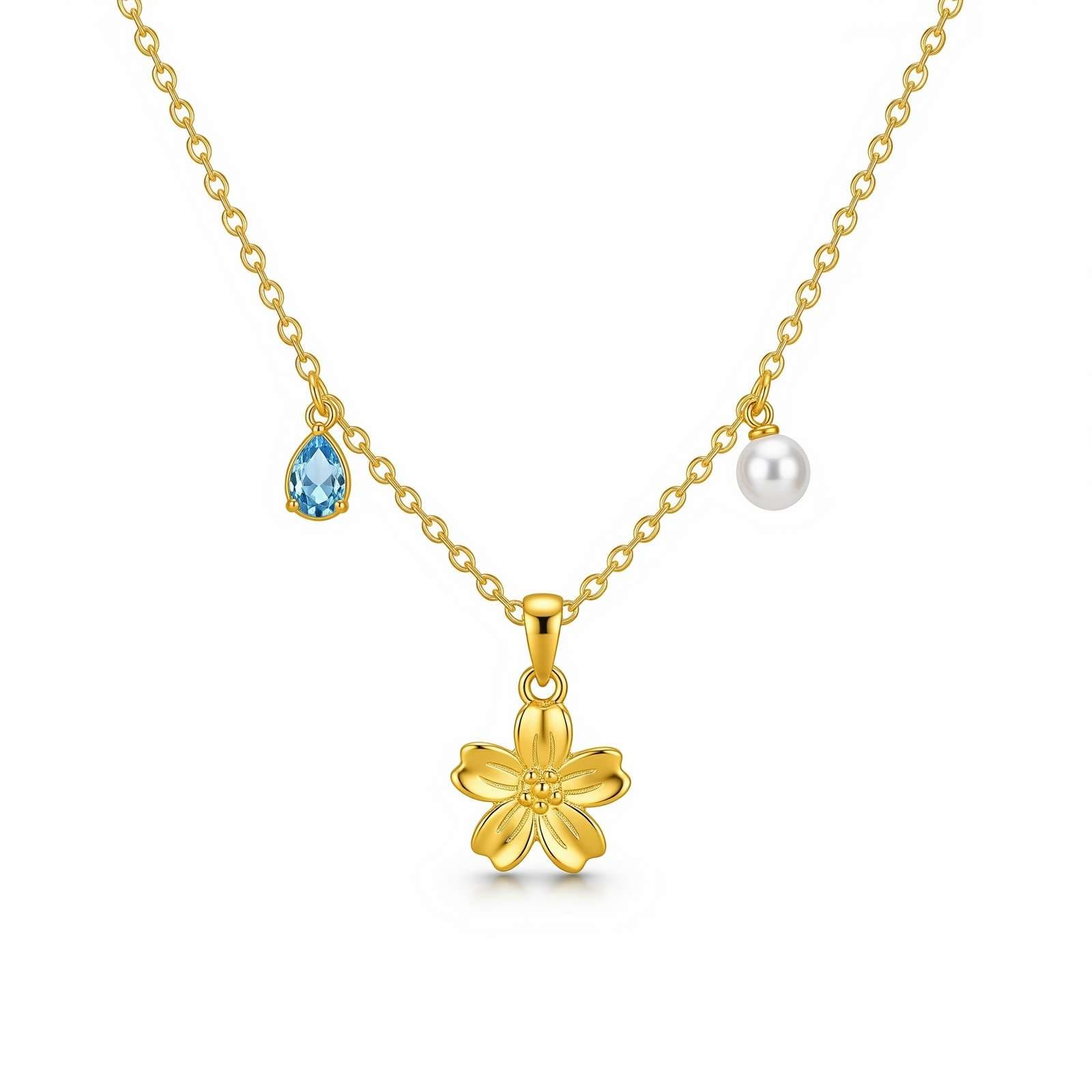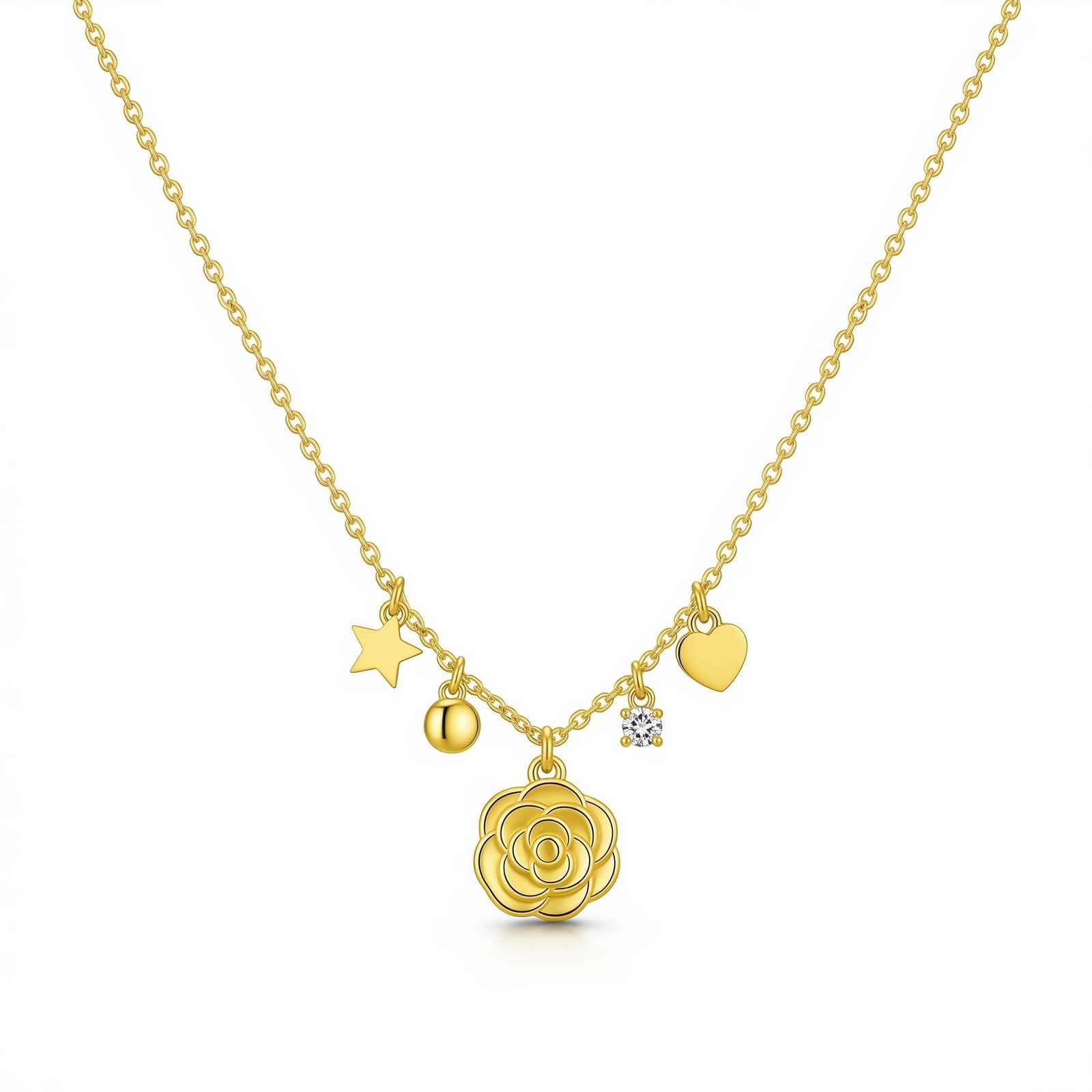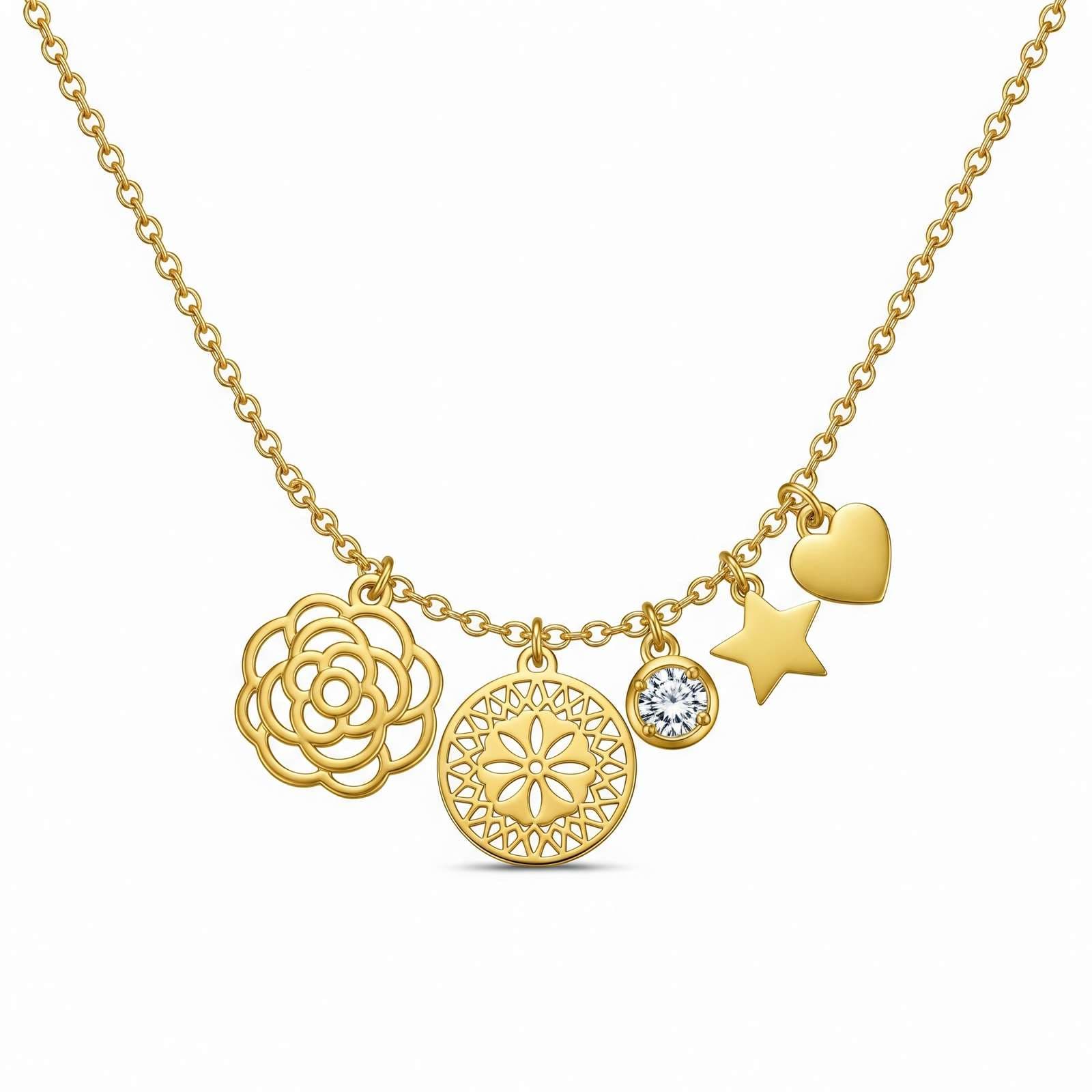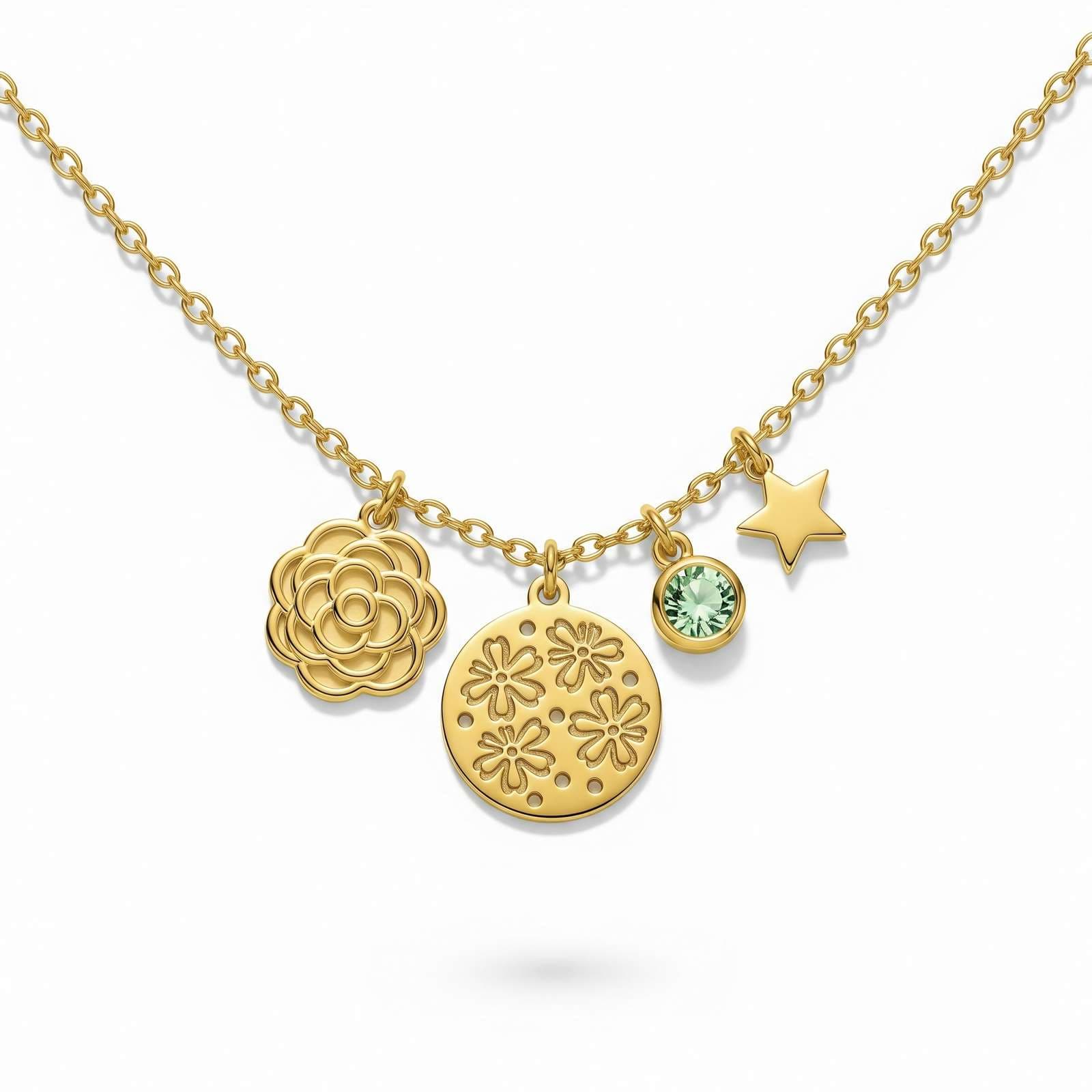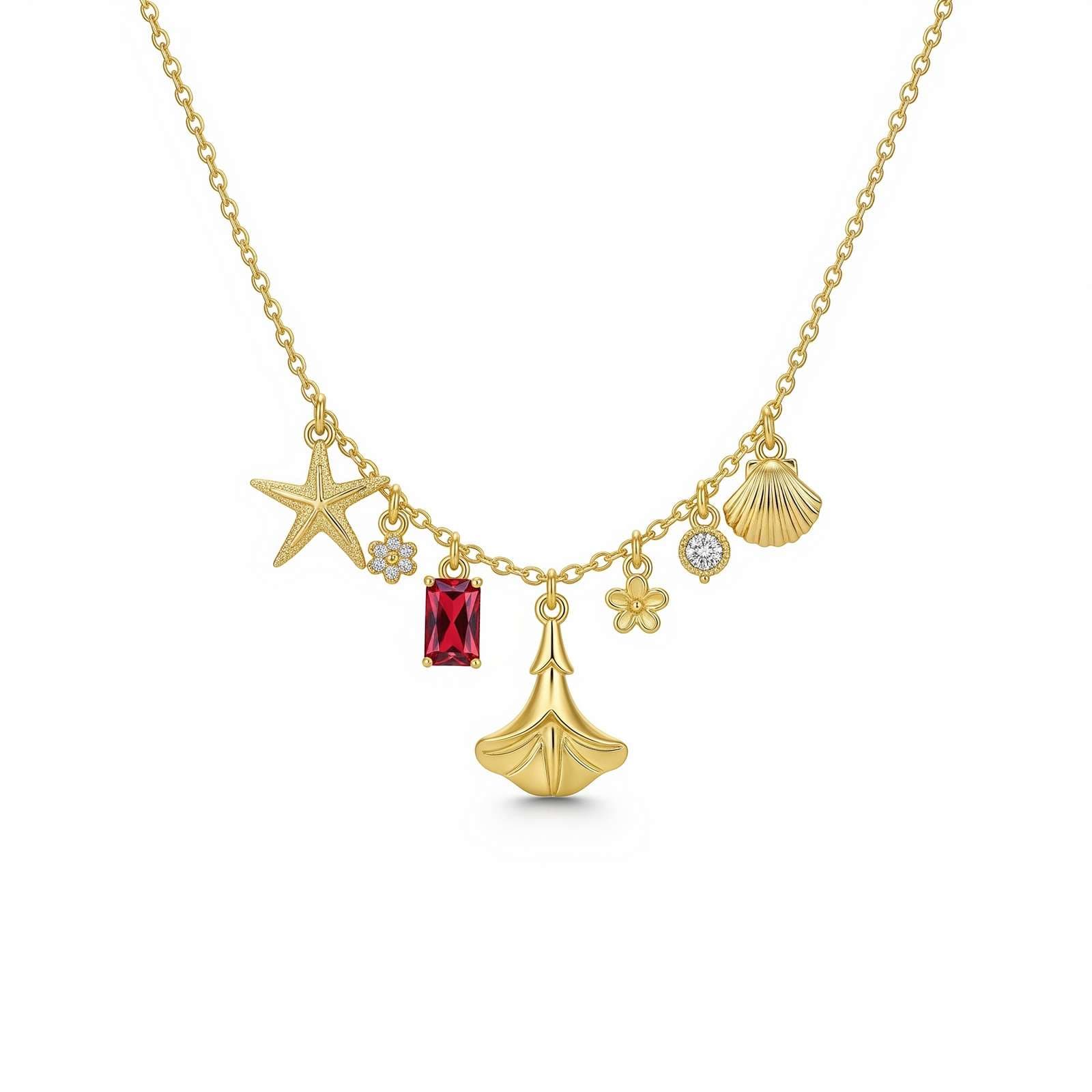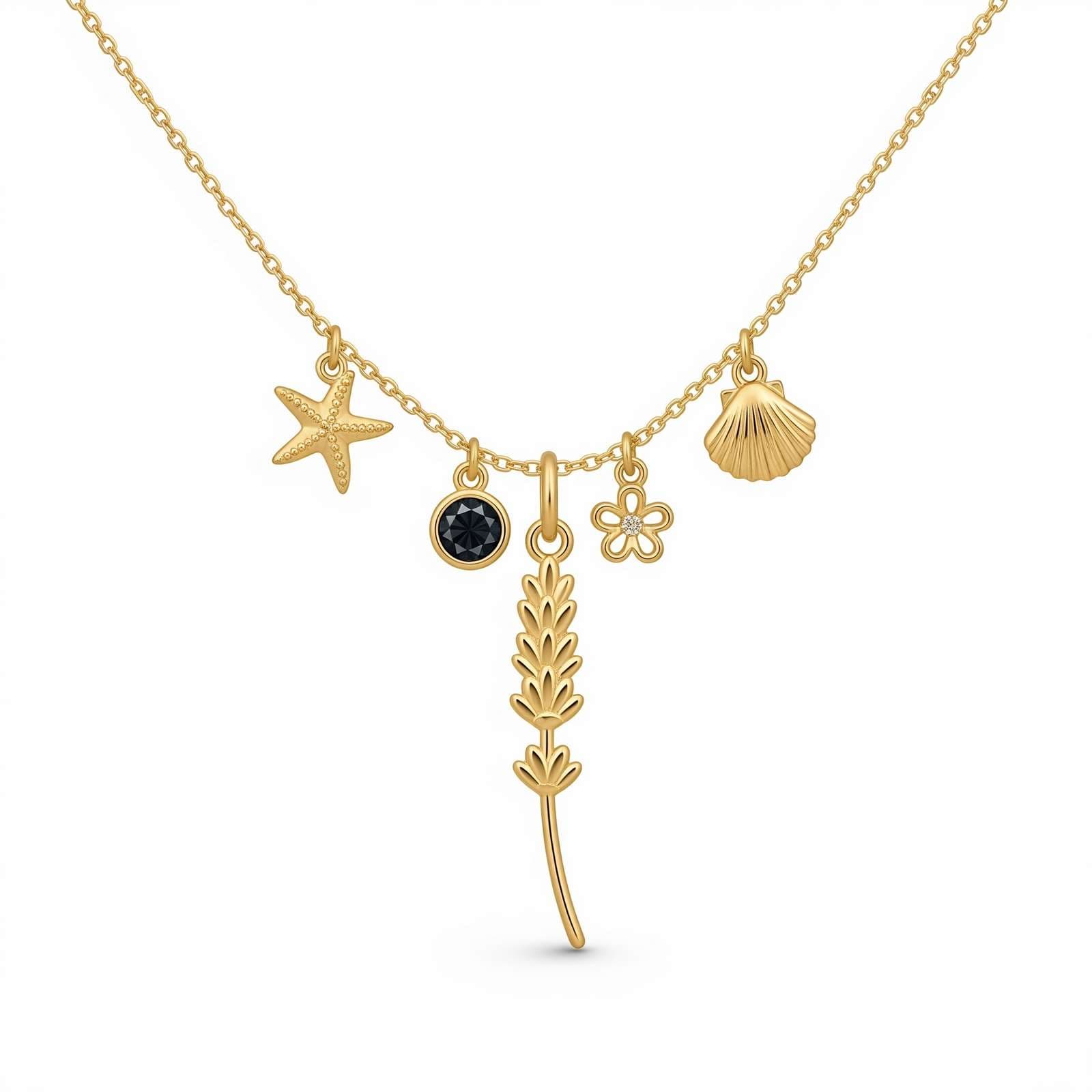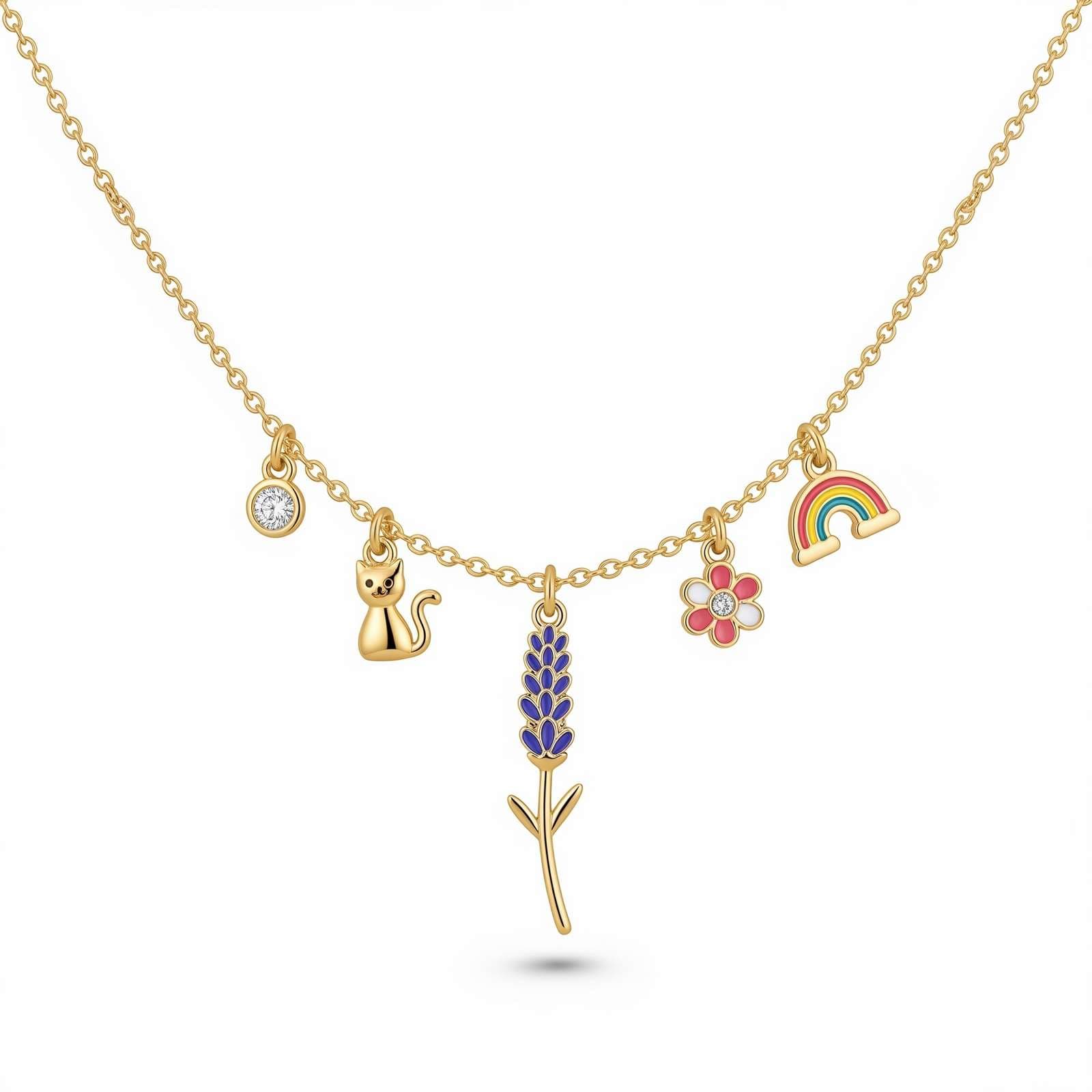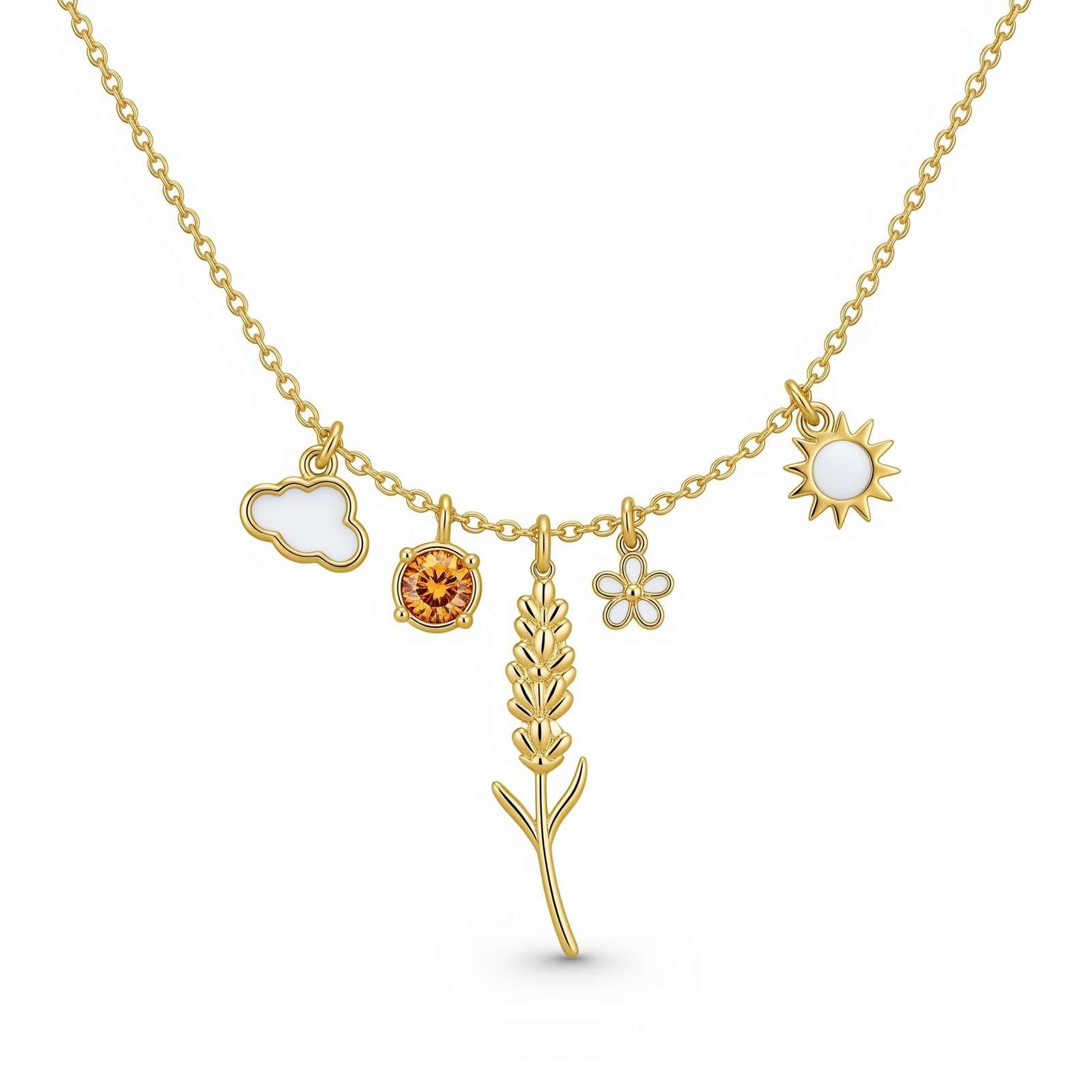
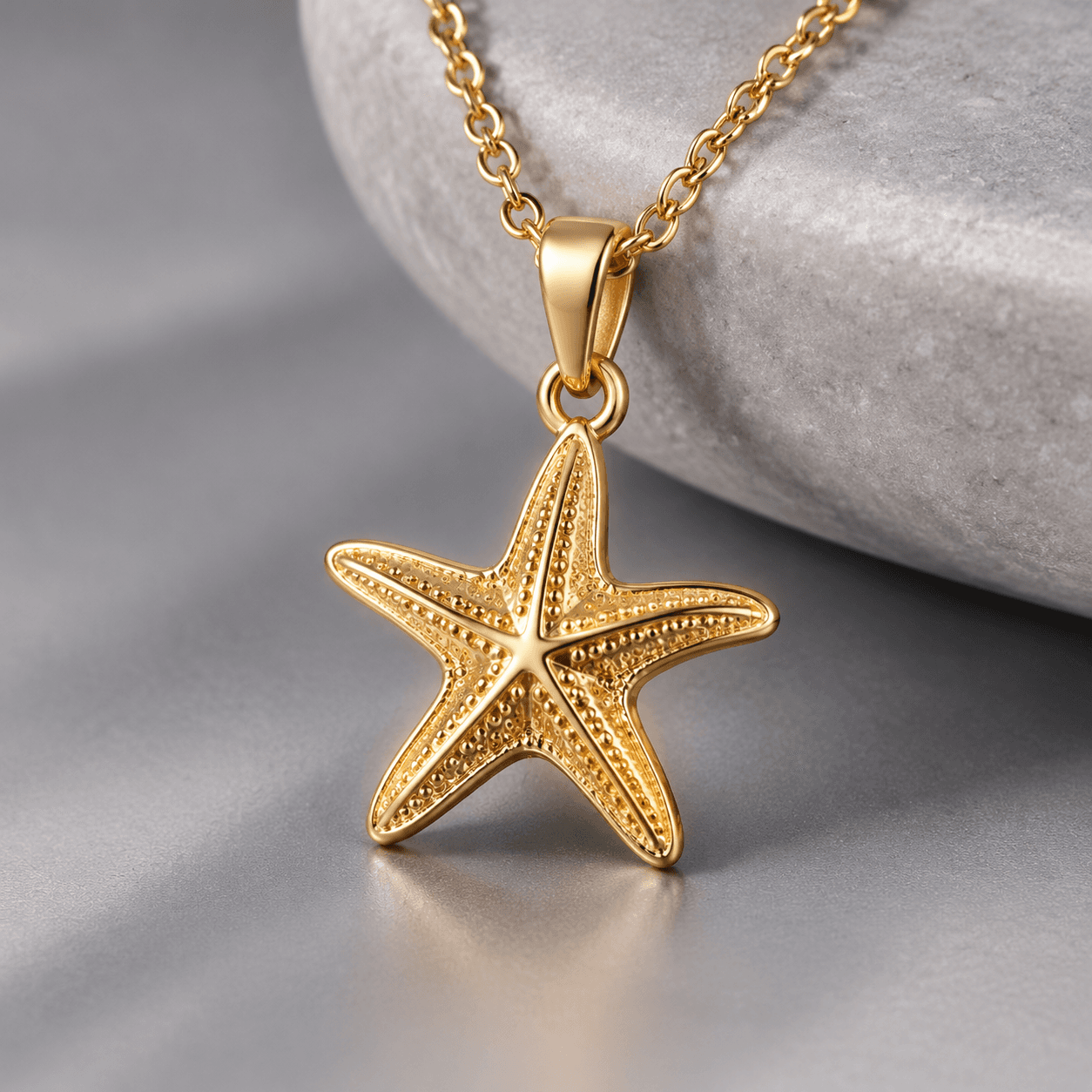
Starfish charms for jewelry making offer jewelry designers an opportunity to develop distinctive ocean-inspired collections through recognizable silhouettes, dimensional details, and carefully selected metal finishes. From minimalist starfish outlines to sculpted five-arm forms with textured surfaces, the design possibilities depend on more than appearance. Material selection, component thickness, edge finishing, attachment geometry, and surface treatment all influence the final result.
This technical guide explores how to evaluate starfish charms for jewelry making from a material and manufacturing perspective. It explains practical considerations for 316L stainless steel, 304 stainless steel, alternative metals, PVD gold plating, rose gold plating, enamel, and decorative stone options. It also examines prototyping, sampling, finishing, and quality control considerations for jewelry designers developing a private label collection. For OEM/ODM projects, buyers can use these considerations to prepare a design brief and discuss project requirements with a manufacturer, including sampling, inspection, packaging, and export coordination.
Verständnis von Seestern-Anhängern für die Schmuckherstellung
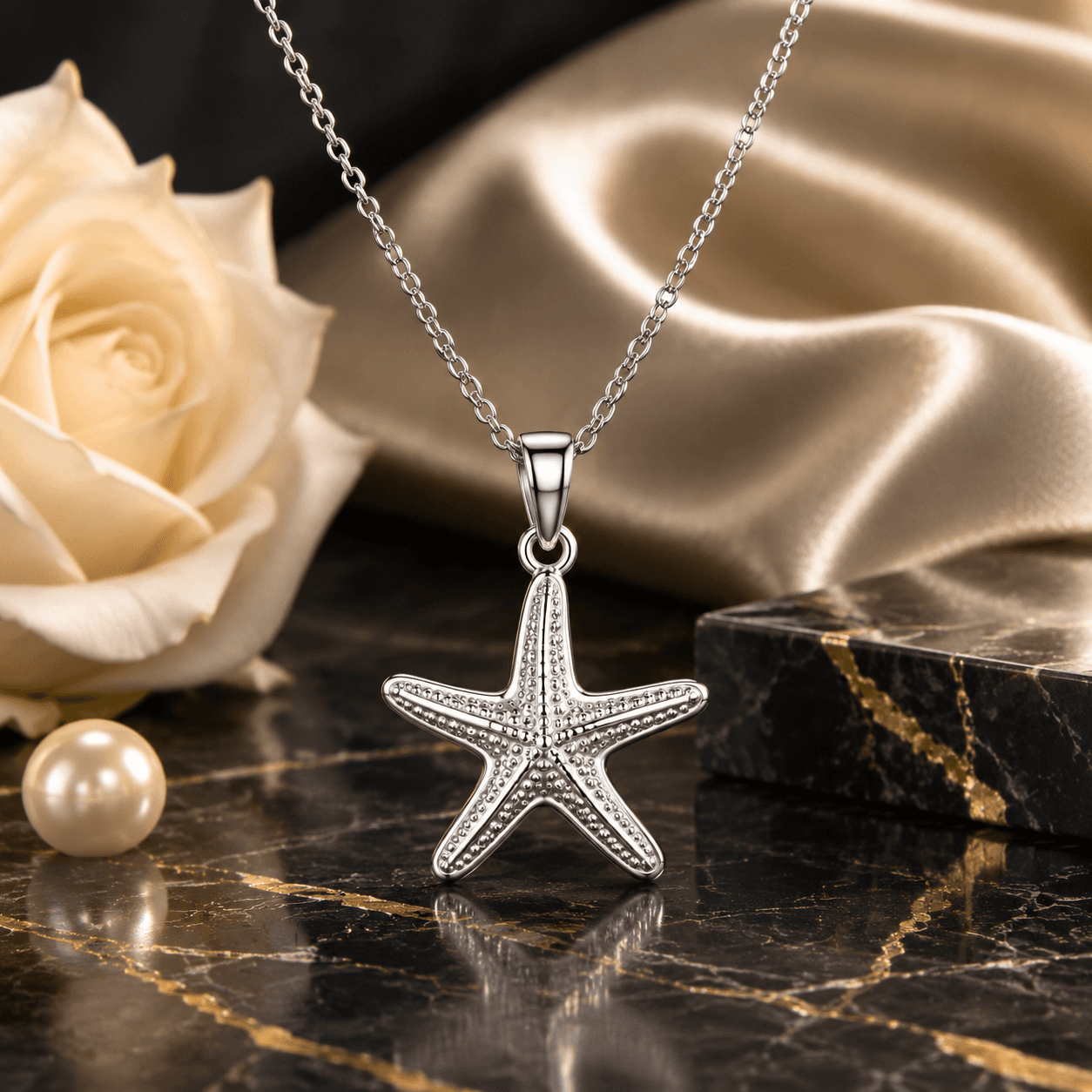
Starfish charms for jewelry making are decorative metal components designed around the recognizable radial structure of a starfish. Their defining features include a central body, projecting arms, surface contours, and an attachment point. Although the silhouette may appear simple, small differences in proportion and geometry can significantly influence the finished jewelry design. A broad central body creates a different visual balance from a slender outline, while raised surface details introduce additional dimensional character.
For professional jewelry designers, the first step is to translate the visual concept into measurable design requirements. Consider the overall charm dimensions, arm length, central thickness, edge profile, surface texture, and intended orientation. A charm intended for a pendant necklace may require a different attachment arrangement from one intended for a bracelet or anklet. Designers should also establish whether the component will remain a standalone decorative element or accommodate enamel, zircon, crystal, or pearl details where the selected construction permits.
When evaluating starfish charms for jewelry making, distinguish the decorative form from its functional hardware. The charm, bail, jump ring, chain, extension chain, and lobster clasp are separate components with individual manufacturing requirements. The charm should connect through a properly designed hole, bail, or side loop. Establishing these details early helps prevent structural conflicts during sampling and supports more predictable assembly. For broader design references, explore the stainless steel charms collection and new jewelry designs.
Materialwissenschaft: Das richtige Metall für Seestern-Charms auswählen
Material selection influences the mechanical behavior, surface appearance, finishing possibilities, and maintenance characteristics of starfish jewelry components. 316L stainless steel is a useful starting point for designers seeking a corrosion-resistant stainless steel base with a practical balance of strength, durability, and finishing flexibility. Its composition includes chromium, nickel, and molybdenum, which contribute to the formation and stability of its protective passive surface layer. This layer helps the material resist many everyday corrosive conditions, although actual performance depends on the environment, component design, and surface condition.
304 stainless steel provides another manufacturing option. It is an austenitic stainless steel commonly selected for applications requiring a combination of formability, corrosion resistance, and workable surface finishing. The choice between 304 and 316L should consider intended use, design geometry, finish specification, and buyer requirements rather than relying on a material name alone. Other potential material options for jewelry components include 925 sterling silver, copper, and zinc alloy, subject to the manufacturer's available processes and the specific product specification.
Designers should request confirmation of the actual base material and relevant specification for each project. Material documentation, composition information, and any requested certification or test reports should be reviewed against the confirmed material grade and finished component. A general description of stainless steel does not independently establish the precise grade of an individual charm. For OEM/ODM development, buyers should document the selected material, applicable requirements, and expected supporting evidence before sample approval.
Oberflächentechnik und dekorative Veredelungen
Surface finishing is an important part of developing commercially consistent starfish charms for jewelry making. The same starfish silhouette can produce substantially different visual results depending on its surface preparation and final treatment. Polished stainless steel emphasizes reflective highlights, while a more subdued surface treatment can make sculpted contours and raised details easier to distinguish. Designers should define the intended appearance before sampling rather than treating finishing as an independent decision after the metal component has been produced.
PVD gold plating is a configured finishing option for projects requiring a gold-colored surface on suitable stainless steel components. Physical vapor deposition involves depositing a coating through a controlled vacuum-based process. The final appearance and practical performance depend on the substrate, surface preparation, coating specification, component geometry, and processing conditions. Rose gold plating is another available finish, while enamel can introduce defined areas of color. Zircon, crystal, and pearl may also be incorporated where the design and setting construction are suitable. Each additional decorative element introduces specific assembly and inspection requirements.
For accurate finish development, designers should communicate the desired color, visual reference, polished or textured appearance, and acceptable variation. Request physical samples when color consistency and surface appearance are important to a collection. Review the sample under consistent lighting and inspect recessed areas, edges, attachment holes, and raised surfaces. For PVD or other coating-related requirements, confirm the specified process and any requested documentation for the actual project. Further manufacturing details are available through Lefeng Jewelry OEM and ODM services.
Geometrie, Textur und strukturelles Design von Seestern-Anhängern
Die Geometrie bestimmt, wie ein Seestern-Charm aussieht, hängt und mit anderen Schmuckkomponenten verbunden wird. Designer sollten zunächst das Verhältnis zwischen dem zentralen Körper und den fünf Armen bewerten. Gleichmäßig geformte Arme erzeugen eine ausgewogene, gut erkennbare Silhouette, während Variationen in Krümmung, Verjüngung und Oberflächenhöhe für ein organischeres Erscheinungsbild sorgen können. Der zentrale Körper muss ausreichend visuell definiert bleiben, ohne im Vergleich zu den äußeren Spitzen unverhältnismäßig massiv zu wirken. Eine maßstabsgetreue Zeichnung hilft dabei, diese Anforderungen vor Beginn der Fertigung zu vermitteln.
Die Materialstärke ist ein weiterer wichtiger Designparameter. Ein dünner Charm kann ein filigranes Gestaltungskonzept unterstützen, doch die gewählte Stärke muss für die vorgesehenen Abmessungen, das Material und die Verbindungsmethode geeignet sein. Designer sollten berücksichtigen, ob die äußeren Armspitzen abgerundete Kanten benötigen, wie der Charm am Körper oder an der Kleidung anliegt und ob erhabene Details unerwünschte Kontaktstellen verursachen könnten. Die Oberflächenstruktur kann entsprechend dem bestätigten Fertigungsdesign durch CNC-Bearbeitung, Laserbearbeitung und anschließendes Polieren gestaltet werden. Diese Verfahren sollten anhand der Geometrie und des gewünschten Oberflächenergebnisses ausgewählt werden.
Auch die Konstruktion der Befestigung verdient besondere Aufmerksamkeit. Eine oben angebrachte Öse, eine integrierte seitliche Schlaufe oder ein gebohrtes Befestigungsloch können zu unterschiedlichen Hängeausrichtungen führen. Die Position der Befestigung sollte im Verhältnis zum Schwerpunkt des Charms bewertet werden, damit die Komponente natürlich hängt. Die Abmessungen der Biegeringe und die Drahtstärke sollten gemeinsam mit der Öffnungsgeometrie berücksichtigt werden. Die Kette und der Verschluss sollten als funktionale Montagekomponenten behandelt werden, wobei der Karabinerverschluss am Kettenende und nicht direkt am dekorativen Anhänger befestigt wird. Diese Entscheidungen sind besonders wichtig, wenn ein Seestern-Charm für eine Halskettenkollektion oder eine aufeinander abgestimmte Armbandserie vorgesehen ist.
Vom Konzept zum Muster: Individuelle Seestern-Charms entwickeln
Successful jewelry sample development begins with a clear design brief. For starfish charms for jewelry making, the brief should identify the intended product category, silhouette, overall dimensions, material grade, surface treatment, decorative details, and connection method. A hand drawing can communicate the overall idea, while a dimensioned technical drawing provides a more reliable basis for manufacturing interpretation. Where available, three-dimensional design files can further clarify the central body, arm profiles, thickness, and attachment geometry.
The next step is a manufacturing feasibility review. The design team considers whether the selected geometry can be produced through the intended CNC and laser processing methods and whether the required polishing, PVD/plating, enamel application, or stone setting can be accommodated. Small recesses, narrow edges, deep textures, and complicated attachment structures may require adjustments to achieve a practical manufacturing design. Reviewing these factors before sample production helps designers understand the relationship between creative intent and physical construction.
Sampling provides an opportunity to assess the actual component rather than relying entirely on digital representations. Review the sample's dimensions, weight, proportions, surface quality, edge smoothness, attachment alignment, and decorative details. If the charm is part of a larger product, assess the assembled necklace or bracelet as well. Record requested changes clearly and confirm which sample version represents the approved specification. Buyers can discuss design development, sampling, processing, finishing, and inspection requirements with their selected OEM/ODM manufacturer. The Lefeng Jewelry factory background may provide additional context about its manufacturing approach.
Qualitätskontrollpunkte für Starfish Charms im Großhandel
Quality control for starfish charms for jewelry making should evaluate both the decorative component and its manufacturing functionality. A visual inspection begins with the overall silhouette, arm symmetry, surface condition, and dimensional consistency. Particular attention should be given to the tips of the arms, central body, recessed details, and attachment opening. Burrs, sharp edges, uneven polishing, visible surface defects, and inconsistent decorative application should be recorded for review against the approved sample and project specification.
Dimensional inspection should cover the agreed overall length, width, thickness, attachment-hole position, and other critical drawing measurements. For charms with zircon or crystal settings, inspect the setting alignment and visible stone positioning. For enamel details, examine the color boundaries, coverage, and surface appearance. For PVD gold plating or rose gold plating, compare the finished appearance with the approved reference and review areas where coating coverage may be affected by geometry. These checkpoints should be defined according to the product construction rather than applying one generic inspection standard to every charm.
Assembly review is equally important for finished products. Confirm that jump rings close correctly, the charm hangs in the intended direction, the chain connections are secure, and the clasp operates as specified. Packaging should be reviewed for correct product identification, presentation, and protection during export handling. Any requested material, coating, or regulatory documentation should be matched to the confirmed product specification and reviewed before making compliance statements. A stainless steel jewelry factory should be able to explain the checkpoints it performs and distinguish process records from independent certification or laboratory evidence.
Designanwendungen für Eigenmarken- und Großhandelskollektionen
Starfish charms can support several commercial jewelry applications when their dimensions, finishes, and attachment structures are developed for a defined collection. In a necklace collection, a single starfish pendant can function as the main decorative element, while a smaller charm may serve as an additional detail. For bracelets, designers can evaluate integrated links, individual charm attachments, and coordinated decorative arrangements. Anklet designs require particular attention to overall proportions, connection details, and extension-chain configuration. Each application should be developed around its intended product structure rather than assuming that one charm specification will suit every category.
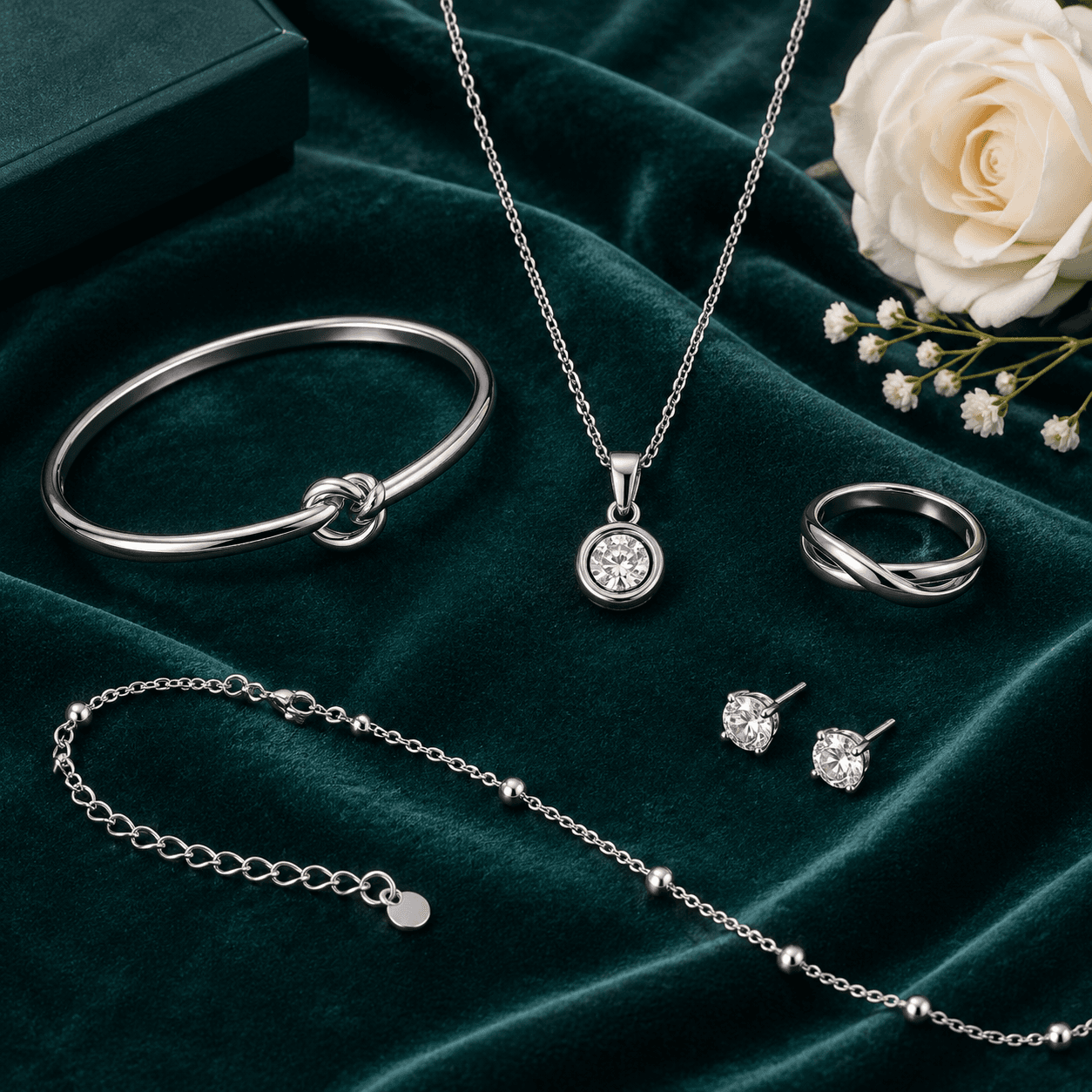
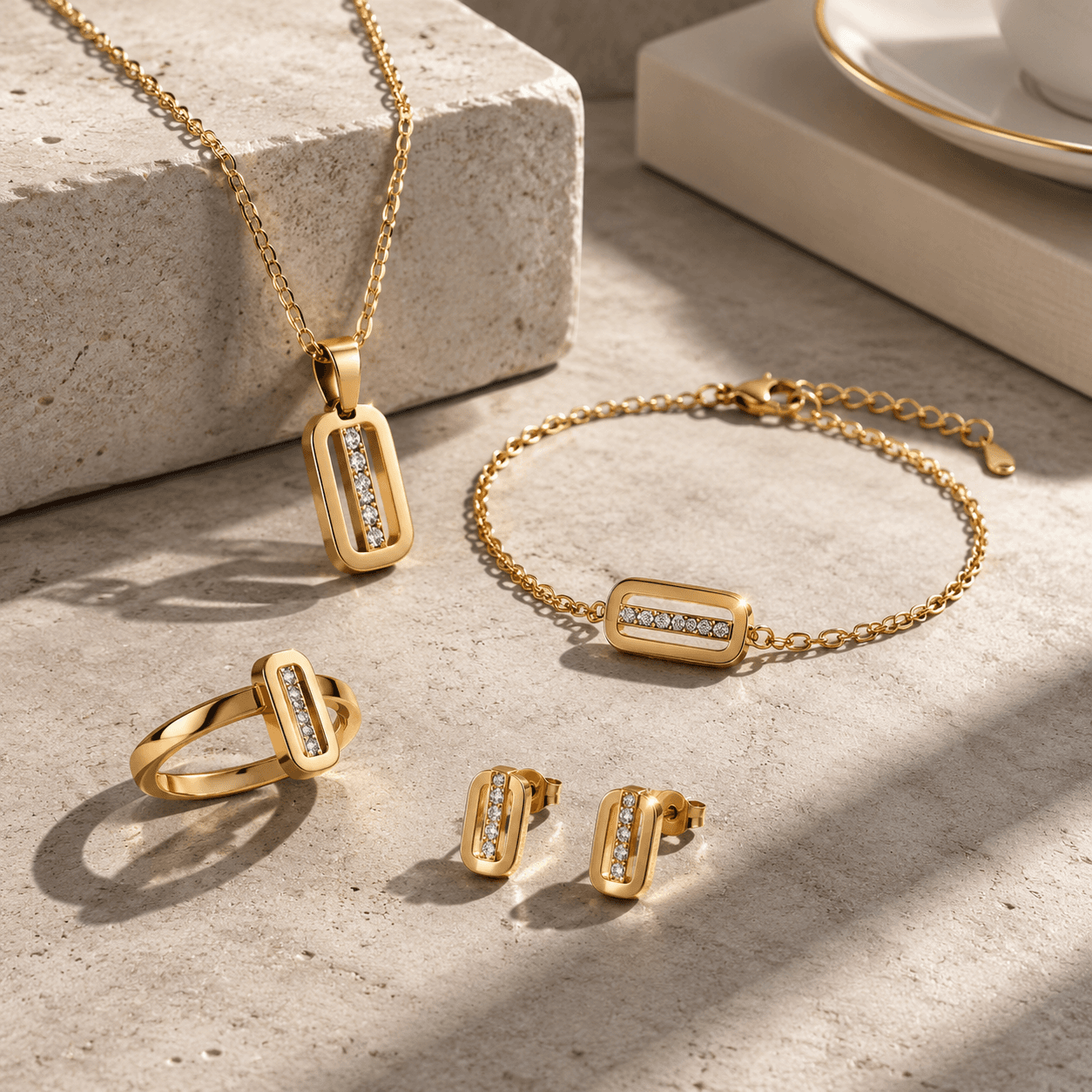
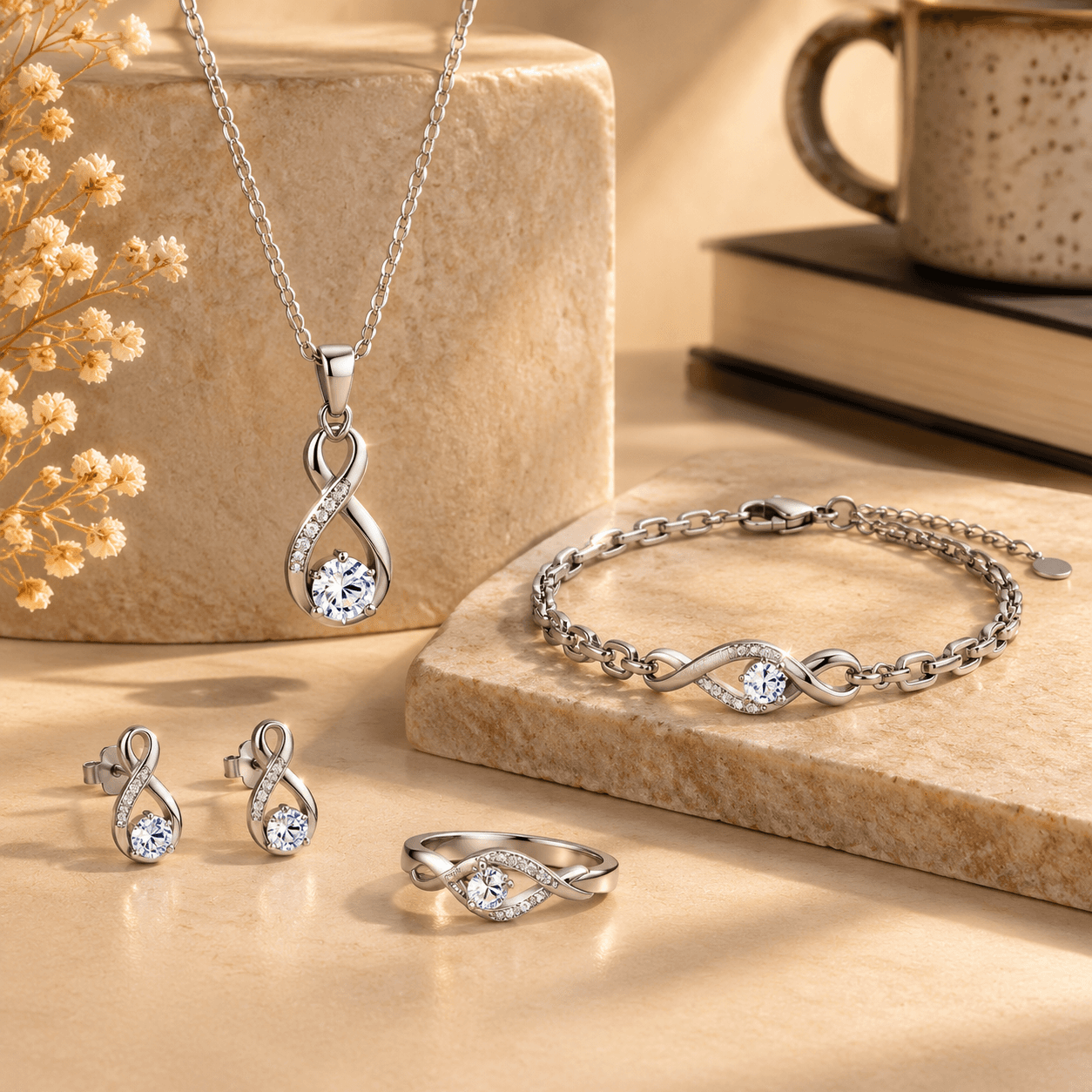
Private label jewelry programs may also benefit from a consistent design language across multiple product forms. A starfish motif can be adapted into a necklace, bracelet, earring, or jewelry set while retaining common visual features. Designers can coordinate metal finish, surface texture, central details, and packaging presentation to create a coherent product range. Where multiple components are involved, the technical brief should identify which features must remain consistent and which can vary by product category.
For wholesale stainless steel jewelry programs, commercial planning should connect the approved design with MOQ requirements, sample approval, packaging specifications, and production quantities. The final MOQ should be confirmed for the actual material, finishing process, component complexity, and order configuration rather than assumed from another product. Buyers evaluating an OEM jewelry manufacturer should also clarify logo engraving, private label packaging, quality control checkpoints, and export documentation requirements. The stainless steel charms range and stainless steel necklace collection provide useful starting points for related product development.
Materialdokumentation, Prüfungen und verantwortungsvolle Spezifikationsprüfung
Material claims should be interpreted in relation to the exact component and finished product. A statement identifying a charm as 316L stainless steel describes a material grade, but it does not independently establish every property of the finished jewelry item. Substrate composition, manufacturing operations, polishing, coatings, decorative elements, and final assembly all influence the characteristics that a buyer may need to evaluate. Designers and sourcing managers should therefore define the evidence required for their target market before finalizing the specification.
When certification or test documentation is requested, identify the relevant material, finish, product configuration, testing scope, and intended market. For example, a buyer may require documentation relating to material composition, coating performance, or restricted substances. These are different evaluation areas and should not be treated as interchangeable. A material certificate does not automatically establish finished-product performance, and a coating assessment does not independently establish the composition of the underlying substrate. OEM/ODM buyers should confirm documentation availability, testing arrangements, and evidence scope with the selected manufacturer before placing an order.
For international B2B sourcing, buyers should provide applicable market requirements and any requested testing protocol before sample approval or bulk production. Record the approved material grade, finish description, relevant tolerances, inspection expectations, and documentation requirements in the product specification. This approach gives designers and procurement teams a clear basis for evaluating samples and reviewing subsequent production. Additional guidance on material durability and care is available through Lefeng Jewelry's manufacturing insights, including articles on stainless steel tarnish, cleaning, and supplier compliance considerations.
Häufig gestellte Fragen zu Seestern-Anhängern für die Schmuckherstellung
Eine praktische Design-Checkliste vor der Serienproduktion
Before moving starfish charms for jewelry making from sampling into production, establish a controlled specification that covers every important design and manufacturing detail. Start with the approved drawing, dimensions, material grade, thickness, attachment geometry, surface treatment, and decorative elements. Include the intended jewelry application and assembled-product requirements where relevant. If the charm is being developed in several sizes or finishes, identify each configuration separately to prevent confusion during sampling, production planning, and inspection.
Next, establish approval checkpoints. Review the sample's physical proportions, finish, and attachment functionality. Confirm the logo engraving location, if applicable, and approve the packaging presentation. Define the inspection points that matter most to the design, including dimensional consistency, surface appearance, coating coverage, setting quality, and assembly. If market-specific certificates or reports are required, specify their intended scope and confirm the supporting documentation before making a purchasing decision. Keep the approved reference sample and final specification aligned throughout the project.
Finally, review commercial details before issuing the production order. Confirm MOQ, order quantities, sampling status, packaging requirements, shipping arrangements, and the information needed for export coordination. A clearly documented RFQ reduces uncertainty by giving the manufacturer a practical basis for assessing the project. For further assistance, visit OEM and ODM manufacturing services, review the Lefeng Jewelry factory profile, or explore buyer education and manufacturing topics.
Entwickeln Sie Ihre individuelle Seestern-Charm-Kollektion
Developing custom starfish jewelry components for a private-label, boutique, or wholesale collection begins with a clearly defined project brief. Buyers can contact Lefeng Jewelry to discuss their design requirements and determine the applicable OEM/ODM development, sampling, processing, finishing, inspection, logo customization, packaging, and export coordination arrangements for their project.
To support an initial project evaluation, provide a reference drawing or design image, intended product category, target dimensions, preferred material such as 316L or 304 stainless steel, desired finish, decorative requirements, and attachment structure. Include estimated order quantities, target market, logo engraving preferences, packaging requirements, MOQ expectations, and any requested material or testing documentation. Existing physical samples or technical drawings can also help communicate the intended construction.
After reviewing the project requirements, the manufacturer can discuss design feasibility, potential manufacturing considerations, and possible next steps for sample development. Confirm the available processes, sampling arrangements, production specifications, and commercial terms directly before proceeding. Submit a project-specific inquiry through Contact Lefeng Jewelry, or collect relevant designs in the Quote List before submitting your RFQ. A detailed design brief provides a practical starting point for developing a production-ready jewelry collection.
Related resources
Related resources
- Stainless Steel Heart Charms: A B2B Buyer’s Guide to Premium Finishes
- Lefeng Jewelry - OEM/ODM Stainless Steel Jewelry Manufacturer
- Stainless steel jewelry gift ideas: Retail design trends guide
- Contact Us | Lefeng Jewelry
- Best Stainless Steel Heart Charm Ideas: A Buyer's Design Guide
- Stainless Steel Charms
- Is Stainless Steel Jewelry Waterproof? Quality Tests Guide
- Why Is Stainless Steel Heart Charm Waterproof? 316L Guide
- Jewelry Parts for OEM/ODM: Stainless Steel Solutions for Brands
- Gold Plated Stainless Steel Jewelry: Durability and Sourcing Guide