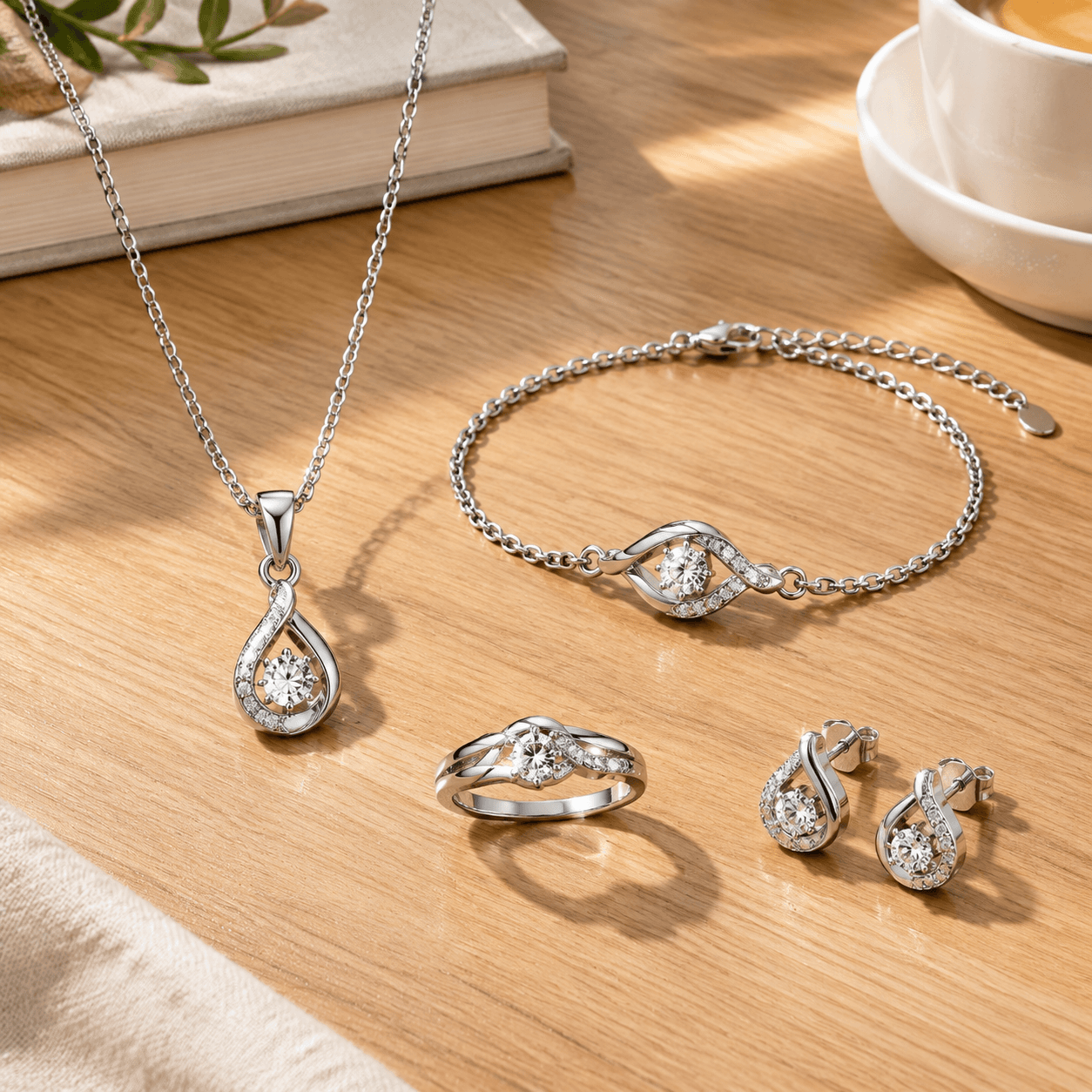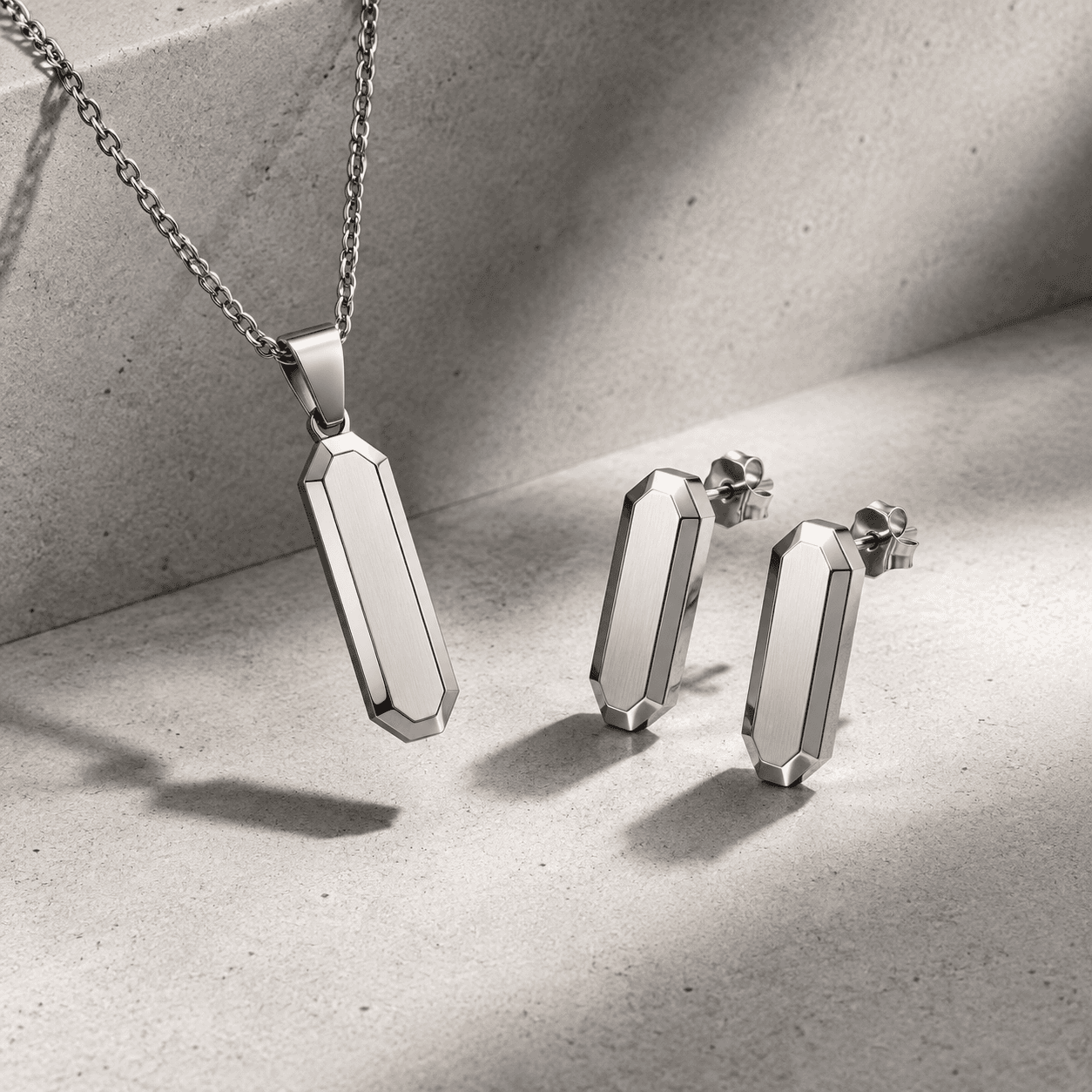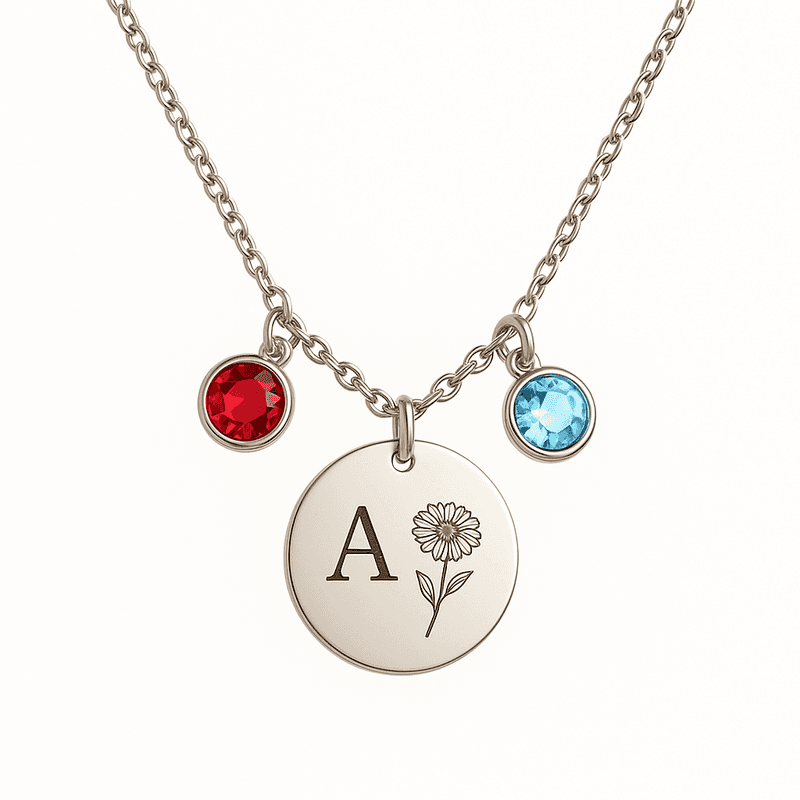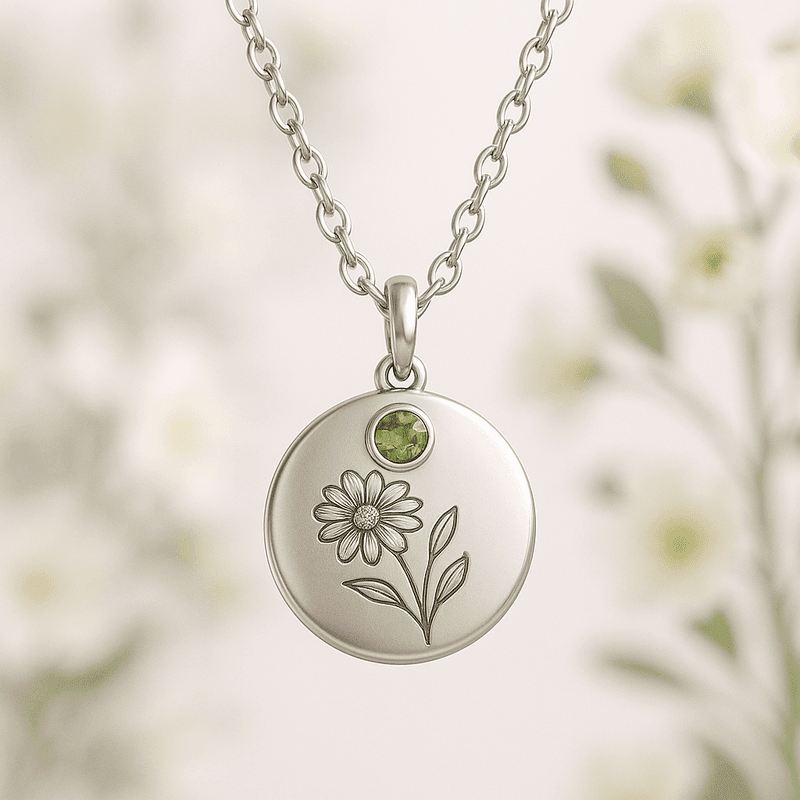
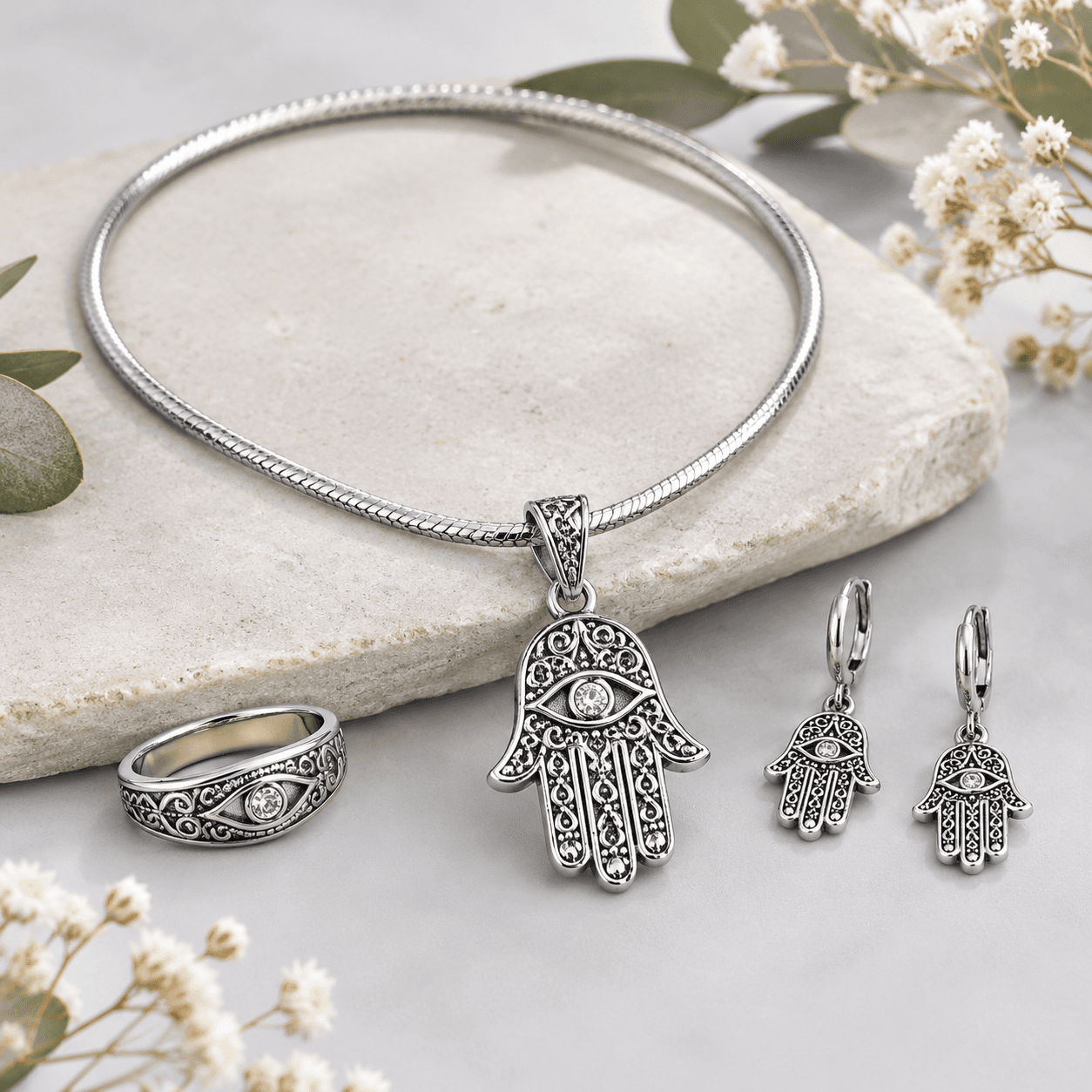
An intricate silver-tone hamsa hand choker combines symbolic pendant artwork with compact chain proportions, precise connections, and a carefully controlled surface finish. For jewelry brands developing private-label collections, the manufacturing challenge is to preserve the intended design while making the pendant practical to produce, assemble, inspect, and package. Material grade, pendant thickness, cutout geometry, attachment points, chain construction, and finishing requirements should therefore be considered together rather than specified as isolated features.
Lefeng Jewelry supports OEM/ODM stainless steel jewelry development through processes that can include design refinement, sampling, CNC and laser processing, polishing, PVD finishing, enamel application, stone setting, quality inspection, custom logo work, packaging, and export coordination. Available processes depend on the proposed design and confirmed project scope. Buyers can evaluate 316L or 304 stainless steel for a silver-tone design, or specify 925 sterling silver if that is the required base material. A silver-tone appearance alone does not establish the product's metal composition.
This guide explains how to prepare a manufacturing-ready specification for a hamsa hand choker. It covers material selection, decorative detail, pendant-to-chain connections, finishing, sample approval, inspection criteria, private-label options, and purchasing documentation. Use these checkpoints to prepare an RFQ, compare supplier quotations on a consistent basis, and establish the requirements that must be met before bulk production.
Diseño de un choker plateado con una mano de Hamsa de detalles intrincados
Un collar tipo choker con una mano de hamsa debe especificarse como un conjunto completo de collar, en lugar de considerar únicamente el colgante. El colgante, la argolla de suspensión o el lazo de sujeción, la anilla de unión, la cadena, el cierre y cualquier cadena de extensión funcionan conjuntamente para determinar la apariencia, el movimiento y la comodidad de uso. El peso del colgante, la flexibilidad de la cadena, la longitud total del collar y el espacio libre en las conexiones influyen en cómo queda colgado el diseño, especialmente cuando se pretende que el collar quede ajustado al cuello.
Comience con un diseño técnico acotado que defina el contorno, el ancho, la altura, el grosor y la posición de sujeción del colgante, así como el acabado de los bordes y cualquier relieve, línea hundida o recorte. Identifique los detalles decorativos más pequeños que deben permanecer visibles después del procesamiento y pulido. Si el diseño incluye esmalte, circonitas, cristal o perlas, especifique por separado la posición y las dimensiones de cada elemento, así como el método de aplicación o engaste propuesto.
Considere la apariencia deseada antes de seleccionar el acabado. Las superficies amplias y pulidas resaltan los reflejos, mientras que los detalles hundidos pueden crear contraste visual mediante la geometría o un tratamiento de acabado aprobado. Dado que un dibujo bidimensional no puede mostrar por completo la apariencia de un colgante terminado, solicite una muestra representativa y evalúela en condiciones normales de observación. Los servicios de fabricación OEM/ODM de Lefeng Jewelry ofrecen un punto de partida adecuado para analizar el perfeccionamiento del diseño y el desarrollo de muestras.
Selección de materiales: acero inoxidable 316L, acero inoxidable 304 y plata de ley 925
Separate the base material from the surface appearance in every product specification. A polished silver-tone necklace made from stainless steel is materially different from one made from 925 sterling silver. If sterling silver is required, state that explicitly and request material documentation applicable to the finished product. If stainless steel is preferred, specify the grade and identify the material required for each component.
316L stainless steel is an option to evaluate when corrosion resistance and a durable metal surface are priorities. 304 stainless steel is another option, but the grades should not be treated as interchangeable without reviewing the intended application and specification. Consider the pendant, chain, clasp, jump rings, and other fittings individually. A complete bill of materials helps prevent ambiguity about whether all components use the same grade.
Finishing requirements should be documented separately. Mechanical polishing affects reflectivity and contour definition, while additional coatings may be appropriate for selected colour variants. PVD gold or rose-gold finishes can be evaluated when those colourways are required; they should not be assumed to be part of a silver-tone specification. Confirm the proposed finish, component coverage, and relevant documentation with the manufacturer. For a coordinated product brief, review the available stainless steel necklace collection and align the pendant, chain, and finish requirements before requesting a quotation.
Diseño de detalles, bordes y conexiones de cadena de colgantes
Fine pendant artwork must retain sufficient structural integrity through processing, finishing, assembly, and ordinary handling. Narrow bridges between cutouts may be vulnerable, deep recesses can be difficult to finish consistently, and very fine raised lines may lose definition during polishing. Define structural sections separately from decorative details, and have the manufacturer review critical dimensions against the proposed material, thickness, processing method, and sample results.
CNC and laser processing may be suitable for different features, depending on the geometry and required finish. The selected method should be evaluated together with edge condition, corner radii, material thickness, and post-processing requirements. Polishing can improve appearance but may soften fine contours if too much material is removed. Inspect the sample closely to verify the silhouette, openings, relief details, and edge quality against the approved artwork.
Specify the pendant connection independently from the necklace closure. A bail, jump ring, side loop, or designed opening typically connects the pendant to the chain; the clasp serves as the closure at the chain ends. Define the attachment opening, ring dimensions where critical, required movement, and intended hanging orientation. Confirm that the chain does not twist the pendant or obstruct the decorative face. For a close-fitting choker, also specify the target length and whether an extension chain is required.
Especificación de acabados en tono plateado y tratamientos decorativos
El acabado superficial afecta tanto a la apariencia de un colgante hamsa como a la visibilidad de sus detalles. El pulido brillante resalta los reflejos y las transiciones de los contornos, mientras que un acabado menos reflectante puede producir un efecto visual más suave. Seleccione el acabado de acuerdo con la orientación de diseño de la colección y la geometría del colgante y, a continuación, verifique su apariencia en una muestra física.
En el caso del acero inoxidable, aclare si la apariencia en tono plateado proviene del metal base acabado o de un tratamiento adicional especificado. Si la colección incluye variantes en tono dorado o en oro rosa, evalúe cada una como una configuración independiente. Revise la cobertura del acabado en los bordes, orificios, hendiduras y puntos de unión. Si el diseño incluye esmalte, zirconia, cristal o perla, especifique el color, las dimensiones, la ubicación y el método de fijación propuesto, junto con los criterios de inspección aplicables.
Una especificación de acabado útil incluye imágenes de referencia, una descripción escrita de la apariencia y las superficies que deben tratarse. Cuando sea necesario, añada una referencia de color definida o un requisito de recubrimiento. Compare la muestra con la referencia acordada bajo condiciones de iluminación uniformes y compruebe si hay arañazos, pulido irregular, color inconsistente, bordes ásperos y residuos alrededor de los detalles decorativos. Si se necesitan declaraciones de materiales, especificaciones de recubrimiento o informes de ensayo, confirme su disponibilidad y aplicabilidad a la configuración real del producto y al mercado de destino. Las descripciones generales de los materiales no deben considerarse pruebas de conformidad específicas del producto.
Desarrollo y aprobación de muestras
Sampling allows a jewelry brand and manufacturer to evaluate the actual construction before committing to bulk production. Submit vector artwork or a dimensioned drawing where available, including front and side views, pendant dimensions and thickness, chain style and length, closure type, attachment details, and required base metal. Specify the surface finish separately. Identify any relief, cutouts, enamel, stones, or other decorative elements, and use reference photographs to clarify visual intent rather than replace written requirements.
During sample review, check the silhouette, proportions, edge smoothness, detail definition, pendant balance, chain flexibility, attachment security, and clasp operation. Inspect the surface under diffuse and direct lighting and at normal viewing distance. If a revision is needed, record a specific change, such as adjusting pendant width, moving the attachment opening, changing chain length, or revising a defined decorative feature. Avoid relying on vague feedback that cannot be translated into a production instruction.
Once the sample is approved, retain it or an agreed dimensional and visual record as the production reference. Document accepted tolerances, appearance criteria, and any permitted variations. Lefeng Jewelry can review sampling, processing, finishing, inspection, logo customization, and packaging requirements according to the project scope. See new stainless steel jewelry designs and manufacturing and sourcing insights for related development information.
Control de calidad y aceptación de la producción a granel
Define quality requirements before production begins. Confirm the material grade for each component, critical dimensions, approved artwork, surface finish, assembly requirements, and any project-specific documentation. A written inspection plan should identify the checkpoints to be used during sample review, assembly, and final inspection.
For an intricate hamsa pendant, inspect narrow cutouts, fine relief lines, corners, attachment points, and transitions between polished and recessed surfaces. Check both the front and reverse for burrs, sharp edges, blocked openings, uneven polishing, visible assembly marks, and inconsistent decorative placement. Verify chain articulation, clasp function, pendant orientation, and connection security. For coated designs, compare colour and coverage with the approved reference. For designs with stones or enamel, inspect placement and condition against the agreed requirements.
Agree on acceptable dimensional and appearance tolerances, sampling arrangements, defect handling, and packaging condition. If the project requires nickel-release testing, restricted-substance assessment, coating durability evidence, or other destination-market documentation, identify the specific requirement before ordering. Confirm the relevant test scope, issuing source, product configuration, and applicability rather than inferring compliance from a material grade alone. The actual inspection and documentation arrangements should be agreed for each project.
Personalización de marca privada, MOQ y planificación mayorista
Private-label customization can cover pendant dimensions, silhouette, relief, chain style, necklace length, extension chain, closure, finish, logo placement, and retail packaging. Separate fixed requirements from optional variants. For example, a collection may retain the same pendant design while offering different chain lengths or approved colourways. Each variation should be listed because changes to material, coating, decorative components, or packaging can affect sampling, production planning, inspection, and quotation.
MOQ should be assessed against the proposed design and order structure rather than assumed to be universal. Relevant factors may include component configuration, finishing requirements, customization, packaging, and the number of variants sharing common parts. Request a project-specific quotation that distinguishes sample development, unit pricing, any applicable tooling or setup charges, packaging, shipping, and requested documentation. Ask the supplier to identify included services and items that remain subject to confirmation.
Before requesting bulk production, prepare the specification sheet, approved sample reference, quantities by variant, logo artwork, packaging instructions, destination market, and shipping requirements. If the assortment extends to stainless steel bracelets, stainless steel earrings, or stainless steel rings, identify shared design requirements while specifying each product's material and construction independently. A complete RFQ gives the manufacturer a clearer basis for assessing feasibility and preparing a comparable quotation.
Embalaje, coordinación de exportación y documentación
Packaging should protect the pendant's finish, prevent chain tangling, and support the intended retail presentation. Specify the packaging format, dimensions, insert, logo artwork, labels, barcode requirements where applicable, and units per outer carton. Check the complete necklace inside the proposed packaging to confirm that the chain stays organized and the pendant is protected from movement and abrasion.
Export coordination requires agreement on destination, shipping method, order quantity, packaging configuration, and required commercial documents. Buyers supplying the US, EU, UK, Canada, Australia, or other markets should identify applicable requirements at the RFQ stage. Where material-composition declarations, coating information, restricted-substance evidence, or product-safety documentation is required, confirm the exact document, product scope, and whether supporting testing or third-party assessment is necessary.
Prepare one approval package containing the final artwork, bill of materials, finish reference, dimensions, sample approval notes, logo placement, packaging specification, inspection criteria, and agreed documentation list. Identify any permitted substitutions and changes that require approval. Confirm who issues each requested document, which configuration it covers, and whether it applies to the proposed order. To discuss manufacturing and shipment requirements, visit the Lefeng Jewelry contact page or review the factory and company information.
Preguntas frecuentes sobre la fabricación de gargantillas con la mano de Hamsa
Solicite una cotización OEM/ODM para su gargantilla Hamsa personalizada
Desarrolle un collar tipo choker personalizado en tono plateado con un colgante de mano de Hamsa junto con Lefeng Jewelry mediante un proceso OEM/ODM basado en especificaciones. El soporte de desarrollo disponible puede incluir la elaboración de muestras, mecanizado CNC y procesamiento láser, pulido, acabados de chapado aplicables o PVD, aplicación de esmalte, engaste de piedras, inspección de calidad, personalización del logotipo, embalaje y coordinación de exportación. La idoneidad y disponibilidad de cada proceso dependen del diseño propuesto, el material, el acabado y el alcance del pedido.
Para solicitar la revisión de una muestra o un presupuesto, envíe el diseño gráfico del colgante o un plano acotado, el metal base requerido, las dimensiones y el grosor del colgante, una referencia del acabado, el estilo y la longitud de la cadena, los detalles del cierre y los elementos de sujeción, los elementos decorativos, las cantidades estimadas por variante, los requisitos de embalaje y el mercado de destino. Incluya las pruebas o la documentación requeridas y distinga las especificaciones obligatorias de las opciones de diseño opcionales.
Utilice la página de contacto de Lefeng Jewelry para tratar su RFQ. Una especificación clara ayuda a determinar la viabilidad de fabricación, los requisitos de las muestras, el alcance del presupuesto, los criterios de inspección y la documentación necesaria antes de la producción en serie.
Related resources
Related resources
- Lefeng Jewelry - OEM/ODM Stainless Steel Jewelry Manufacturer
- Dashboard
- My account
- Shop
- Download
- Contact Us | Lefeng Jewelry
- Case Studies
- What Buyers Should Know About Minimalist Stainless Steel Necklace Styling for OEM/ODM Partnerships
- 316L Stainless Steel Earrings for Sensitive Ears: A B2B Buyer’s Quality Checklist
- Gold Plated Stainless Steel Jewelry: Durability and Sourcing Guide