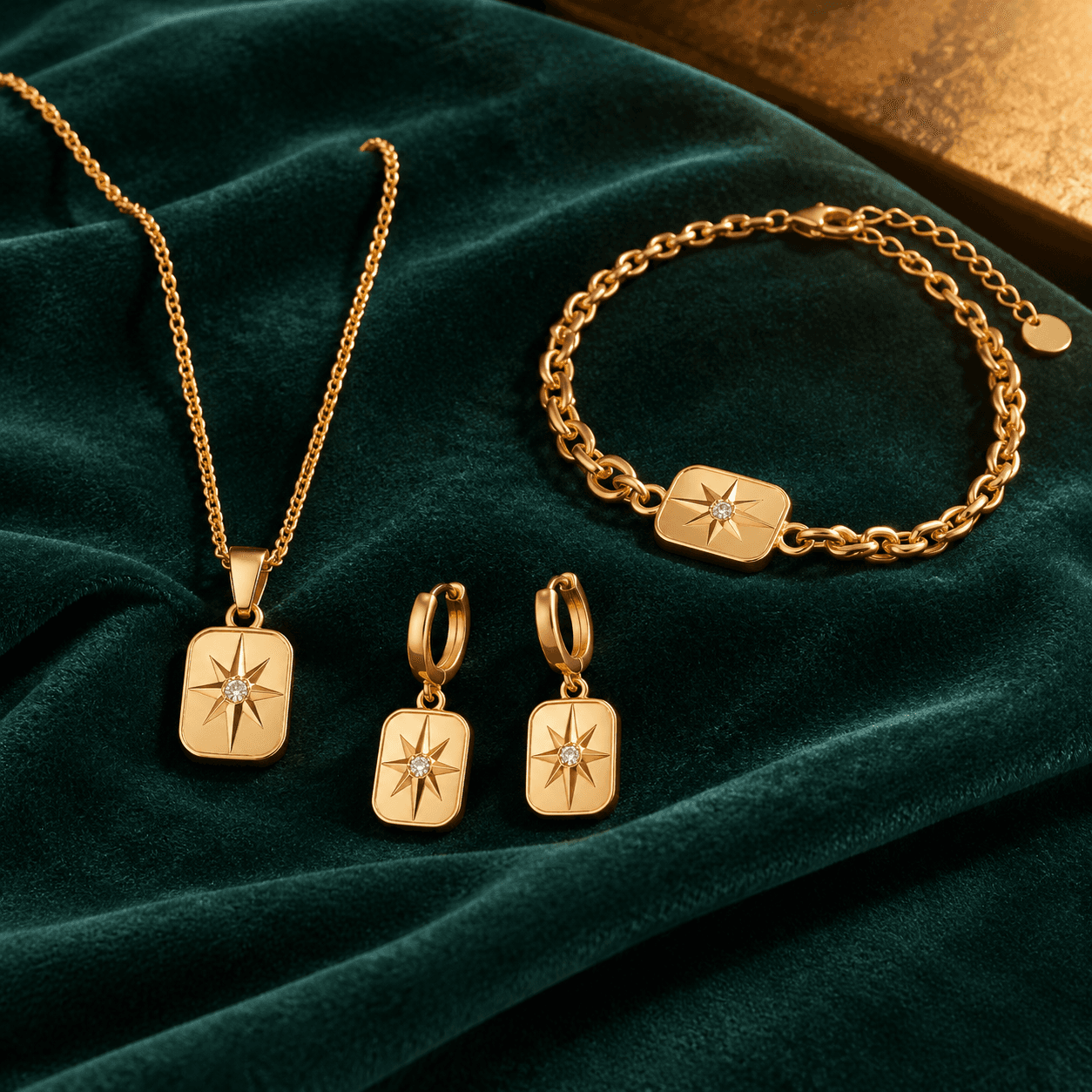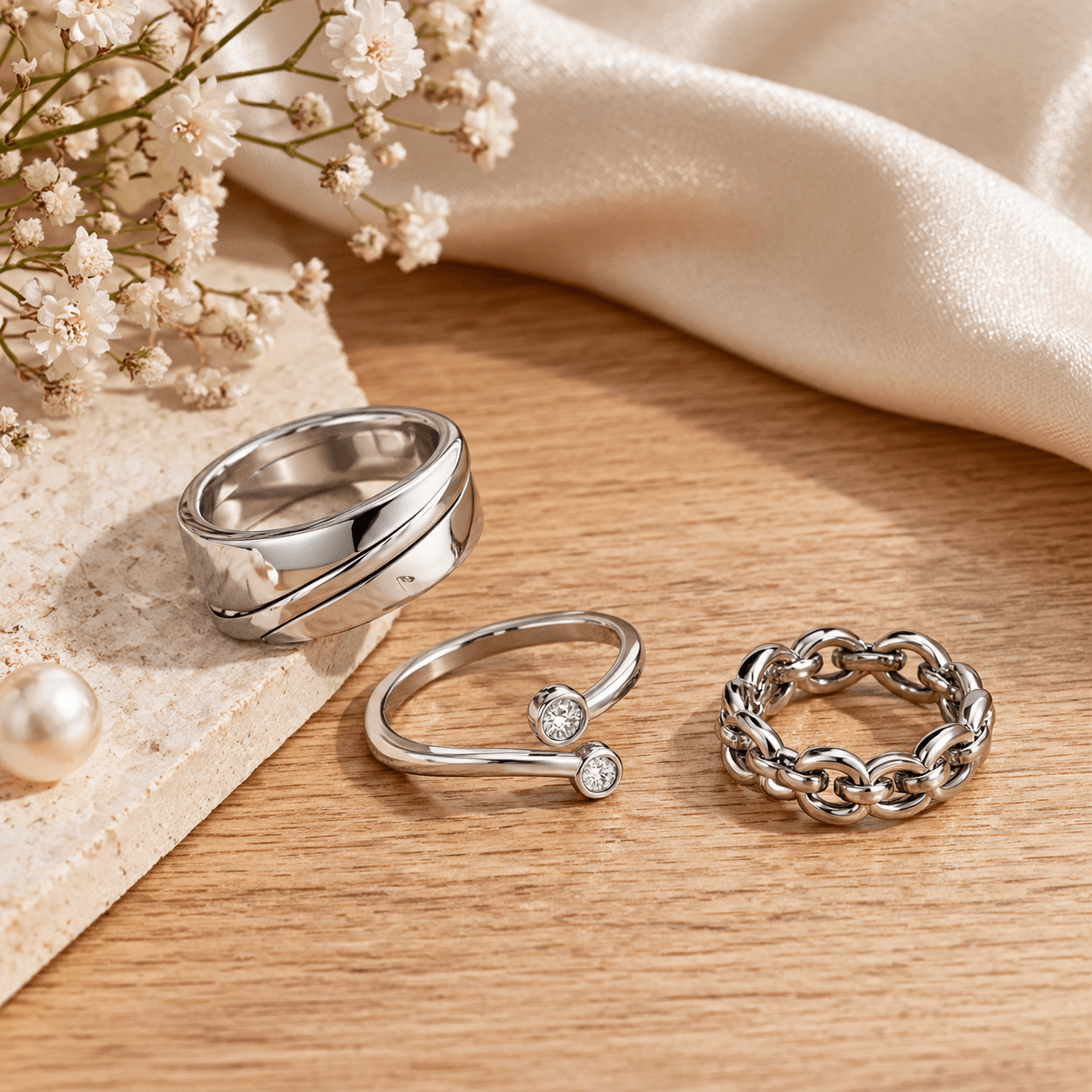
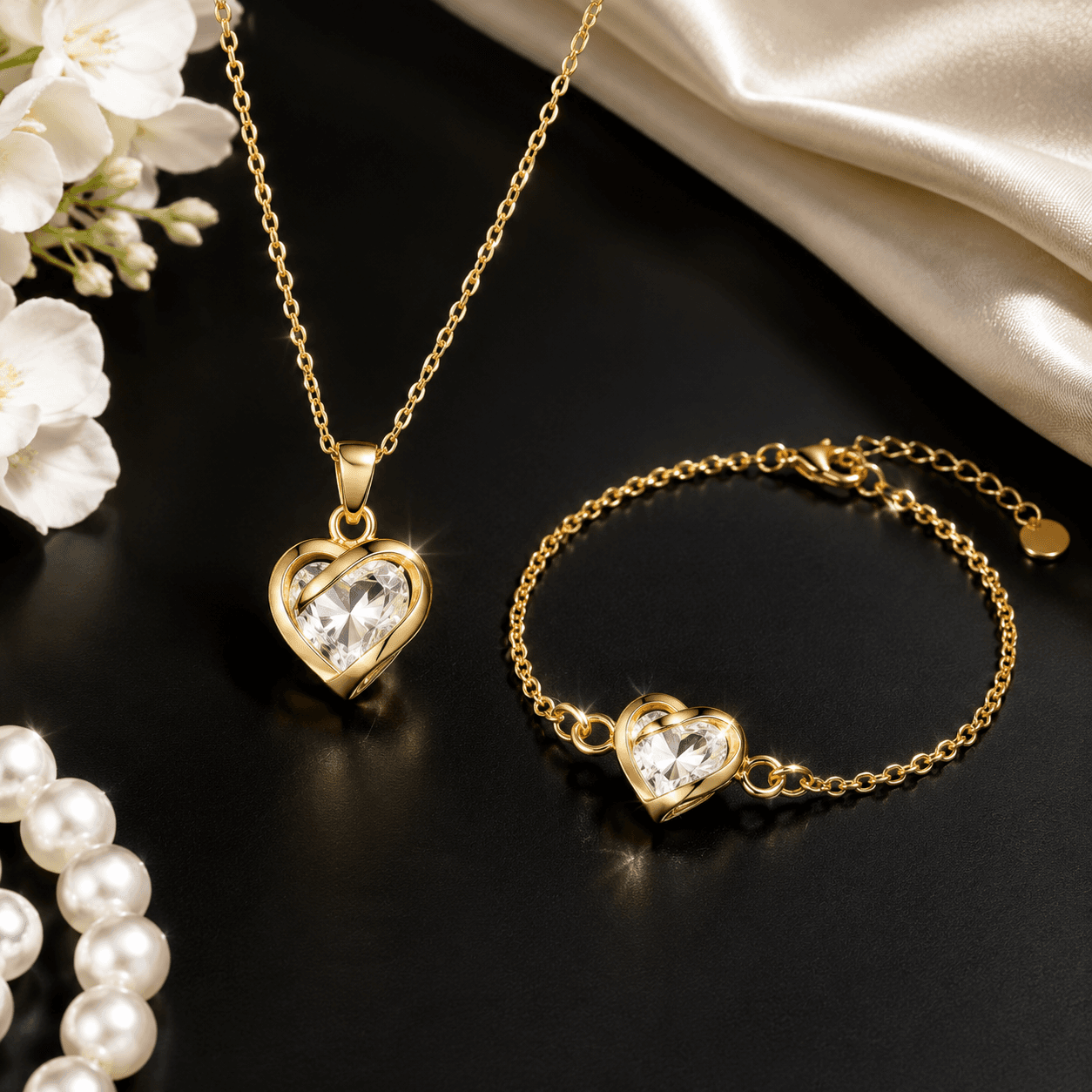
Gold plated stainless steel jewelry can offer e-commerce brands and wholesale buyers a practical combination of a gold-colored appearance, a stainless steel base, and flexible OEM/ODM development options. Actual durability depends on the base material, surface preparation, finishing process, product construction, and conditions of use. A finish name or attractive sample alone cannot establish long-term wear performance.
For North American jewelry sellers, the sourcing process should connect material and finish specifications with sample approval, quality inspection, packaging, and accurate product descriptions. This guide explains what to request from a manufacturer, how to compare suppliers, and which details to confirm before authorizing bulk production.
What Is Gold Plated Stainless Steel Jewelry?
Gold plated stainless steel jewelry combines a stainless steel base with a gold-colored surface finish. The base metal provides the underlying structure, while the finishing process influences color, surface appearance, and wear characteristics. Buyers should verify the materials used throughout the item rather than assume every component has the same composition.
Grades such as 304 and 316L stainless steel may be used in jewelry manufacturing. The appropriate grade depends on the product design and agreed specification. Chains, clasps, posts, jump rings, settings, and decorative components should be identified individually when different materials are used.
PVD, or physical vapor deposition, is one finishing option for stainless steel jewelry. The term alone does not establish coating thickness, adhesion, abrasion resistance, or expected service life. Ask the manufacturer to identify the proposed finishing process and the specifications and inspection methods applicable to the actual product.
How to Evaluate Gold Plated Stainless Steel Jewelry Durability
1. Confirm the base material and construction
Request a material specification covering the complete product. A necklace, for example, may include a chain, pendant, bail, jump rings, and clasp. Earrings may include posts, backs, hoops, and decorative settings. If any component uses copper, zinc alloy, sterling silver, or another material, establish its role and specification rather than relying on a general stainless steel product description.
Inspect both appearance and function. Check that clasps open and close correctly, links move as intended, jump rings close securely, and stones or decorative elements are properly seated. Structural defects can cause returns even when the gold-colored finish appears uniform.
2. Assess finish quality and coverage
Surface preparation, finishing parameters, component geometry, handling, and subsequent use can all affect the observed condition of a coating. Pay particular attention to edges, recessed details, contact points, closures, and moving connections, where differences in coverage or wear may become visible.
Request a representative sample made with the intended material, construction, and finish. Compare its color, surface uniformity, smoothness, and coverage under consistent lighting. Record the approved color reference and document any acceptable variation so the same criteria can be used during production inspection.
If coating thickness, adhesion, or abrasion performance matters to the purchasing decision, agree on the relevant measurement or test method and acceptance criteria in advance. Do not infer these properties from a generic description such as gold plated or PVD gold plated.
3. Establish a product-specific inspection plan
A useful quality plan separates visual inspection, functional checks, and performance testing. The appropriate checks depend on the finish, construction, intended use, and claims planned for the product. Not every test is suitable for every coating or component.
| Inspection or test | What it evaluates | What buyers should specify |
|---|---|---|
| Visual inspection | Color consistency, surface marks, missed coverage, and visible defects | Approved reference sample, inspection conditions, and acceptable variation |
| Adhesion assessment | Coating attachment to the substrate | Suitable method for the specific finish and documented acceptance criteria |
| Abrasion assessment | Surface wear under defined conditions | Test setup, exposure or cycle conditions, and acceptance criteria |
| Perspiration or corrosion assessment | Finish behavior under specified exposure conditions | Relevant method, sample identification, and project-specific requirements |
| Functional inspection | Clasps, links, posts, settings, and attached components | Required operation, structural checks, and sampling plan |
| Packaging inspection | Protection during storage, handling, and transport | Approved packaging configuration and shipping requirements |
Before production, document which checks are required, who will perform them, how samples will be identified, and what constitutes acceptance or rejection. Ask whether relevant reports or records can be provided for the agreed specification. Do not treat a proposed test, an inspection plan, or a supplier's general statement as evidence that a particular result has already been achieved.
4. Interpret durability claims carefully
Descriptions such as durable, scratch-resistant, long-lasting, and color-retaining should be supported by evidence appropriate to the exact product and claim. Request the relevant test conditions and results when available, and confirm whether the evidence covers the proposed materials, finish, and component configuration.
Laboratory testing does not guarantee identical performance in every customer's daily use. Friction, perspiration, cosmetics, moisture, storage, and handling may influence the appearance of a finished item. Avoid promising a fixed lifespan or permanent color retention without adequate substantiation.
If a manufacturer offers a warranty, request written terms covering its duration, scope, exclusions, and claim procedure. Keep warranty commitments separate from laboratory results and production inspection records.
How to Compare Gold Plated Stainless Steel Jewelry Suppliers
For wholesale and private label purchasing, compare manufacturers against the same documented requirements rather than unit price alone. The following scorecard can help procurement teams identify gaps before placing an order.
| Evaluation factor | Questions to ask |
|---|---|
| Material specification | Are the steel grade and materials of relevant components identified? |
| Finishing capability | Can the supplier explain the proposed finish, color reference, and applicable quality checks? |
| Sample development | Can the sample represent the intended materials, construction, finish, logo, and packaging? |
| Quality control | Are inspection criteria, sampling procedures, and available records defined? |
| Commercial terms | Are MOQ, sample costs, production scope, packaging, and shipping responsibilities stated in the quotation? |
| Repeat-order control | Will the approved sample and specifications be retained as references for future orders? |
| Communication | Can the team resolve technical and commercial questions before production approval? |
A lower quotation is not necessarily the better sourcing decision if it excludes required packaging, leaves materials unspecified, or provides no clear process for resolving quality discrepancies. Compare equivalent product specifications and commercial scope before evaluating cost.
OEM and ODM Development for Private Label Jewelry
OEM and ODM projects can involve design adaptation, sampling, logo application, finishing, quality inspection, packaging, and export coordination. The available services and manufacturing requirements should be confirmed with the supplier for each project.
Discuss customization requirements early, including product dimensions, logo placement, chain or clasp options, finish color, packaging materials, and any required testing or documentation. These choices may affect sample development, tooling or setup requirements, commercial terms, and inspection criteria. Confirm MOQ, sample charges, production scope, and other terms in writing rather than assuming they are identical across designs.
Before bulk production, approve a representative finished sample and record the final product specification. Include the agreed materials, dimensions, finish reference, construction, branding, packaging, and inspection criteria. An unfinished prototype may not accurately represent the final appearance of a product that requires a gold-colored surface treatment.
Packaging, Shipping, and E-Commerce Product Presentation
Protect finished surfaces in transit
Jewelry can become scratched, tangled, bent, or damaged when components move unnecessarily during storage and transport. Suitable packaging should protect individual items, separate finished surfaces where needed, and secure delicate components against pressure and movement.
Review both the retail presentation and the outer shipping configuration. Check whether chains can tangle, earrings remain secured, and multiple items can rub against one another. Request packaging samples when protection, branding, or presentation is part of the order, and approve the actual configuration before shipment.
Make product listings accurate
Online customers depend on photography and descriptions to assess jewelry before purchasing. Use consistent lighting and white balance, show the full product, and include close-up images of relevant details such as clasps, links, settings, and engraving. Compare the images with the approved sample so the depicted color and construction reasonably represent the supplied item.
Describe only confirmed product attributes, including base material, finish, dimensions, closure type, and care instructions. Avoid unsupported claims about coating thickness, precise wear duration, waterproof performance, hypoallergenic properties, or permanent color retention. Any claim should be supported by evidence relevant to the actual product.
North American sellers should determine which product-safety, chemical-restriction, labeling, and advertising requirements apply to their products and sales channels. Requirements may differ by jurisdiction and product characteristics. Do not present FDA approval as a universal requirement or claim regulatory approval or compliance without verification for the exact product and applicable rule.
Manage Customer Feedback and Returns
Establish a repeatable process for recording customer complaints, collecting photographs, identifying affected batches, and investigating recurring issues. Separate finish concerns from structural failures, shipping damage, and mismatches between listings and delivered products. This helps identify whether corrective action is needed in manufacturing, packaging, or product communication.
Care instructions should reflect the confirmed product and finish. Where appropriate, recommend minimizing unnecessary friction, avoiding harsh cleaning methods, and storing jewelry separately to reduce scratching. Care advice complements appropriate manufacturing quality; it does not replace it.
Frequently Asked Questions
Is gold plated stainless steel jewelry durable?
It can be a practical option for fashion jewelry, but performance depends on the base material, finishing process, construction, use conditions, and quality controls. Evaluate a representative finished sample and establish appropriate inspection or testing criteria before ordering in bulk.
Does PVD gold plating prevent fading or scratching?
No finish should be assumed to prevent all fading or scratching. PVD is a finishing process, and actual performance depends on the coating specification, surface preparation, product geometry, handling, and exposure conditions. Request relevant evidence and agree on acceptance criteria for the specific product.
What documents should a wholesale buyer request?
Start with the material and finish specifications, approved sample reference, inspection criteria, and available records for agreed checks. If a particular test report or regulatory document is required, confirm whether it can be supplied or arranged for the exact product configuration. Verify the document's scope and applicability before relying on it.
Can Lefeng Jewelry support private label gold plated stainless steel jewelry?
Contact Lefeng Jewelry to ask whether the team can support your specific gold plated stainless steel jewelry project. In your inquiry, outline the proposed OEM/ODM requirements, sample development, logo customization, packaging, quality expectations, and export arrangements. Confirm the services available, material and finishing options, documentation, MOQ, and commercial terms directly with the company before proceeding.
Start Your Gold Plated Stainless Steel Jewelry Project
Successful jewelry sourcing begins with a clear specification, a representative sample, and agreed inspection criteria. For North American e-commerce sellers and wholesale buyers, these controls help align manufacturing decisions with product presentation, packaging, and customer expectations.
When requesting an OEM/ODM quotation, prepare your target design or reference images, preferred base material, desired finish, estimated order quantity, logo requirements, packaging specifications, and any testing or documentation needs. The more clearly these requirements are defined, the easier it is to assess the proposed scope and identify open questions before production.
Explore OEM/ODM manufacturing services, learn more about Lefeng Jewelry, or submit an RFQ to discuss your project.
Related resources
- Lefeng Jewelry - OEM/ODM Stainless Steel Jewelry Manufacturer
- Contact Us | Lefeng Jewelry
- Hypoallergenic Hoop Earrings Gold: FAQs & Fixes
- Stainless Steel Cross Pendant Necklace Material Guide
- Men Gold Earrings Materials & Gold Finish Guide for OEM/ODM Jewelry Sourcing
- Imitation Fur Earrings Materials, Construction & OEM Quality Guide