Stainless steel charm bracelets offer jewelry brands, wholesalers, and private-label retailers opportunities to develop coordinated collections with interchangeable design themes, personalized details, and multiple product variations. However, an attractive sample does not automatically indicate consistent manufacturing quality. Loose connecting rings, uneven PVD finishes, poorly secured decorative elements, and unsuitable packaging can create product defects and increase the cost of returns and replacements.
For B2B buyers in the United States and Canada, quality evaluation should begin before approving bulk production. A reliable purchasing process includes reviewing material specifications, inspecting mechanical construction, evaluating surface finishes, defining durability requirements, and establishing production inspection criteria. This guide explains the essential checkpoints for evaluating stainless steel charm bracelets and preparing a more effective OEM/ODM manufacturing project.
1. Verify Stainless Steel Material Specifications
The material specification affects a bracelet's corrosion resistance, appearance, component compatibility, and product positioning. Buyers should request the exact stainless steel grade rather than relying on general descriptions such as stainless steel jewelry.
316L vs. 304 Stainless Steel
316L and 304 are commonly specified stainless steel grades, but they have different compositions and corrosion-resistance characteristics. 316L contains molybdenum, which improves resistance to certain corrosive environments. It is frequently selected for jewelry applications where corrosion resistance is an important consideration.
However, material grade alone does not determine finished-product performance. Manufacturing quality, surface condition, component construction, and exposure conditions also matter.
- Confirm whether the bracelet base uses 316L or 304 stainless steel.
- Specify the material requirements for chains, charms, connecting rings, clasps, and decorative components.
- Identify any components made from different materials.
- Request relevant material documentation when required.
- Include the agreed material specifications in the purchase order and product drawings.
For OEM/ODM projects, a documented bill of materials helps ensure that the approved sample and subsequent production batches follow the same material requirements.
2. Inspect Bracelet Construction and Charm Attachments
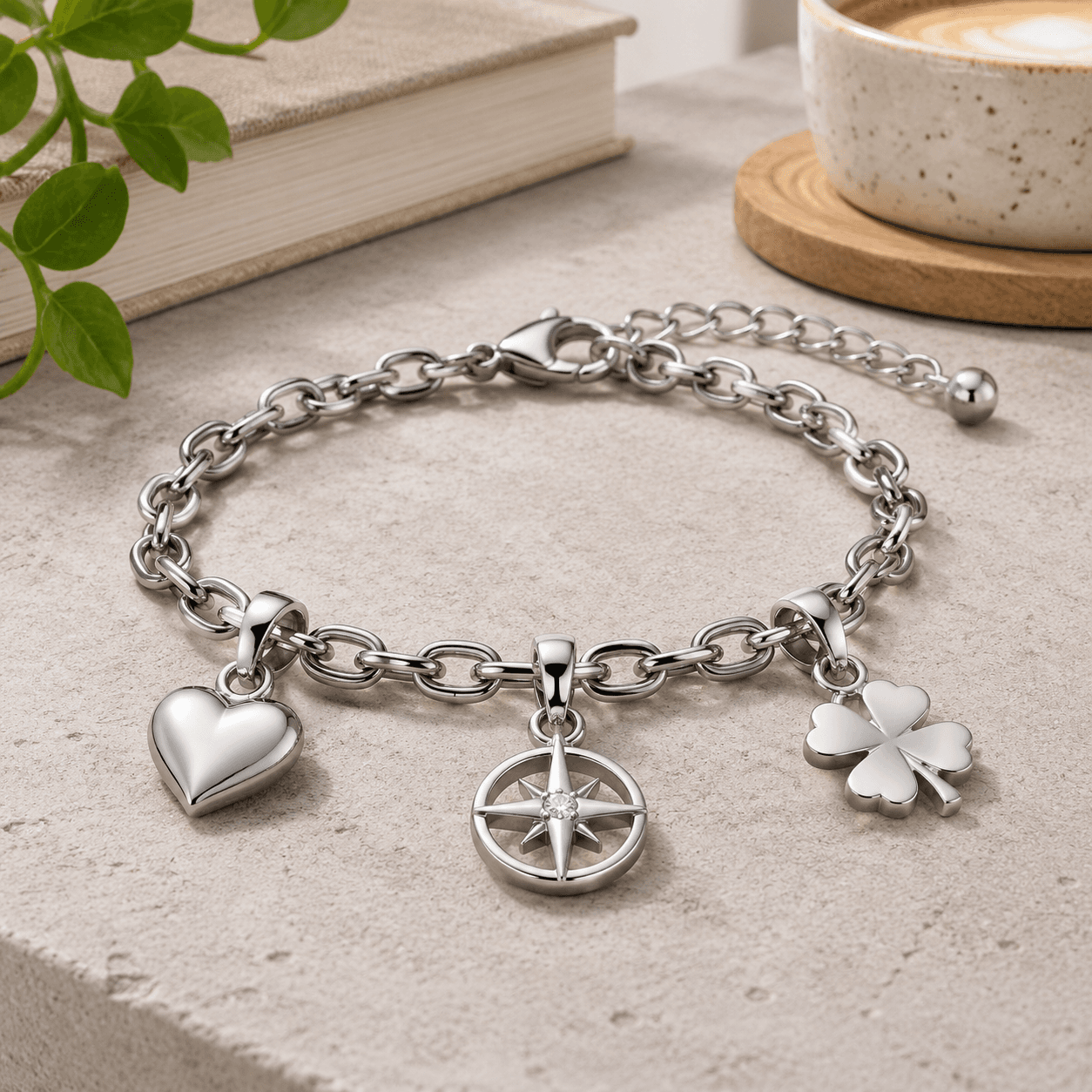
Mechanical construction is particularly important for charm bracelets because multiple components are connected through small rings, loops, chains, or other attachment structures. A defect in one connection can affect the appearance or functionality of the entire product.
Essential Construction Checkpoints
- Connecting rings: Check for visible gaps, inconsistent alignment, and incomplete closures.
- Charm attachments: Confirm that each charm is secured using the specified attachment structure.
- Chain links: Inspect link consistency, movement, and visible surface defects.
- Bracelet closure: Verify that the clasp opens and closes correctly.
- Extension chain: Check attachment security and the finishing of end components.
- Charm positioning: Confirm that decorative elements hang naturally without unwanted interference.
When several bracelet designs share the same base structure, consistent component dimensions and attachment specifications are especially important. Standardized construction requirements make it easier to maintain visual consistency across multiple SKUs.
3. Evaluate Surface Finishing and PVD Plating
Surface finishing influences both the perceived quality and practical performance of stainless steel jewelry. Common options include polished silver-tone stainless steel, PVD gold plating, and rose gold finishes.
For colored stainless steel charm bracelets, buyers should evaluate the complete finishing process rather than judging quality by color alone. Surface preparation, coating application, component geometry, and handling procedures can all influence the finished appearance.
Surface Finish Inspection Checklist
- Compare the finished color with an approved physical reference sample.
- Check for uneven color, scratches, discoloration, and visible polishing marks.
- Inspect edges, recessed areas, and connecting components for consistent finishing.
- Confirm the specified finishing process and applicable coating requirements.
- Establish acceptable color variation between production batches.
PVD is a surface coating process used for various colored stainless steel jewelry finishes. However, different PVD specifications and application conditions can produce different results. Buyers should not assume that all gold-colored stainless steel products have identical coating characteristics.
For projects with specific durability expectations, agree on suitable evaluation methods and acceptance criteria before production. Claims concerning coating thickness, adhesion, abrasion resistance, or wear performance should be supported by relevant specifications and test documentation.
4. Check Decorative Components and Setting Quality
Charm bracelet designs may incorporate enamel, zircon, crystals, pearls, and other decorative elements. These components create additional inspection requirements because their appearance, positioning, and attachment quality contribute directly to the finished product.
- Enamel: Check color consistency, surface coverage, and visible chips or cracks.
- Zircon and crystal: Inspect stone alignment, setting condition, and visible gaps.
- Pearls: Review surface condition, positioning, and attachment security.
- Decorative metal charms: Check dimensions, polishing quality, and edge finishing.
- Multiple components: Compare the arrangement and spacing with the approved design.
For designs containing several decorative elements, buyers should define acceptance criteria for individual components rather than relying only on an overall visual assessment.
5. Evaluate Durability Before Approving Bulk Production
A finished bracelet should be evaluated according to its intended use, material composition, and agreed product specification. General descriptions such as durable, scratch-resistant, or long-lasting are not substitutes for measurable quality requirements.
Depending on the design, buyers may request appropriate evaluations covering:
- Corrosion resistance: Evaluate the suitability of the selected material and finish for the intended exposure conditions.
- Coating adhesion: Assess whether the specified finish remains attached under the agreed evaluation method.
- Abrasion resistance: Review the finish's response to relevant surface wear conditions.
- Mechanical functionality: Evaluate clasp operation and relevant connection performance.
- Decorative attachment: Check the retention of stones, enamel components, and other decorative elements using appropriate methods.
Not every bracelet requires the same testing program. The appropriate evaluation method depends on its construction, material, coating, target market, and intended application. Buyers and manufacturers should agree on test methods, sample selection, and acceptance thresholds before testing begins.
6. Establish a Production Quality Control Process
Quality control should cover multiple manufacturing stages rather than relying exclusively on a final visual inspection. A structured process helps identify deviations earlier and creates clearer responsibilities between the buyer and manufacturer.
Incoming Material Inspection
Verify that incoming materials and purchased components correspond to the approved specifications. Review material identification, dimensions, quantities, and visible condition before processing.
In-Process Inspection
Review relevant manufacturing operations, including cutting, CNC processing, laser processing, polishing, PVD finishing, plating, enamel application, and stone setting where applicable. Identify process-specific characteristics that could affect the final product.
Finished Product Inspection
Inspect completed bracelets against the approved sample and product specification. Typical checkpoints include dimensions, component attachment, surface appearance, closure operation, decorative details, and overall assembly.
Pre-Shipment Inspection
Before shipment approval, review finished quantities, product conformity, packaging condition, labeling requirements, and agreed documentation. Inspection records should identify defects and any corrective actions required before release.
For bulk OEM/ODM orders, buyers should also establish the inspection scope, sampling approach, defect classifications, and acceptance criteria in advance. This makes quality expectations more objective and reduces misunderstandings during production.
7. Prepare Product Documentation for US and Canadian Markets
Businesses importing and selling stainless steel jewelry in North America should identify the regulatory and documentation requirements relevant to their actual products and sales channels.
Material specifications, component composition, applicable chemical restrictions, consumer product requirements, and labeling obligations may need to be reviewed. Particular attention is appropriate for products marketed to children or designs incorporating components with specific chemical or material considerations.
General stainless steel jewelry should not be described as FDA-approved simply because of its material composition. FDA requirements apply to particular regulated products and circumstances, not as a universal jewelry certification.
Before placing a production order, buyers should consider the following:
- Identify the intended destination market and customer group.
- Confirm the composition of relevant metal and decorative components.
- Identify applicable US or Canadian chemical and consumer product requirements.
- Request relevant test reports or supporting material documentation where necessary.
- Confirm labeling and import documentation requirements with the responsible importer or qualified regulatory professional.
Documentation must correspond to the actual product specification. A report covering one material, coating, or component should not automatically be treated as evidence for a different product.
8. Review Packaging and Shipping Protection
Packaging is an important part of finished-product quality, particularly for charm bracelets with several metal components that may move or contact one another during transportation.
Buyers should evaluate both retail presentation and shipping protection.
- Confirm the approved packaging design and private-label requirements.
- Use suitable inserts or positioning structures to prevent excessive product movement.
- Reduce direct contact between components where scratching or tangling is a concern.
- Check product identification, labels, and packaging quantities.
- Confirm that outer cartons provide appropriate protection for the shipping arrangement.
- Review individual packaging requirements for third-party fulfillment or dropshipping operations.
Packaging specifications should be approved alongside the product sample rather than treated as an unrelated final production detail.
9. Prepare an OEM/ODM Product Specification Before Sampling
A complete product specification helps a stainless steel jewelry manufacturer understand the intended design, assess manufacturing feasibility, and prepare a more representative sample.
For a stainless steel charm bracelet project, the specification should include:
- Product design: Reference images, technical drawings, charm arrangements, and design dimensions.
- Material: Required stainless steel grade and component-specific material specifications.
- Dimensions: Bracelet length, width, thickness, charm size, and extension chain measurements.
- Construction: Chain structure, attachment methods, clasp type, and decorative component positioning.
- Finishing: Polishing requirements, PVD or plating preferences, and approved color references.
- Customization: Logo engraving, private-label details, and any proposed design modifications.
- Packaging: Retail packaging, inserts, labels, and shipping protection.
- Quality requirements: Inspection checkpoints, relevant testing expectations, and acceptance criteria.
Clearly distinguish essential design requirements from proposed adjustments that remain subject to manufacturing feasibility and sample approval.
Why Sample Approval Matters
A representative sample allows buyers to evaluate the actual construction before committing to larger production quantities. During sample review, examine dimensions, charm positioning, surface appearance, component attachment, closure operation, and packaging presentation.
Record requested revisions and confirm the final approved sample and specifications in writing. If important materials, finishes, or construction details change, obtain the appropriate revised sample or documented approval before proceeding.
10. How to Evaluate a Stainless Steel Jewelry OEM/ODM Manufacturer
Supplier selection is another important part of quality management. A competitive quotation does not necessarily indicate that a manufacturer can consistently meet the required specifications.
Before sending an RFQ, evaluate the following capabilities:
- Experience developing stainless steel jewelry products.
- OEM/ODM design development and sampling support.
- Relevant polishing, PVD finishing, plating, and decorative processing capabilities.
- Experience with charm attachments, stone settings, and complex component assembly.
- Documented quality inspection procedures.
- Custom logo and private-label packaging options.
- Clear communication about project feasibility, MOQ, production specifications, and export arrangements.
Buyers should also ask how material specifications are communicated to production, how samples are approved, how defects are recorded, and how changes are controlled between sampling and bulk manufacturing.
For businesses developing a new charm bracelet collection, evaluating these processes can be more useful than comparing suppliers on quotation price alone. The objective is to establish a manufacturing relationship with clear specifications, defined quality expectations, and effective communication throughout product development.
11. Practical Pre-Production Checklist for Buyers
Use the following checklist before confirming a bulk order:
- Confirm the stainless steel grade and component materials.
- Approve the bracelet dimensions and technical drawings.
- Verify charm attachment methods and closure functionality.
- Approve the surface finish and color reference.
- Inspect enamel, zircon, pearl, and other decorative components where applicable.
- Agree on relevant durability evaluations and acceptance criteria.
- Approve a representative production sample.
- Define incoming, in-process, and finished-product inspection checkpoints.
- Confirm applicable market documentation and regulatory responsibilities.
- Approve retail packaging and shipping protection.
- Document all final specifications before bulk production begins.
Develop Your Stainless Steel Charm Bracelet Collection with Clear Quality Requirements
Successful stainless steel charm bracelet development requires more than an attractive design. Material selection, mechanical construction, surface finishing, decorative component quality, inspection procedures, and packaging all contribute to the final product.
For wholesale buyers, jewelry brands, and private-label businesses, a clearly documented specification and approved sample provide a practical foundation for more consistent OEM/ODM production. Discussing these requirements early also helps manufacturers evaluate technical feasibility and identify potential design adjustments before bulk manufacturing.
Explore OEM/ODM manufacturing services to learn about product development and production support. Review stainless steel charm designs for decorative component ideas, or browse stainless steel bracelets for coordinated collection development.
When preparing an inquiry, include your reference images, target materials, preferred finishes, estimated order quantities, customization requirements, and packaging expectations. These details provide a more useful starting point for discussing your project with a manufacturing partner.
Frequently Asked Questions
Is 316L stainless steel suitable for charm bracelets?
Yes. 316L stainless steel is commonly used in jewelry because of its corrosion resistance and suitability for everyday jewelry applications. However, finished-product quality also depends on construction, surface finishing, and the specifications of individual components.
How can buyers check whether a stainless steel charm bracelet is good quality?
Start by reviewing the material specification, charm attachments, chain links, clasp functionality, surface finish, and decorative components. Compare the product with an approved sample and use agreed inspection criteria before accepting bulk production.
Does PVD gold plating guarantee scratch resistance?
No. PVD is a coating process, but actual wear performance depends on the coating specification, surface preparation, application conditions, product construction, and intended use. Buyers should request relevant project-specific evaluations rather than relying on general durability claims.
What should an OEM charm bracelet specification include?
It should identify materials, dimensions, chain construction, charm quantity and positioning, attachment methods, clasp type, surface finish, customization details, packaging, and quality acceptance criteria. Technical drawings and reference photographs can help communicate these requirements.
Should buyers approve a sample before ordering in bulk?
Yes. A representative sample allows buyers to evaluate construction, materials, appearance, dimensions, and functionality before approving larger production quantities. Any revisions should be documented and confirmed before bulk production.
What quality documents should US and Canadian jewelry buyers request?
Depending on the product and applicable market requirements, buyers may need material specifications, relevant chemical testing documentation, inspection records, and other product compliance information. The required documents depend on the actual composition, intended customer group, and destination market.
How can packaging help protect charm bracelets during shipping?
Suitable inserts, individual positioning, and protective packaging can reduce tangling, excessive movement, and contact between metal components. Buyers should approve packaging as part of the overall product specification.