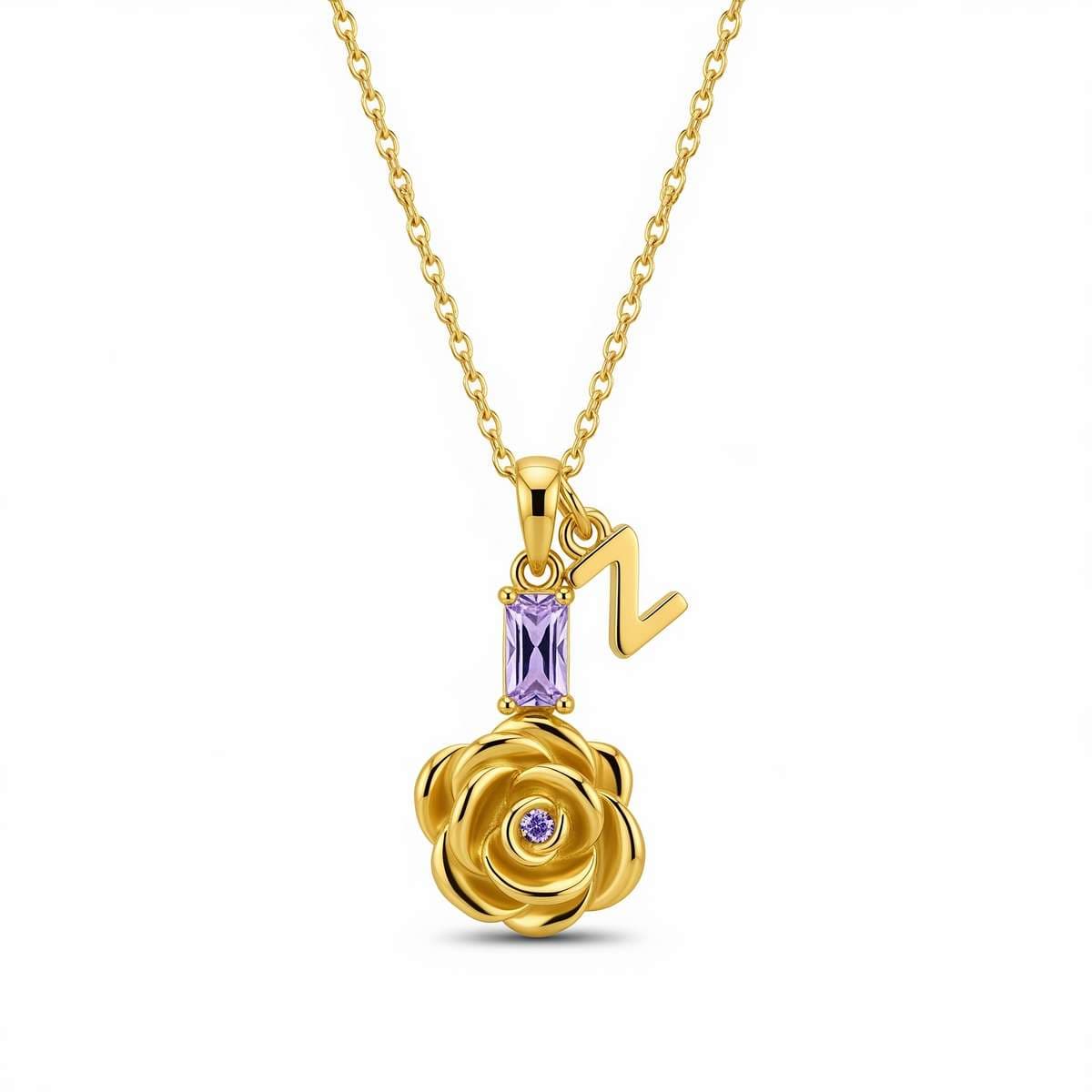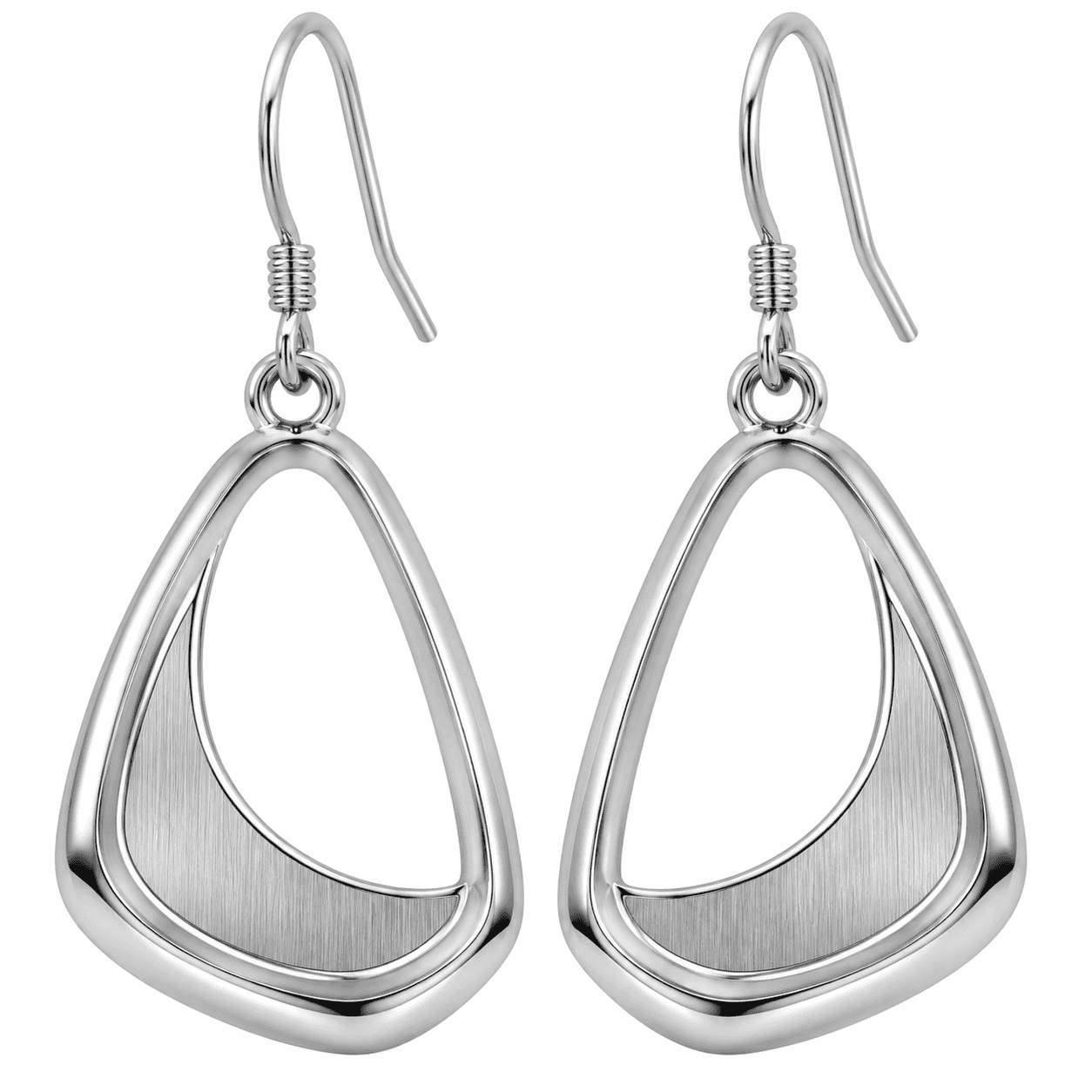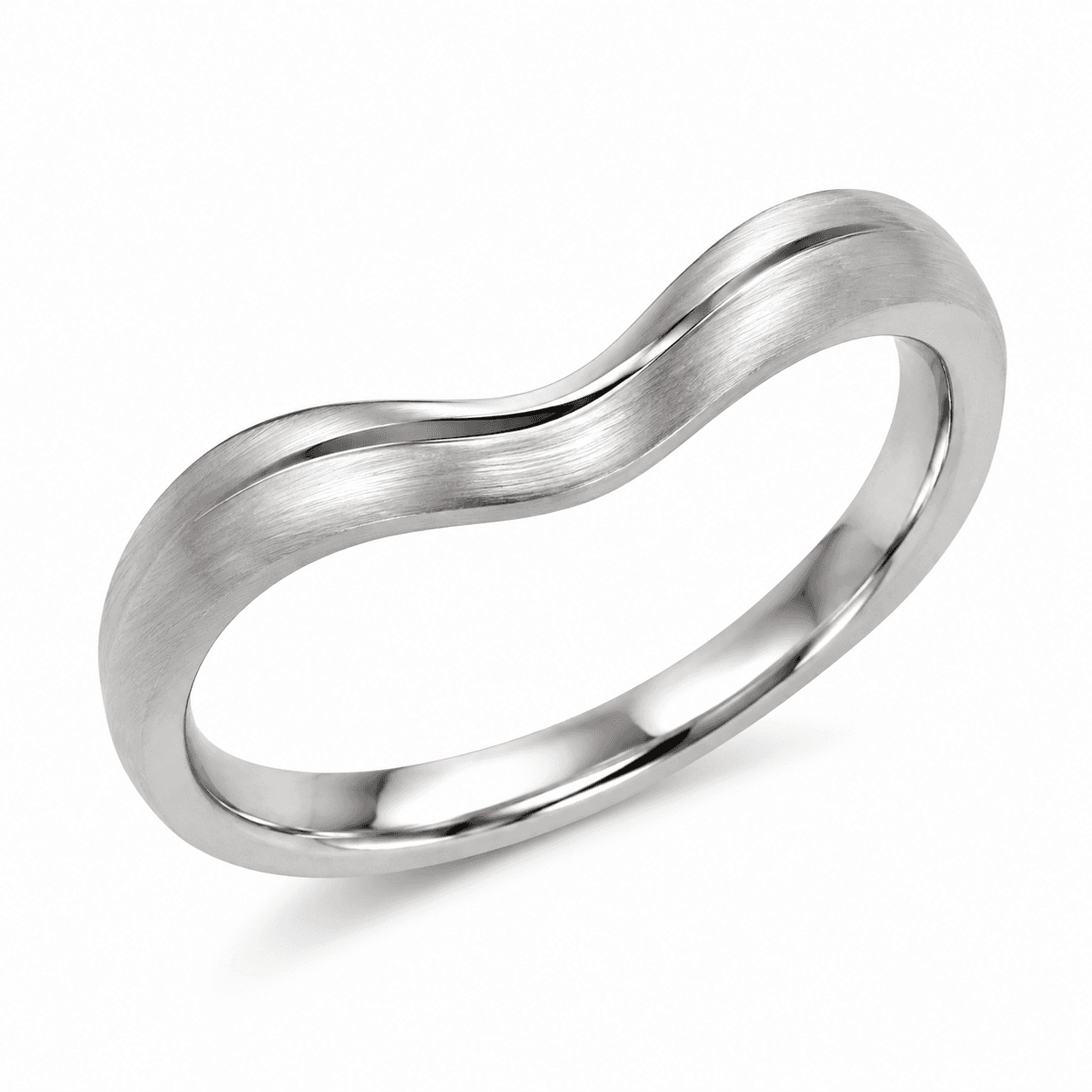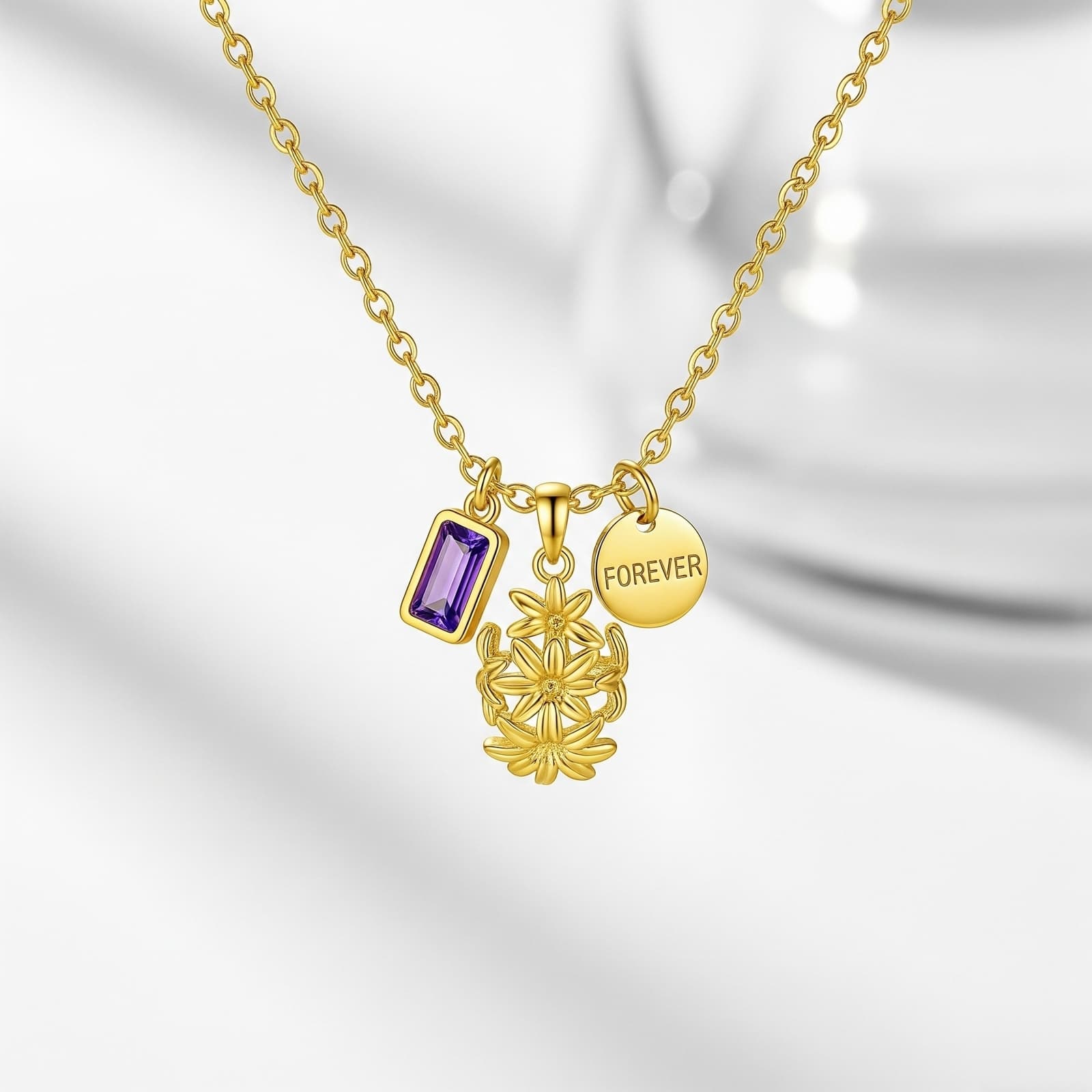
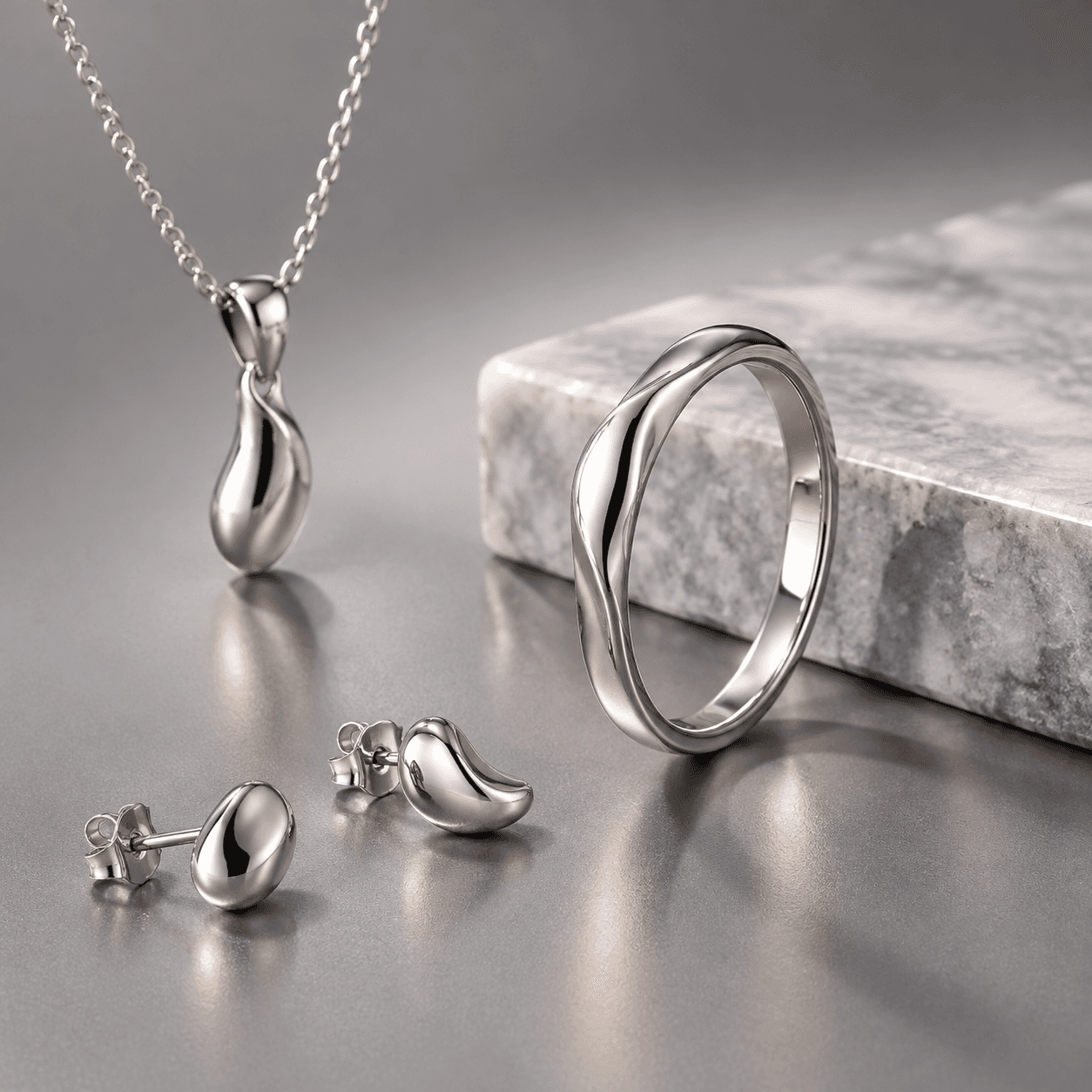
A minimalist stainless steel ring is more than a simple metal band. Its visual quality, wearing characteristics, structural stability, and long-term surface appearance depend on material selection, ring geometry, manufacturing precision, and finishing technology. For jewelry designers developing distinctive collections, understanding these technical factors makes it easier to translate a creative concept into a manufacturable product.
This material deep dive examines 316L and 304 stainless steel, ring construction, polishing, PVD gold plating, prototyping, and practical quality-control considerations. It also outlines the information B2B buyers should prepare when requesting OEM/ODM development, including material grade, dimensions, finish, logo requirements, packaging, and inspection criteria. Use the technical guidance to compare supplier proposals and establish a clear product specification before sampling.
ミニマルなステンレススチールリングの素材を理解する
A minimalist stainless steel ring places unusual importance on its base material because the design often contains very few decorative elements. With a simple band, sculptural curve, smooth surface, or subtle geometric profile, the metal itself becomes the primary visual feature. For jewelry designers, selecting the appropriate stainless steel grade is therefore an early development decision rather than a finishing detail. The two relevant stainless steel options in this manufacturing scope are 316L stainless steel and 304 stainless steel. Both belong to the stainless steel family, but their material characteristics and suitability for individual product specifications should be evaluated separately.
316L stainless steel is an austenitic stainless steel containing chromium, nickel, and molybdenum. Its material composition contributes to corrosion resistance, including improved resistance to certain localized corrosion conditions compared with many stainless steel alternatives. The low-carbon designation is also relevant to its metallurgical behavior during processing. These characteristics make 316L stainless steel a practical material to evaluate when developing minimalist rings intended for repeated everyday wear. However, stainless steel should not be described as completely immune to corrosion, surface damage, or chemical exposure. Actual performance depends on the selected grade, manufacturing condition, surface finish, environmental exposure, and care practices. A professional OEM jewelry manufacturer should review the intended use and agreed specification before confirming material selection.
304 stainless steel provides another material option for suitable ring designs. Designers should compare the intended application, forming requirements, finish expectations, and commercial positioning before choosing between the two grades. A material specification should identify the requested grade rather than relying on a general description such as silver-tone metal. For further product development, explore the stainless steel rings collection and the manufacturing capabilities described on the OEM/ODM services page.
リングのデザインに影響を与える素材特性
The performance of a minimalist stainless steel ring is influenced by several interconnected material properties. Hardness, strength, ductility, corrosion resistance, and surface condition all affect how a particular design can be manufactured and evaluated. Designers should understand that these properties are not interchangeable. Hardness relates to resistance to localized indentation and scratching, while strength describes the material's ability to withstand applied loads. Ductility concerns how a material deforms before fracture. These distinctions matter when translating narrow bands, rounded edges, open silhouettes, or sculptural wave forms into production-ready designs. The selected material must be considered together with the ring's dimensions and construction.
Stainless steel is valued in jewelry manufacturing partly because it combines useful mechanical characteristics with a naturally protective passive surface layer. This chromium-rich surface layer helps limit corrosion under appropriate conditions. It does not mean that every stainless steel ring will remain unchanged in every environment. Strong chemical exposure, abrasive contact, unsuitable cleaning practices, and manufacturing-related surface defects can influence appearance over time. For designers, the practical objective is to specify a suitable material and establish a repeatable finishing process. A 316L stainless steel ring with a carefully controlled polished surface, for example, has different visual requirements from a ring featuring a brushed or sculptural finish.
Ring geometry also influences perceived material quality. A wide band creates a larger visible surface, while a narrow band makes edge consistency and dimensional accuracy particularly noticeable. Rounded internal edges can contribute to a smoother contact surface, while external edge profiles determine the overall visual character. Designers should consider these features during initial CAD or drawing development. During OEM/ODM development, material choices, dimensions, and visual details can be reviewed together during sample evaluation before a production specification is finalized. Buyers can also explore custom ring manufacturing for additional development information.
リングの構造、厚み、および構造形状
ミニマリストリングのデザインでは、外観と物理的な構造の間で慎重な調整が必要です。シンプルな円形のリングは図面上では単純に見えるかもしれませんが、幅、厚み、内径、断面形状、エッジの仕上げによって、完成品の見た目や着用感が決まります。平らな断面形状のリングは、ドーム型のリングや、快適な着用感を重視した丸みのある断面形状とは異なる視覚効果を生み出します。彫刻的なウェーブリングでは、表面の高さや曲率が変化するため、指に沿って視覚的なバランスを保つという追加の要件が生じます。デザイナーは外観の参考資料だけに頼るのではなく、サンプル製作に入る前にこれらの特性を明確に定義する必要があります。
リングの厚みは、構造上の要件、重量感、完成品の視覚的なプロポーションに影響するため、特に重要です。極端に薄いデザインは、厚みのあるリングとは異なる製造上および取り扱い上の課題を伴う場合があります。また、幅広のリングは、同じ公称内径の細いリングとは指との接触具合やフィット感が異なる可能性があるため、サイズ設定にも注意が必要です。これらの点は、寸法入り図面、サイズ仕様書、実物サンプルの評価を通じて確認する必要があります。装飾要素を備えたリングでは、石留めや刻印の位置と深さを、残りの素材の厚みと併せて検討する必要があります。すっきりとしたミニマリストの外観を実現するために、実用的な構造を犠牲にしてはなりません。
製造工程の開発には、承認されたデザインに応じて、CNC加工、レーザー加工、成形、研磨、その後の仕上げ加工が含まれる場合があります。適切な加工方法は、リングの形状と求められる外観によって異なります。例えば、滑らかで連続したリングと、彫刻的で流動感のあるウェーブシルエットでは、必ずしも同じ加工や研磨上の配慮が必要になるわけではありません。サンプルの確認時には、正面から見た外観だけで評価せず、リング全体を検査する必要があります。内側の開口部、対称性、断面形状、エッジのつながり、表面の連続性、全体的なシルエットの一貫性を確認してください。こうした確認によって、魅力的なコンセプトを、プライベートブランドジュエリーや卸売コレクションに適した、再現性のある製品仕様へと仕上げることができます。
表面仕上げとPVDゴールドメッキ技術
Surface finishing is a defining part of minimalist stainless steel ring development. Because uncomplicated designs contain relatively few visual distractions, small variations in reflectivity, polishing direction, edge definition, or coating appearance can become prominent. Polished stainless steel produces a reflective surface that emphasizes the ring's geometry. A brushed finish creates a more directional visual texture, while carefully controlled matte finishing reduces reflected light and produces a restrained appearance. Designers should choose a finish based on the intended collection identity and the physical form of the ring. Surface treatments should be specified clearly so that the sampling and production teams can evaluate the same visual requirements.
PVD gold plating is another finishing option for stainless steel jewelry. Physical vapor deposition is a vacuum-based coating technology in which material is vaporized and deposited onto a prepared substrate. In jewelry applications, the process can be used to develop decorative gold-tone surfaces, including gold and rose-gold appearances. The final appearance and functional characteristics depend on substrate preparation, coating specification, process conditions, geometry, and subsequent handling. A coating should not be assumed to have identical performance across different designs or production conditions. When specifying a finish, identify the intended color, surface appearance, coverage requirements, and project-specific evaluation criteria.
Surface preparation is essential because a coating does not automatically conceal underlying manufacturing imperfections. Scratches, polishing marks, contamination, and inconsistent substrate preparation can affect the appearance of the final surface. A practical development sequence includes reviewing the base material, checking the polished surface, evaluating the sample finish under consistent lighting, and confirming the approved appearance before production. For a gold-tone minimalist stainless steel ring, inspect the inner and outer surfaces, edges, and transitions rather than assessing only the top surface. Buyers can discuss the requested finish and specification through an RFQ inquiry.
ミニマルリングコレクションのカスタマイズオプション
Minimalist stainless steel ring design offers considerable creative flexibility because small changes in shape and proportion can produce noticeably different visual identities. Designers can develop smooth classic bands, gently domed silhouettes, geometric profiles, sculptural wave forms, and coordinated ring combinations. Other customization possibilities include engraved details, contrasting surface treatments, selective decorative elements, and carefully positioned stone settings where appropriate. The important distinction is between a visual concept and a manufacturable design. Each requested feature should be assessed according to its dimensions, physical construction, finishing requirements, and relationship to the overall ring structure.
Logo engraving is one practical customization option for private label jewelry projects. A brand's approved artwork or wordmark can be evaluated for suitable placement on the inner or outer surface of the ring. The engraving method, available area, line thickness, and readability should be reviewed during sampling. Small text and intricate artwork may require adjustments to maintain clarity within the available surface dimensions. Other customization decisions include band width, thickness, size range, profile, finish, and packaging presentation. Where a design incorporates zircon, crystal, or pearl, the setting arrangement and physical attachment should be evaluated independently from the base ring construction.
For jewelry designers, a useful approach is to develop a coherent collection rather than treating every ring as an isolated product. A shared material grade, finish family, visual language, and packaging direction can create consistency across multiple designs. Variations in band width, silhouette, engraving, and surface treatment can then provide meaningful differentiation. Buyers can use the new stainless steel jewelry designs page to explore product development directions and the About Lefeng Jewelry page for available company information. Final customization options should remain subject to design review and sample approval.
デザインコンセプトから実物のリングサンプルまで
Sampling is the stage where a minimalist stainless steel ring moves from a visual idea into a physical object that can be evaluated. A rendering may communicate the overall silhouette, but it cannot fully demonstrate surface reflectivity, actual proportions, edge comfort, dimensional consistency, or the interaction between the ring and its decorative elements. A useful sample request should therefore include the ring's intended material, internal diameter or size range, band width, thickness, cross-sectional profile, finish, and any engraving or setting requirements. Dimensioned drawings are particularly valuable when the design contains sculptural curves, asymmetrical elements, or transitions between different surface profiles.
A practical sample development workflow begins with design review and specification clarification. The manufacturing team can assess whether the requested geometry and finish are compatible with the proposed processing route. CNC and laser processing may be considered for suitable construction details, followed by shaping and polishing as required by the design. If the project includes PVD gold plating or another configured finish, the finishing requirements should be recorded separately from the base-metal specification. Once the physical sample is available, the designer can assess the overall form, dimensions, material appearance, edge transitions, surface consistency, and functional details. Requested revisions should be documented clearly so that the next sample iteration can be evaluated against an identifiable set of changes.
Design approval should be based on a confirmed specification rather than a general statement that the sample looks acceptable. Record the approved material grade, size, dimensional tolerances, surface finish, logo placement, and decorative components. Photographs and annotated drawings can help maintain communication between the design team and factory. A sample should also be reviewed for the exact appearance expected in the final collection, including relevant packaging presentation. Buyers seeking sample development can submit the required drawings, references, and specifications through an RFQ inquiry. For additional sourcing guidance, visit the jewelry manufacturing insights section.
ステンレススチールリングの品質管理チェックポイント
Quality control for minimalist stainless steel rings should evaluate both measurable specifications and visible workmanship. Because the design is visually restrained, inconsistent dimensions, surface scratches, uneven polishing, and poorly defined edges can significantly affect perceived quality. A structured inspection process begins by comparing the incoming or prepared material specification with the approved project requirements. The material grade should be identified in the production documentation, and any requested supporting material records should be reviewed against the actual specification. A general description such as stainless steel is insufficient when the buyer has specified 316L stainless steel.
Dimensional inspection is another essential checkpoint. Relevant measurements may include internal diameter, ring size, band width, band thickness, and other design-specific dimensions. The buyer and manufacturer should agree on applicable tolerances before production. Visual inspection should examine surface continuity, polishing consistency, edge transitions, symmetry, and obvious manufacturing defects. For coated products, inspection should also cover color consistency, surface coverage, visible coating irregularities, and the agreed finish appearance. Where stones or other decorative components are configured, inspect their positioning, setting quality, and attachment against the approved design and project-specific acceptance criteria.
For private label jewelry and bulk orders, inspection checkpoints should be defined before manufacturing begins. A useful process can include material and specification review, in-process workmanship checks, finishing inspection, final product inspection, and packaging review. Packaging should be checked against approved requirements, including product presentation and requested logo or labeling details. Certification interpretation also requires care: any certificate or test report should be reviewed for the exact material, product, scope, issuing organization, and applicable specification. Where a buyer requires specific testing, certifications, or compliance documentation, availability and suitability should be confirmed against the project specification before order approval.
素材の選定、お手入れ時の注意点、長期的な外観保持
ミニマルなステンレススチールリングを選ぶ際には、素材の特性と想定される使用環境、コレクションにおける位置づけのバランスを考慮する必要があります。多くのデザインにおいて、316Lステンレススチールは、耐食性とジュエリー製造における実用性を備えていることから、検討の出発点として適した素材です。ただし、リングの経年変化は素材のグレードだけで決まるものではありません。表面仕上げ、コーティング、研磨性のある物体との接触、化学物質への曝露、湿気、メンテナンス方法など、さまざまな要因が状態に影響します。ポリッシュ仕上げのリングは、ブラッシュ仕上げのリングとは微細な表面の傷の見え方が異なる場合があります。また、PVDゴールドコーティング仕上げの場合は、コーティングに関する別の考慮事項が生じます。デザイナーは、実際の素材と仕上げの仕様に基づき、現実的なお手入れ方法を伝える必要があります。
基本的なお手入れ方法としては、柔らかい布でリングを拭き、強力な洗浄用化学薬品や研磨性のある表面への不必要な接触を避けることが挙げられます。PVDゴールドコーティング製品は、装飾表面を保護することを意識して取り扱う必要があります。また、購入者は、摩耗に関する期待値を評価する際に、ベースメタルの特性とコーティングの特性を区別する必要があります。ステンレススチール基材の耐食性が、装飾コーティングの耐摩耗性能を自動的に保証するわけではありません。同様に、ステンレススチール全般に関する一般的な説明は、プロジェクトごとの素材および仕上げの評価に代わるものではありません。小売業者がお手入れ方法や耐久性に関する説明を行う場合は、実際の製品仕様および利用可能な裏付け資料と整合した内容にする必要があります。
素材の選定にあたっては、コレクション全体の構成も考慮する必要があります。デザイナーは、主力となるリングシリーズに316Lステンレススチールを採用し、必要に応じて304ステンレススチール、925スターリングシルバー、銅、亜鉛合金など、異なる仕様の素材を別の製品向けに検討することもできます。これらの素材は、加工要件や表面特性が異なるため、互換性のあるものとして扱うべきではありません。ステンレススチールを中心とするコレクションでは、ベース素材と仕上げの仕様を明確に定めることで、個々のデザイン間の一貫性を確保しやすくなります。素材やお手入れに関する理解をさらに深めるには、ステンレススチールジュエリーは防水?316L購入者向けガイド、ステンレススチールジュエリーが変色するのはなぜ?316Lの化学的特性を徹底解説、ステンレススチールジュエリーのお手入れ方法:販売業者向け耐久性ガイドなどの関連記事も参考になります。
ミニマルなステンレススチールリングに関するよくある質問
Lefeng Jewelryとともに、ミニマルなステンレススチールリングコレクションを展開しましょう。
Turning a minimalist stainless steel ring concept into a production-ready product requires more than selecting a metal grade. Material identification, band geometry, surface preparation, finishing, sample evaluation, and inspection requirements should work together as one coordinated development process.
Before requesting an OEM/ODM quotation or sample, prepare the target material grade, ring size range, band width and thickness, cross-sectional profile, finish, logo artwork, decorative details, packaging expectations, and documentation requirements. Dimensioned drawings and reference images can help clarify sculptural curves, asymmetry, engraving placement, and transitions between polished, brushed, or coated areas.
Use the RFQ inquiry to submit the project brief and confirm feasibility, sample requirements, finishing options, and quality-control criteria. You can also review the OEM/ODM services page, stainless steel rings collection, and jewelry manufacturing insights for related product-development information.
Related resources
Related resources
- Why Is Stainless Steel Heart Charm Waterproof? 316L Guide
- Stainless Steel Heart Charm vs Sterling Silver: Buyer’s Guide
- What Buyers Should Know About Minimalist Stainless Steel Necklace Styling for OEM/ODM Partnerships
- Why stainless steel rings outfit ideas Are Shaping Design Trends
- Best Stainless Steel Heart Charm Ideas: A Buyer's Design Guide
- Gold Plated Stainless Steel Jewelry: Durability and Sourcing Guide
- Stainless steel jewelry gift ideas: Retail design trends guide
- How to Clean Stainless Steel Jewelry: A Complete B2B Guide
- Can You Shower With Stainless Steel Necklace? A Buyer’s Guide
- Stainless Steel Heart Charms: A B2B Buyer’s Guide to Premium Finishes