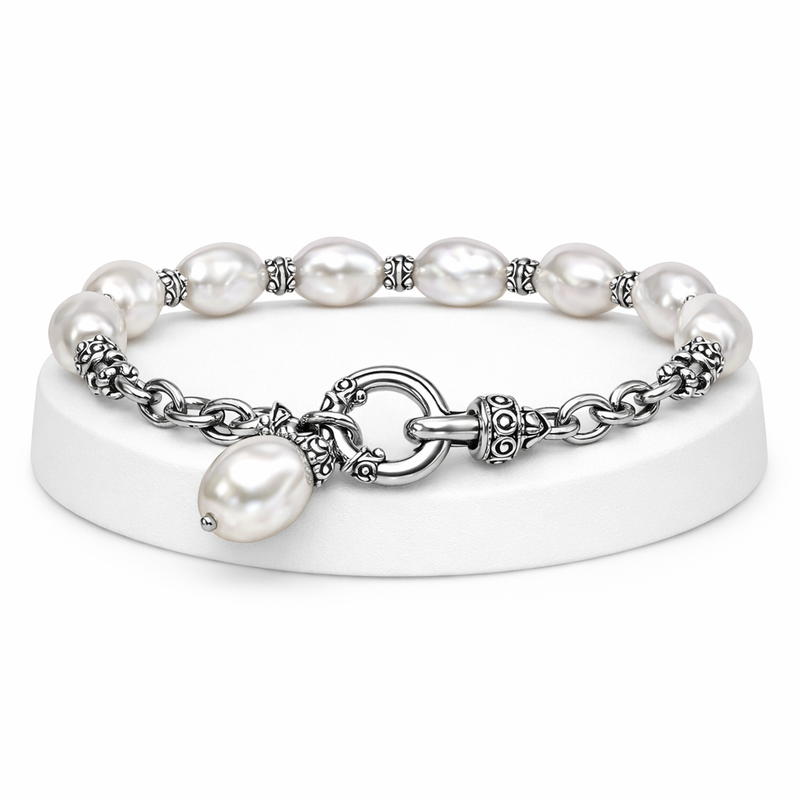
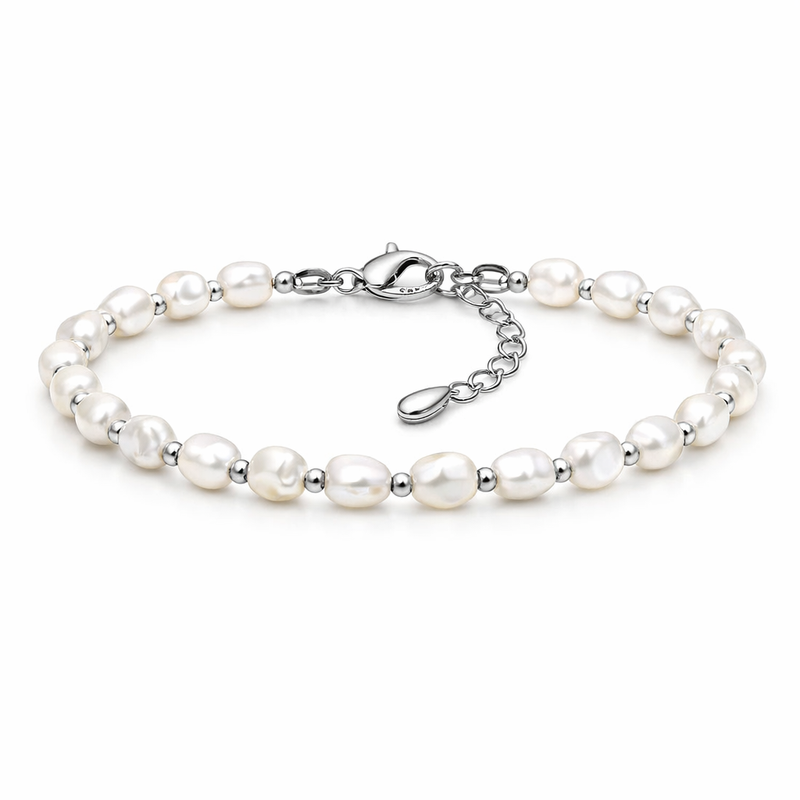
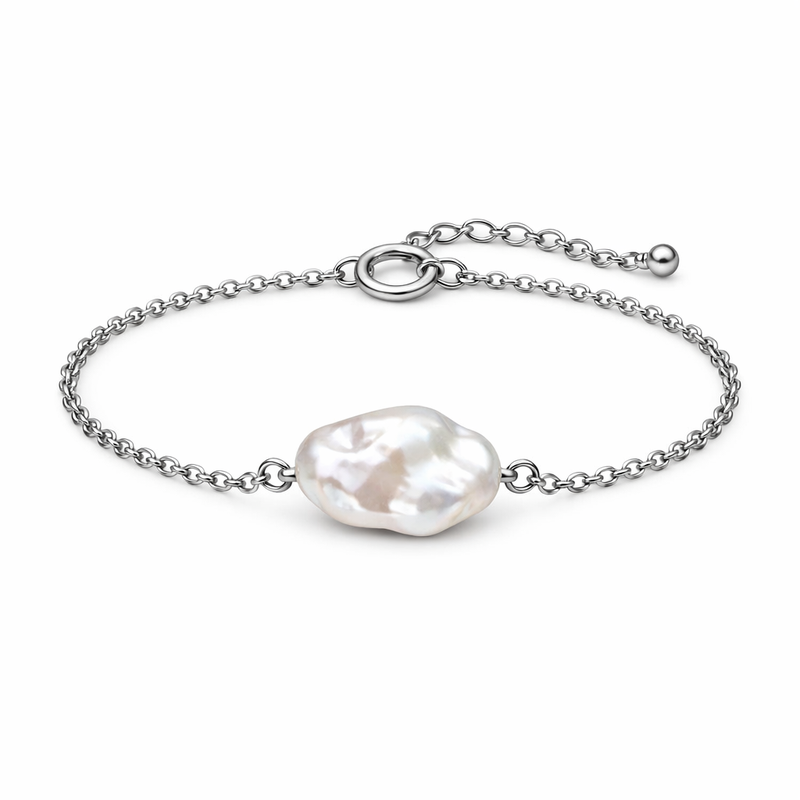
Pearls are having a very “now” moment again, but the demand looks different than it did a few seasons ago. Buyers want pearls that feel modern, wearable, and easy to style with everyday outfits—especially during the Holiday 2025 gifting cycle, when “small luxury” and stackable pieces move fast at retail.
For B2B brands and wholesalers, this trend is less about traditional heirloom styling and more about supply-chain-friendly designs that can be produced consistently, shipped reliably, and merchandised with strong margins. That’s exactly where a dainty adjustable baroque pearl stainless steel toggle closure bracelet becomes a smart OEM/ODM target.
In this article, we’ll break down why toggle-and-pearl bracelets are converting right now, how stainless steel manufacturing supports scalable quality, and what customization and production planning can do for your business growth.
Current pearl demand is being driven by styling versatility: asymmetry, organic shapes, and mixed materials that feel casual rather than formal. Baroque pearls fit perfectly because no two are identical, which gives every unit a “one-of-one” feel—without forcing you into artisan-only production models.
At the same time, closure hardware is becoming a key selling point. A toggle clasp is functional, visually recognizable, and photogenic for short-form video. It also supports a premium look with fewer components than some multi-part lobster clasp assemblies.
This is why the baroque pearl toggle bracelet stainless steel concept is showing up across brand launches and gift edits: it reads as elevated but remains approachable, and it stacks well with chains and bangles.
From a merchandising perspective, a single bracelet style can be offered across multiple SKUs through plating color, pearl grade, chain thickness, and charm add-ons. That allows you to build collections without redesigning from scratch each time.
When you pitch this category to retailers or distributors, avoid vague claims like “high quality” and focus on measurable benefits. Position the bracelet as a repeatable bestseller: dependable base metal, consistent finishing, and scalable customization options.
A dainty adjustable baroque pearl stainless steel toggle closure bracelet can be positioned as a “hero SKU” that anchors a capsule line. Pair it with matching necklaces or earrings using the same pearl and finishing specs to increase average order value.
If your client base includes boutiques and online brands, emphasize easy sizing and comfort. An adjustable pearl bracelet with toggle clasp supports gifting because customers feel safer buying it without knowing an exact wrist size. That reduces returns and improves buyer confidence—important metrics for retailers evaluating reorder potential.
For wholesale catalogs, the story becomes simple: modern pearl + stainless durability + adjustable fit + fast lead times. The clearer the logic, the faster the purchasing decision.
Customization is where OEM/ODM partners can create real value. The goal isn’t unlimited options; it’s a controlled menu of upgrades that feel premium but remain production-friendly.
With a well-designed base, the baroque pearl toggle bracelet stainless steel style can be re-skinned for multiple customers using the same core tooling. That improves factory efficiency and helps you offer low MOQ while still protecting margin.
When discussing customization, specify what’s “standard” versus what requires new sampling. For example, plating color and tag engraving can be standard, while a fully custom toggle shape may require new molds and longer sampling timelines.
If your product brief includes an adjustable pearl bracelet with toggle clasp variant, clarify the adjustability mechanism early. The adjustability choice impacts chain length tolerances, pearl placement, and final wear comfort—so it should be locked before bulk production scheduling.
Stainless steel jewelry wins in OEM/ODM because it’s strong, corrosion-resistant, and stable for high-volume finishing. But “stainless” is not a single standard—material selection and process control matter.
Most B2B buyers prefer 316L stainless steel for jewelry because it performs well in sweat and humid conditions, and it polishes nicely. For toggle components, ensure the bar and ring thickness are engineered for repeated use without deformation.
For pearls, consistency comes from sorting and calibration. Baroque pearls are intentionally irregular, but you can still control the range of size, luster, and surface character so that each shipment looks aligned with the approved sample.
For a dainty adjustable baroque pearl stainless steel toggle closure bracelet, “dainty” cannot mean fragile. If the chain is very fine, compensate with stronger link design or reinforced jump rings. A small upgrade in hardware thickness can reduce after-sales issues dramatically.
Also, keep a clear QC standard for toggle closure performance. A baroque pearl toggle bracelet stainless steel should open and close smoothly, but still hold securely during wear. This is a simple, repeatable factory test that builds trust with brand clients.
Business clients don’t just want a beautiful sample—they want confidence that every carton matches the sample. That means your QC system should be visible, documented, and consistent across orders.
Retailers also care about customer experience. An adjustable pearl bracelet with toggle clasp should feel smooth on skin, with no sharp edges at the toggle ring, end caps, or jump rings. This is especially important for dainty silhouettes where components sit closer to the wrist.
If your clients sell internationally, be prepared to support common compliance needs. Stainless steel jewelry is typically easier for brands to manage versus plated base metals, but clients may still request nickel-release documentation, plating composition details, or testing reports from third-party labs.
The fastest-growing OEM/ODM relationships are built on predictable costing and flexible scaling. Toggle pearl bracelets are ideal because they combine a simple metal structure with one “hero” natural element that adds perceived value.
Here’s how to make the economics work for both sides. Start with a standardized base platform (hardware + chain family), then allow controlled variations. This lets your factory run production in batches while your clients get variety for merchandising.
Offer tiered options clearly. For example, you can quote a baseline baroque pearl toggle bracelet stainless steel with standard polish and natural steel tone, then add premiums for PVD color, higher pearl luster, or custom branding.
Low MOQ is achievable when sampling is efficient. Use a “design service” approach: provide an existing mold library of toggles, chain specs, and pearl placements so a buyer can select and combine elements quickly. This reduces development time and increases conversion for first-time orders.
For brands planning campaigns around gifting, speed matters. Align timelines with realistic production capacity: sampling, approval, bulk, QC, and shipping windows. If a client needs an adjustable pearl bracelet with toggle clasp for a Holiday drop, push early approvals and reserve production slots to prevent delays.
Even in B2B, your product story influences buying decisions. Give clients plug-and-play assets: spec sheets, usage benefits, care instructions, and packaging recommendations that match premium positioning.
For packaging, stainless steel pairs well with minimal, modern branding. Suggest anti-tarnish pouches, clean insert cards, and a short explanation of baroque pearls’ natural uniqueness. This reduces customer questions and elevates perceived value.
Assortment-wise, recommend a three-SKU structure: core steel tone, PVD gold, and a “premium” version with upgraded pearl grade. This approach lets a buyer test pricing elasticity without overcomplicating inventory.
Finally, encourage clients to use video-friendly messaging. Demonstrate how the toggle works, how the bracelet layers, and how adjustability fits different wrists. A dainty adjustable baroque pearl stainless steel toggle closure bracelet sells especially well when customers can see the clasp and pearl movement in motion.
When brands ask for differentiation, propose small but meaningful touches: a signature toggle shape, a micro-engraved logo bar, or a charm that reflects their identity. These details can turn a standard style into a recognizable line.
Trends come and go, but certain combinations stay commercially strong when they match how people actually wear jewelry. Modern pearls, simple closures, and durable metals are aligning right now—making this category highly attractive for wholesale and private label programs.
If you’re building an OEM/ODM offering that supports customization, quality control, and low MOQ, the dainty adjustable baroque pearl stainless steel toggle closure bracelet is a practical, profitable focus. It’s easy to refresh across seasons, easy to merchandise for gifting, and efficient to manufacture when the platform is standardized.
Whether your client is asking for a baroque pearl toggle bracelet stainless steel line extension or an adjustable pearl bracelet with toggle clasp designed for mass-market scalability, the winning formula is the same: controlled customization, documented QC, and production planning that protects timelines.
For business buyers, that’s not just a bracelet—it’s a repeatable growth product with long-term reorder potential.