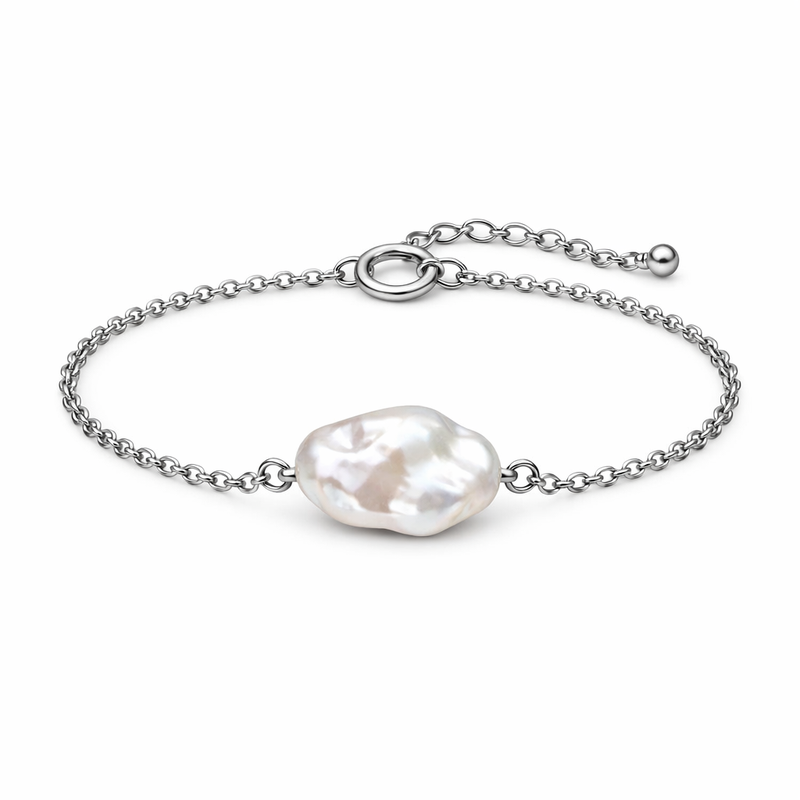
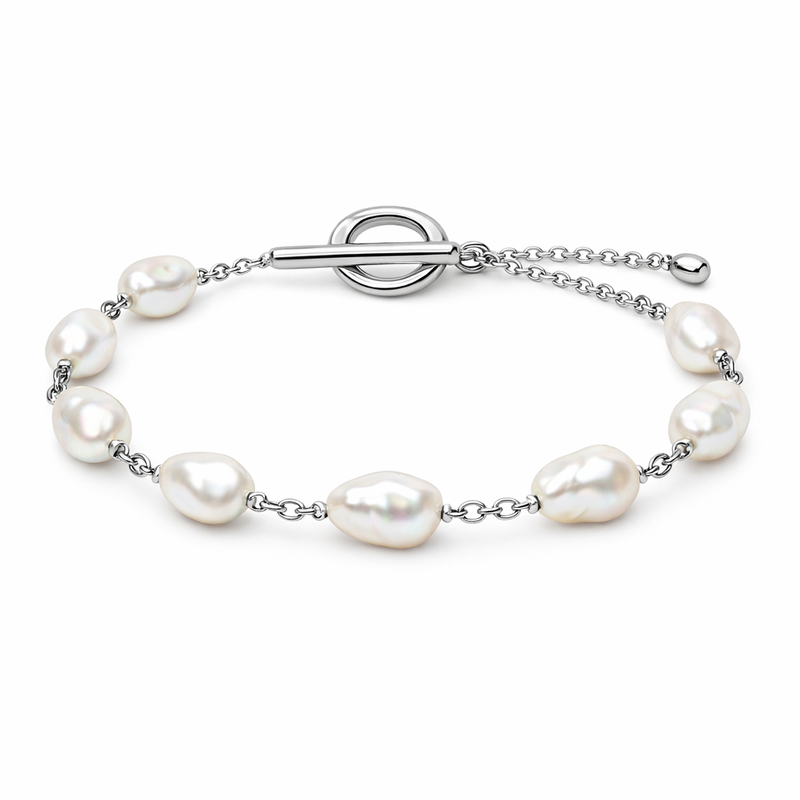
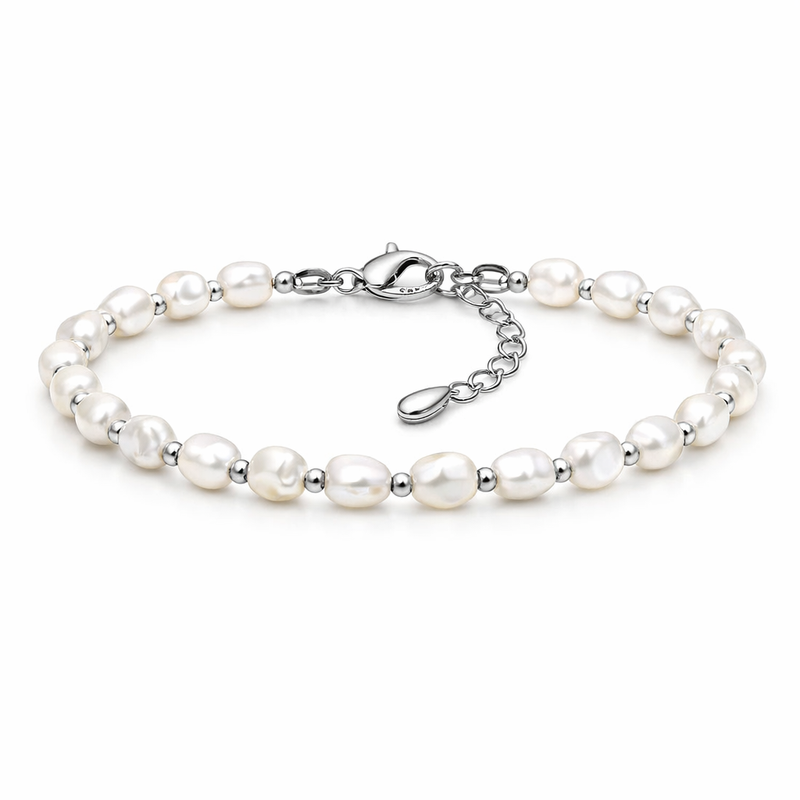
Holiday 2025 jewelry buying has a clear message for brands and retailers: pearls are back, but customers want them lighter, more wearable, and easier to size. That’s why the dainty baroque pearl bracelet is outperforming heavier pearl looks—especially when paired with stainless steel for durability and daily comfort.
For OEM/ODM buyers, this trend is a business opportunity, not just a style shift. The right product architecture (adjustability, secure closure, and corrosion resistance) can reduce returns, improve reviews, and simplify SKU planning across multiple markets.
In this article, we’ll break down how to build a scalable bracelet program around the dainty baroque pearl bracelet, including why an adjustable stainless steel bracelet base and a toggle closure pearl bracelet option can directly support wholesale growth.
Consumers are leaning into “wear-everywhere” jewelry: pieces that feel premium but don’t require delicate handling. A dainty baroque pearl bracelet fits that expectation because each pearl looks unique, while the overall silhouette stays minimal and stackable.
From a merchandising standpoint, baroque pearls also help you differentiate without complicated new components. You can keep the same stainless steel chain platform and simply vary pearl shape, size, spacing, or mixed elements to create multiple SKUs that still share the same manufacturing flow.
For distributors and retailers, that means better shelf variety with predictable replenishment. For brands, it means faster product development cycles and better margins—especially when your factory can standardize core findings while customizing the “front-facing” design details.
Most importantly, this trend aligns with practical product claims. Stainless steel enables “durable” and “everyday” positioning, which is harder to support with softer base metals. When you build the collection as an adjustable stainless steel bracelet family, you can serve more wrist sizes with fewer SKUs.
Two features keep showing up in purchase decisions: easy sizing and confidence in the clasp. That’s why many brands now request an adjustable stainless steel bracelet construction rather than fixed-length styles.
Adjustability can be achieved through extender chains, sliding beads, or multi-position links. For OEM/ODM, extender-based sizing is often the most stable for mass production because it uses repeatable parts, simplifies QC, and supports consistent packaging.
On closures, a toggle closure pearl bracelet is popular because it looks “designed,” not purely functional. Toggles also photograph well, which matters for DTC listings and wholesale line sheets.
The key is matching the toggle size and bar length to the chain weight so the bracelet stays secure during movement. A well-engineered toggle closure pearl bracelet should pass pull testing and repeated open/close cycles without deforming.
When you combine both features—an adjustable stainless steel bracelet platform plus a toggle closure pearl bracelet variant—you give buyers two strong options: easy fit for gifting and a premium closure for higher AOV assortments.
For stainless steel jewelry, selecting the right grade is a commercial decision. Many programs use 304 for cost efficiency, while 316L is preferred when brands want stronger corrosion resistance messaging (often tied to “sweat-friendly” and “water-resistant” positioning).
If your target channels include coastal markets, sports-focused retailers, or customers who wear jewelry daily, 316L can reduce after-sales issues. It also supports a more premium story for a dainty baroque pearl bracelet without drastically changing the design.
Plating strategy matters too. For gold tones, PVD coating typically provides better wear performance than standard electroplating. This becomes especially important when the bracelet includes moving parts like a toggle or extender loops.
From a production standpoint, consistent raw material sourcing, hardness checks, and surface finish standards help ensure each adjustable stainless steel bracelet batch matches the previous one—critical for wholesale reorders and distributor programs.
Scaling a dainty baroque pearl bracelet isn’t just about buying pearls and assembling chain. It requires a repeatable workflow that controls pearl variability while keeping the final appearance intentional, not random.
Typical production steps include: material inspection (chain, findings, pearls), cutting and pre-assembly, pearl drilling or pin-setting (depending on design), welding or joining, surface finishing, cleaning, plating/PVD (if needed), then final assembly and QC.
Because baroque pearls vary naturally, many factories sort pearls by size, luster, and shape category before assembly. This keeps each bracelet visually consistent, which reduces customer complaints and helps brands maintain stable product photography across restocks.
If the design calls for a toggle closure pearl bracelet, the toggle bar and ring are usually produced via casting or stamping, then polished and tested for fit. For higher-volume programs, stamping can improve consistency and lower unit costs once tooling is approved.
For an adjustable stainless steel bracelet configuration, the extender length and end-ring dimensions should be standardized so packaging and labeling stay uniform across SKUs, even if the pearl layout changes.
For B2B clients, QC isn’t a “nice to have.” It’s how you protect sell-through and prevent chargebacks. A strong factory QC plan for a dainty baroque pearl bracelet usually includes both in-process checks and final inspection.
Recommended QC checkpoints:
Many clients also request nickel-release considerations for EU markets, plus packaging tests to prevent scratches during shipping. These steps can be built into SOPs so your reorder quality stays stable as volumes grow.
Customization sells, but unlimited options can slow production. The best OEM/ODM programs balance “brand signature” details with standardized components that keep lead times predictable.
High-impact customization options for a dainty baroque pearl bracelet:
What to standardize for efficiency: extender parts for every adjustable stainless steel bracelet, core jump ring sizes, packaging format, and the mechanical dimensions of a toggle closure pearl bracelet so you can run multiple designs using the same proven closure platform.
This approach supports low MOQ development while keeping your production capacity ready for scale. Brands can launch quickly, then expand the line by swapping pearls and decorative elements without rebuilding the entire supply chain.
For many buyers, the ideal path is: test the market, learn fast, then scale winners. A well-designed dainty baroque pearl bracelet program supports this because it can be offered in tiered pricing and multiple finishes without changing the core assembly process.
A smart low MOQ launch typically includes 3–6 SKUs: one hero dainty baroque pearl bracelet, one minimal station style, one premium toggle closure pearl bracelet version, and at least one adjustable stainless steel bracelet focused on gifting and broad sizing.
Once sell-through data is clear, scale by introducing seasonal color tones (gold/steel), small design refreshes (different pearl grading), and upgraded packaging. For wholesalers and distributors, this also helps you build “sets” and bundle offers that increase order value.
Operationally, ask your manufacturer about monthly capacity, line allocation for repeat orders, and spare parts planning for closures and extenders. These details matter when a style goes viral and your buyers need rapid replenishment.
The market shift is clear: consumers want pearls that feel modern, light, and easy to wear. For B2B clients, the opportunity is to turn that demand into a repeatable manufacturing program built around the dainty baroque pearl bracelet.
When you combine a reliable adjustable stainless steel bracelet platform with a secure toggle closure pearl bracelet option, you’re not just following a trend—you’re solving real retail problems: sizing, durability, and perceived value.
With disciplined customization, standardized components, and factory-grade quality control, you can launch quickly at low MOQ, then scale confidently into wholesale and distributor channels. The result is a pearl collection that looks premium, wears better, and supports long-term business growth.