Pearls are having a modern moment again, and B2B buyers are moving fast to capture it with designs that feel fresh, wearable, and easy to scale.
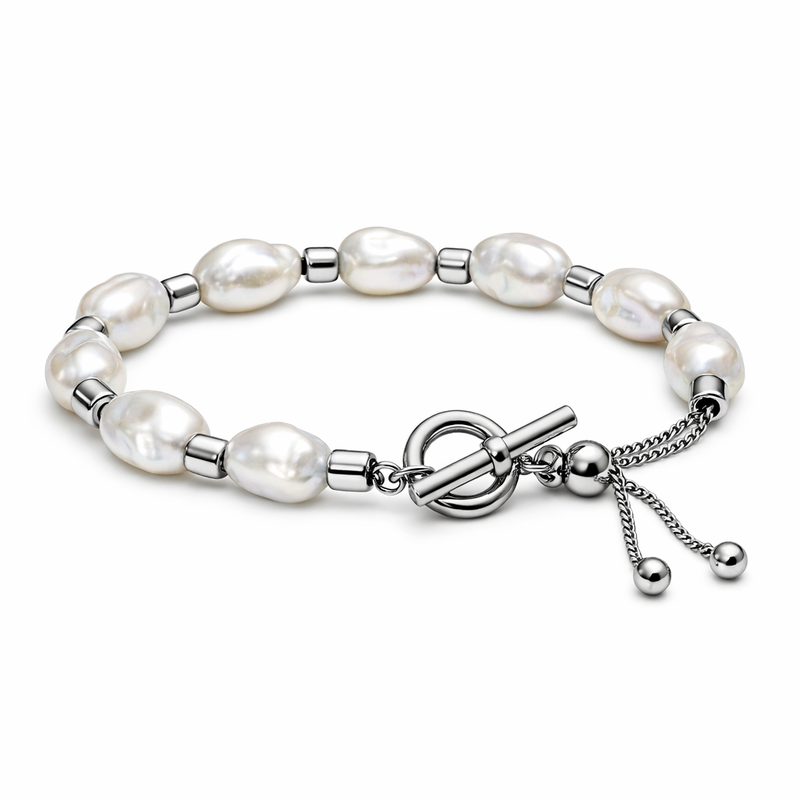
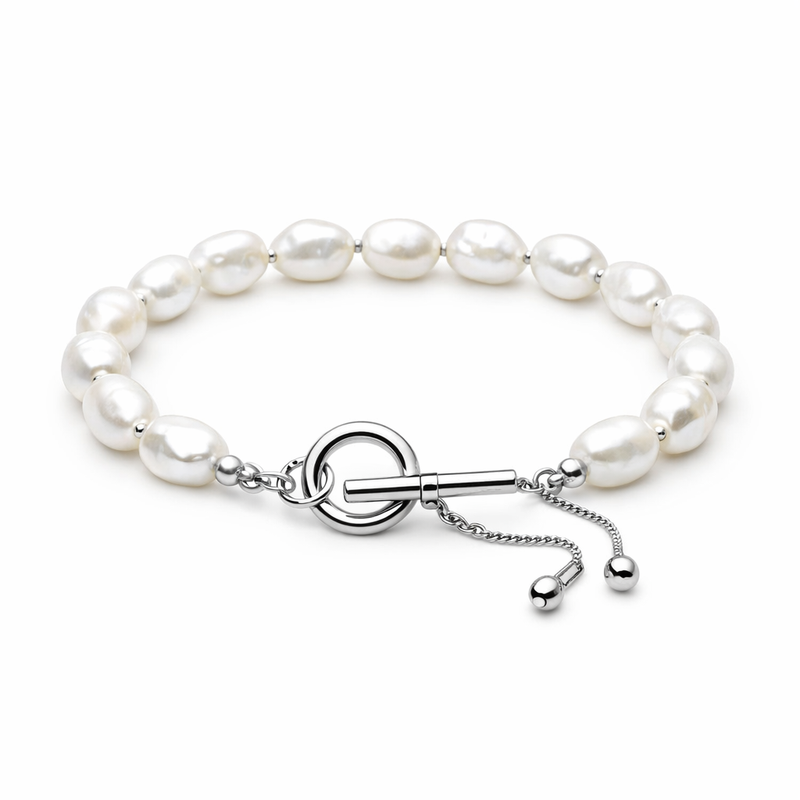
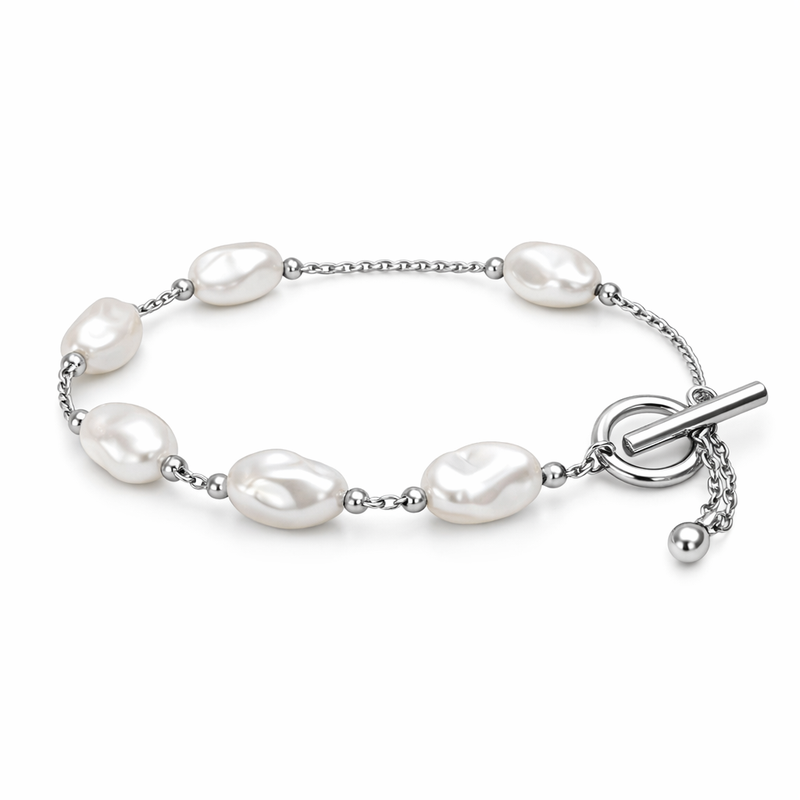
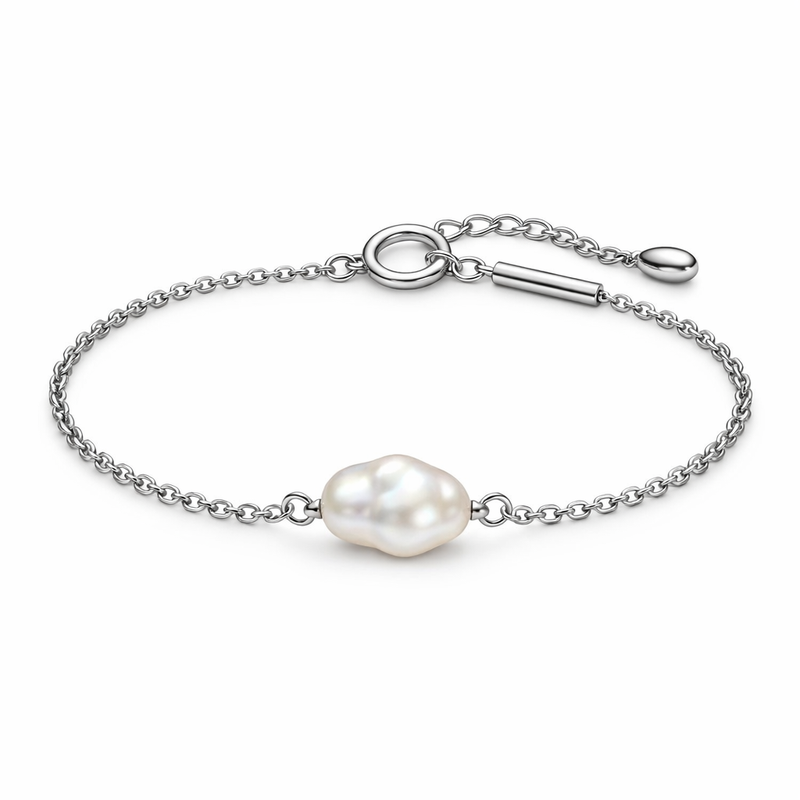
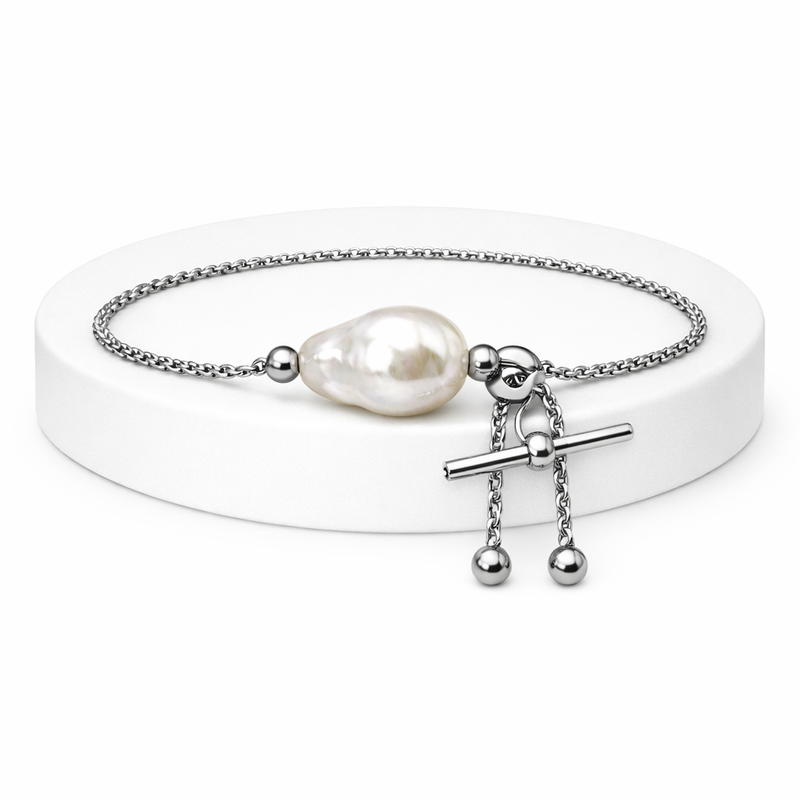
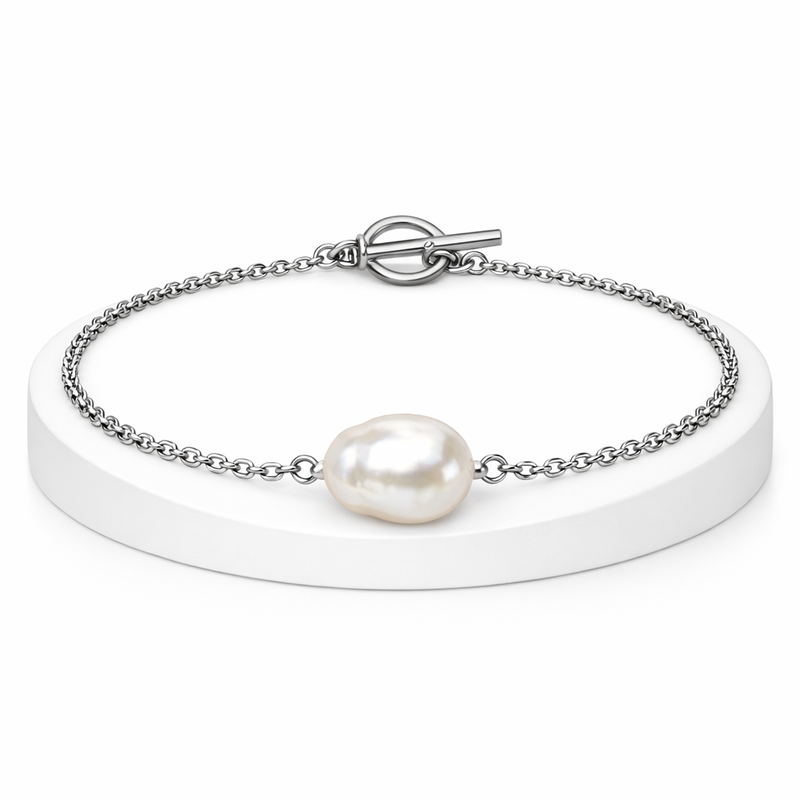
One standout product format is the dainty baroque pearl bracelet: it looks premium, photographs beautifully, and gives brands room to tell a story around “each pearl is unique.”
For OEM/ODM clients, the real opportunity is pairing organic baroque pearls with stainless steel components that improve durability, reduce returns, and support consistent mass production.
In this article, we’ll break down how to build a commercial-ready dainty baroque pearl bracelet line using an adjustable pearl toggle bracelet structure—and why a stainless steel toggle bracelet foundation can be a smart move for business growth.
Consumers want “special” pieces, but they also want everyday wear. That’s why minimal pearl styles are back: they look elevated without feeling formal.
A dainty baroque pearl bracelet hits that sweet spot. It’s delicate enough for stacking, but the irregular pearl shape adds character that makes it feel more expensive than it is.
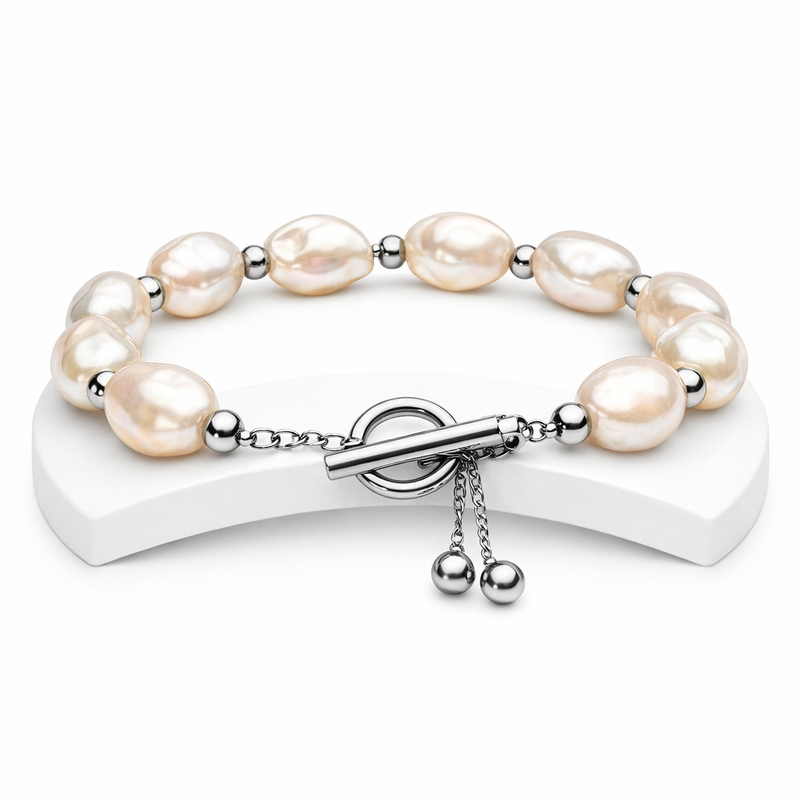
From a merchandising angle, baroque pearls also help brands create visual variety within one SKU family—perfect for drops, capsule collections, and seasonal refreshes.
For wholesalers and retailers, this trend is attractive because it supports both giftable positioning and repeat wear, improving sell-through beyond peak holiday weeks.
Fit is a major reason bracelets get returned. A strong solution is the adjustable pearl toggle bracelet format, which allows flexible sizing without sacrificing aesthetics.
Instead of extension chains that tangle or look “cheap,” the toggle structure can feel intentional, decorative, and premium—especially when paired with clean metal geometry.
For product planners, an adjustable pearl toggle bracelet also reduces SKU complexity. One size can cover more wrist ranges, which simplifies inventory and helps new brands launch faster.
Common adjustable structures include multi-position toggle rings, sliding bead limiters (with a toggle look), and dual-loop toggles that allow two fit settings.
When the goal is both aesthetics and stability, your factory should engineer the toggle dimensions to prevent accidental slipping while keeping the motion smooth.
This is where a well-made stainless steel toggle bracelet structure shines—because precision is easier to maintain at scale with consistent metal parts.
Brands love pearls, but they worry about maintenance issues: tarnish complaints, plating wear, and clasp failures can create costly after-sales support.
Using a stainless steel toggle bracelet base helps reduce these problems because stainless steel is naturally corrosion-resistant and holds up better in everyday wear environments.
For OEM/ODM buyers, stainless steel also improves cost efficiency. It supports high-volume production with predictable material performance and stable finishing workflows.
Most factories build stainless styles around 304 or 316L steel, depending on the positioning and target market expectations for skin-friendliness and durability.
When you combine baroque pearl character with a stainless steel toggle bracelet backbone, you get a product that looks artisanal but behaves like a scalable commercial SKU.
That reliability is a strong selling point for retailers and distributors who want fewer returns and more repeat orders.
Baroque pearls aren’t “uniform,” and that’s the point—but manufacturing still needs repeatable standards so each shipment matches the approved sample.
A professional OEM/ODM workflow starts with pearl grading rules: size range, luster level, surface tolerance, drill accuracy, and color consistency targets.
For a dainty baroque pearl bracelet, drill precision is especially important because the scale is small. Off-center holes can make a delicate design look messy.
Once pearls are sorted, factories typically move through metal prep, finishing, assembly, cleaning, and final inspection—each step should be documented for repeat production.
If your brand is positioning “everyday pearl jewelry,” you want documented durability testing—especially around the toggle, because that’s where failures can happen.
A factory that specializes in adjustable pearl toggle bracelet production should already have standard testing rigs and clear pass/fail thresholds.
Holiday and trend cycles move quickly, so B2B buyers need speed without sacrificing quality. The right OEM/ODM partner should offer design service and sampling that supports rapid decision-making.
Customization on a dainty baroque pearl bracelet can be simple but powerful: chain style changes, pearl size adjustments, or branded toggle shapes can create a “signature” look.
For scaling, low MOQ options matter. A smart approach is launching 2–4 core designs, then expanding with variations once sell-through data is proven.
To keep costs controlled, standardize what you can (chain gauges, ring sizes, packaging) and customize what customers notice most (pearl placement, toggle silhouette, and branding).
For wholesalers and distributors, it also helps to request consistent replenishment lead times and a clear capacity plan—especially if your stainless steel toggle bracelet styles take off mid-season.
Operationally, an adjustable pearl toggle bracelet program is easier to reorder when the metal parts are standardized and the pearl grading rules are locked in.
Once production is ready, your success depends on how the line is positioned to retailers and end customers. Pearls sell best when the story is modern: not “traditional,” but “effortless and personal.”
A dainty baroque pearl bracelet works especially well in layered bracelet sets, “day-to-night” edits, and giftable bundles with matching earrings or necklaces.
For B2B catalogs, show the toggle clearly in product photography. Buyers want to understand how the bracelet closes, how it adjusts, and why the design feels premium.
Also consider merchandising copy that highlights durability, skin comfort, and easy care—key benefits of a stainless steel toggle bracelet structure for everyday wear.
When wholesalers see you’ve planned quality control and replenishment, they’re more comfortable placing deeper orders—even with trend-led items.
That confidence is a major reason stainless-based pearl programs can outperform plating-heavy alternatives in repeat seasons.
The pearl comeback is creating real demand, but the brands that win are the ones who can deliver consistent quality at speed.
A well-engineered dainty baroque pearl bracelet line gives you visual uniqueness, strong storytelling, and flexible assortment building for retailers and distributors.
By choosing an adjustable pearl toggle bracelet structure, you reduce returns and simplify inventory, which is a direct operational advantage for B2B growth.
And with a stainless steel toggle bracelet foundation, you strengthen durability, improve customer experience, and build a product that can scale from low MOQ testing to high-volume wholesale manufacturing.
If you’re planning your next bracelet launch, this combination—baroque pearl + adjustable toggle + stainless steel—can be a practical, trend-aligned formula for stronger sell-through and long-term reorder potential.