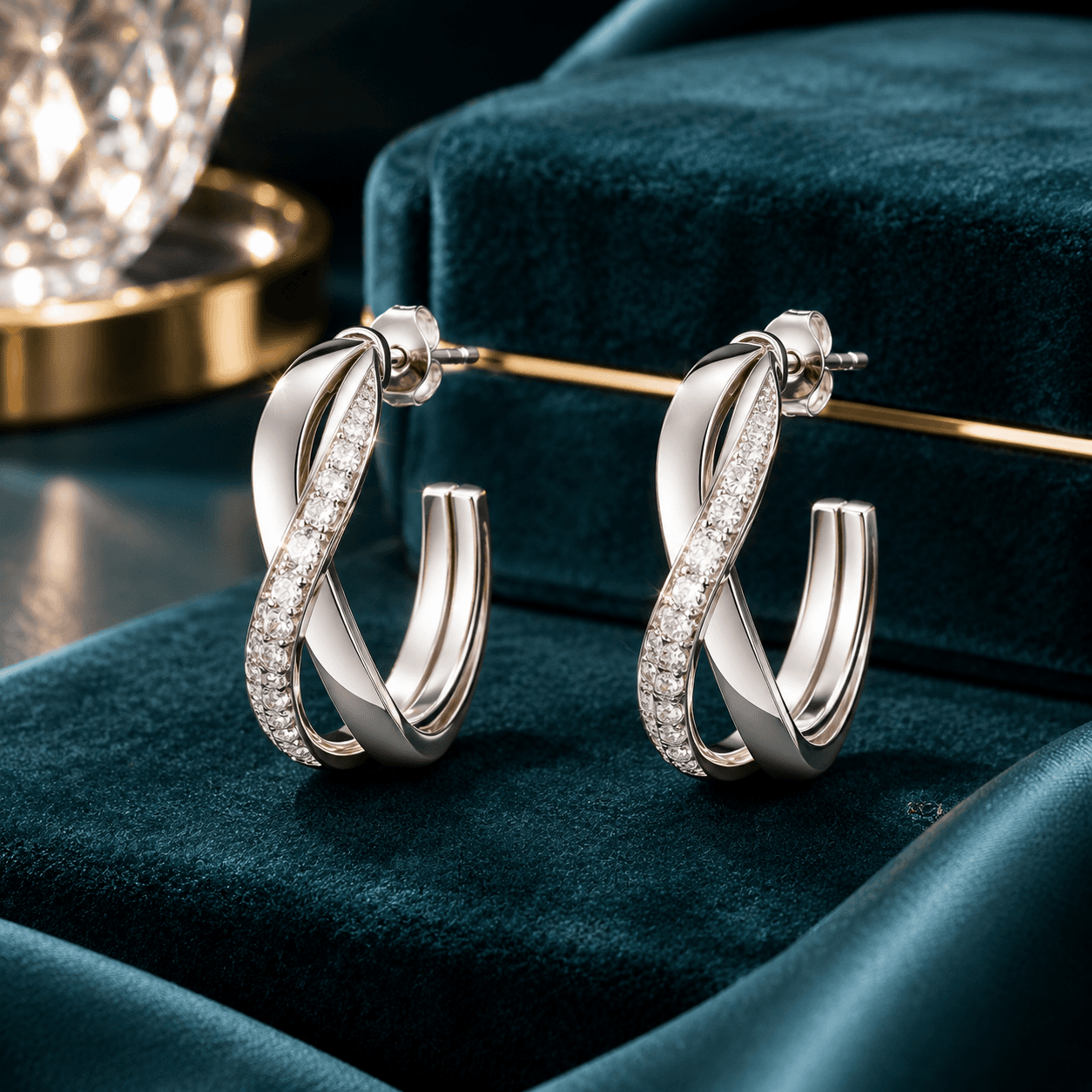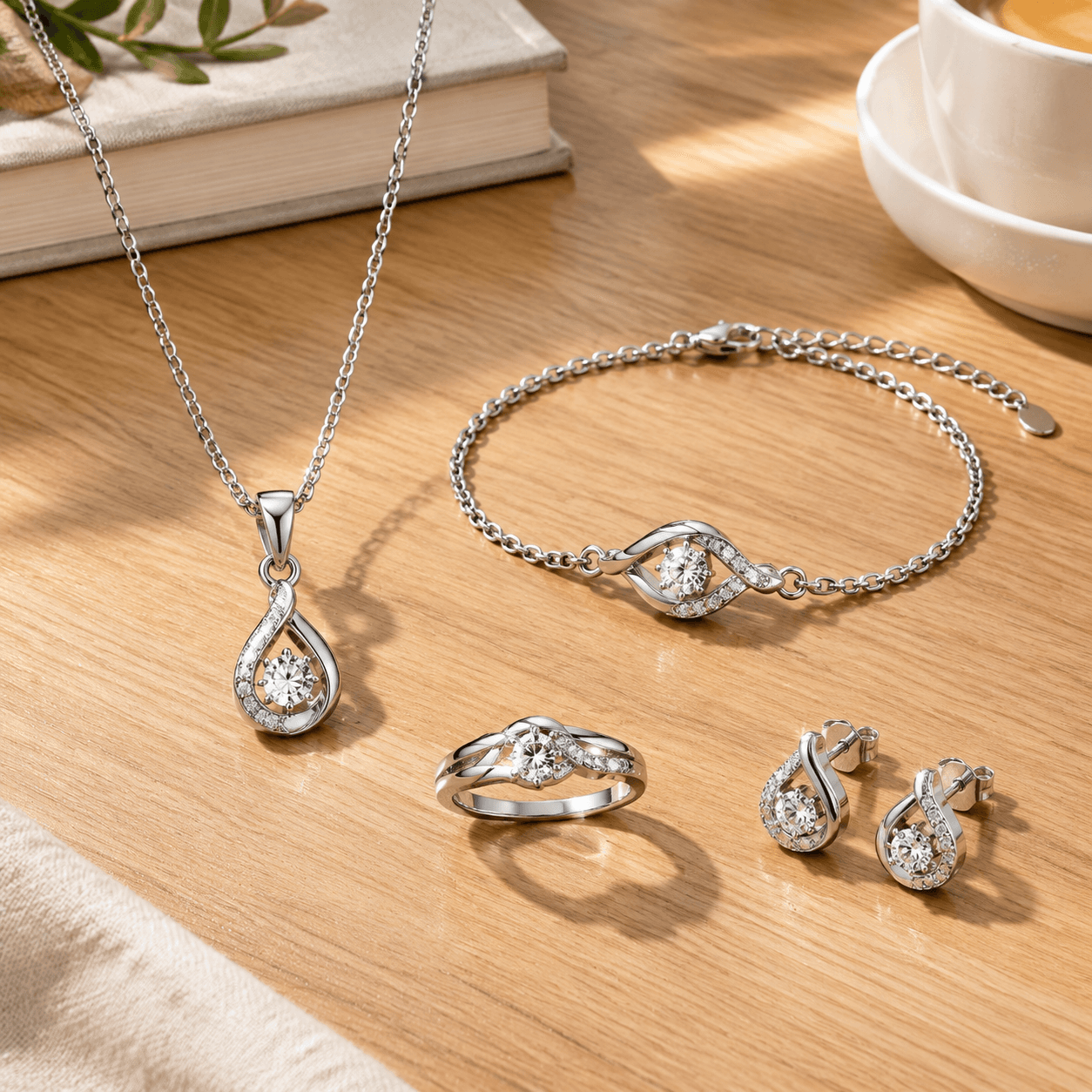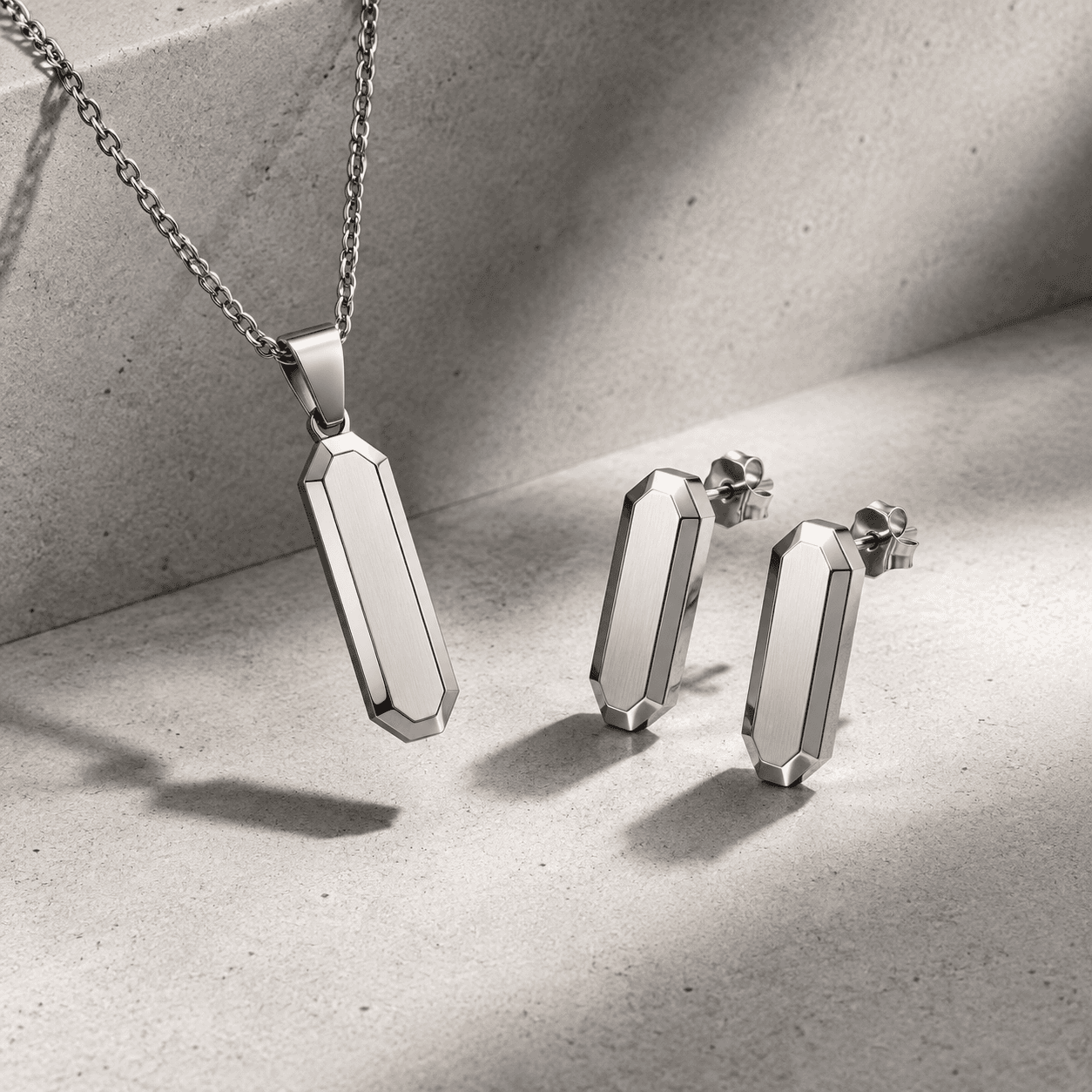
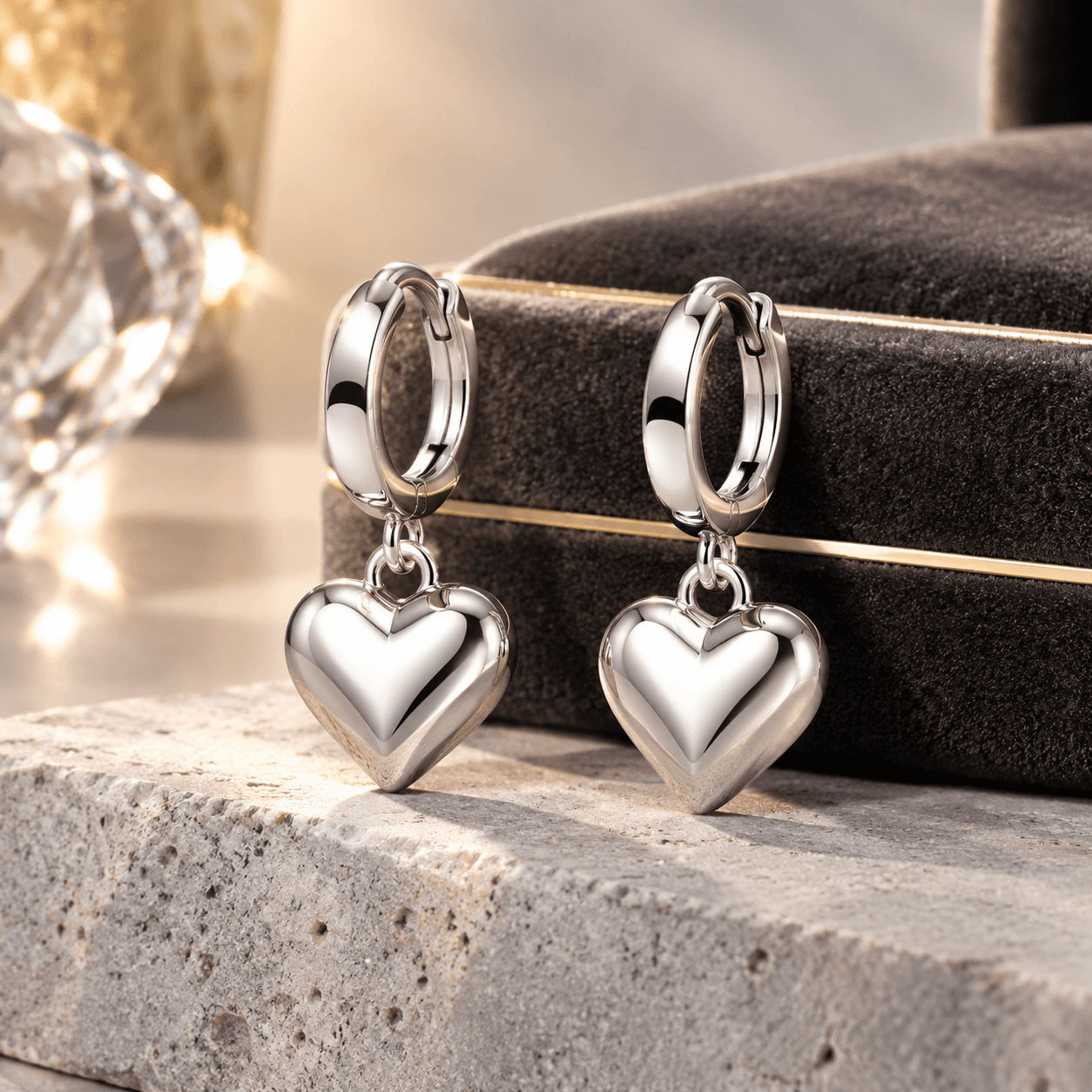
Choosing between a 316L stainless steel heart charm and a 925 sterling silver charm involves more than comparing appearance or purchase price. For jewelry designers and sourcing teams, the material affects product positioning, finish selection, care expectations, and production specifications. This guide compares the two materials and outlines practical questions to address before sampling and bulk production.
Stainless Steel vs Sterling Silver Heart Charms: Material Basics
316L stainless steel
316L is an austenitic stainless steel grade made primarily from iron, with chromium, nickel, and molybdenum among its alloying elements. Chromium supports a thin, protective oxide layer on the surface. Molybdenum contributes to resistance to certain types of localized corrosion, including in some chloride-containing environments. The “L” indicates a lower carbon content than standard 316 stainless steel.
In jewelry, 316L can be specified for heart charms with polished surfaces, shaped edges, engraving, or other design details, subject to the design and manufacturing process. It generally requires less tarnish maintenance than sterling silver, but its performance depends on the supplied alloy, surface condition, finish, and use environment.
925 sterling silver
925 sterling silver contains 92.5% silver by mass; the remaining 7.5% is made up of other metals, commonly copper. Alloying gives silver greater hardness than pure silver, though sterling silver can still be more susceptible to surface deformation than many stainless steel components.
Sterling silver can tarnish when exposed to sulfur-containing compounds and other environmental conditions. Its familiar precious-metal appearance and defined silver content may suit products positioned around sterling silver. Care and storage guidance can help set customer expectations.
At-a-glance comparison
| Factor | 316L stainless steel | 925 sterling silver |
|---|---|---|
| Composition | Iron-based alloy containing chromium, nickel, and molybdenum | 92.5% silver and 7.5% other metals |
| Surface behavior | Passive oxide layer supports corrosion resistance; not immune to all staining or corrosion | Can tarnish through reactions with sulfur-containing compounds |
| Mechanical characteristics | Generally harder and stronger in comparable jewelry applications | Relatively soft and more prone to surface deformation |
| Care considerations | Generally less routine tarnish maintenance | May need periodic cleaning or polishing |
| Natural appearance | Cool silver-gray metallic appearance | Precious-metal silver appearance |
| Finishing | Polishing and, where specified, PVD color coatings | Polishing and finishes suitable for the silver component |
These are general material characteristics, not guarantees for every finished charm. Alloy, dimensions, surface preparation, finishing, and conditions of use affect performance.
Choosing a Material for Your Collection
Neither material is universally better. Consider the intended product positioning, customer expectations, design details, care requirements, and purchasing priorities.
- Consider 316L stainless steel when corrosion resistance, structural durability, and a stainless steel material specification suit the design and collection.
- Consider 925 sterling silver when the defined silver content and precious-metal positioning are central to the product concept.
Use accurate material descriptions. A silver-colored surface does not make a stainless steel charm sterling silver. If a product is described as sterling silver, its specification should support that description. Buyers should also confirm which material documentation and verification methods are appropriate for their product and market.
For products sold in the United States or Canada, importers and sellers should review the requirements that apply to the product, intended users, materials, and claims. Ordinary jewelry should not automatically be described as FDA-approved. Consult appropriate regulatory guidance for the relevant market and product.
Production Considerations for OEM and ODM Buyers
1. Specify the alloy
State the required material grade in the RFQ. For stainless steel, specify whether the requirement is 316L or another grade. For sterling silver, specify 925 composition and the documentation or verification requirements for the project. Do not rely on appearance alone to establish composition.
2. Review surface behavior and care
316L stainless steel’s passive oxide layer supports corrosion resistance, but aggressive chemicals, chlorides, and unsuitable cleaning conditions can affect a surface. Sterling silver may tarnish through exposure to sulfur-containing compounds; tarnish is a known characteristic and does not necessarily indicate a defective component. Review the finished sample and prepare care guidance appropriate to the product.
3. Select a finish
A polished stainless steel charm creates a bright metallic appearance; a controlled brushed or textured surface can create a more understated look. PVD gold color can be specified for suitable stainless steel designs. Appearance and coating performance depend on the coating specification, preparation, process parameters, and component geometry.
Sterling silver may be used with its natural finish or with an additional finish appropriate to the base material. Confirm the finish and visual standard during sampling.
| Design direction | 316L stainless steel option | 925 sterling silver option |
|---|---|---|
| Polished heart | Specify polishing and edge smoothness | Specify polishing and surface refinement |
| Gold-color heart | Specify the PVD coating and target appearance | Specify a finish suitable for sterling silver |
| Personalized heart | Review laser processing or engraving for the design | Review engraving for the design and component dimensions |
| Decorative heart | Consider enamel or stone details subject to design feasibility | Consider decorative details subject to design feasibility |
4. Check geometry and attachment points
Define the charm’s overall dimensions, thickness, edge profile, attachment hole, and connection method. For a necklace, confirm that the bail or jump ring accommodates the intended chain and allows the charm to hang as designed. Review symmetry, balance, and whether engraving or decorative details affect the available material thickness.
5. Provide a clear customization brief
When requesting a sample, provide a dimensioned drawing or artwork, material specification, finish, logo placement, decorative details, and required connection hardware. Include reference images where useful. These details give the supplier a clearer basis for assessing the proposed design and preparing a sample.
6. Agree on sample and quality checks
Set project-specific acceptance criteria and review the sample for appearance and function. Possible checkpoints include:
- Material specification and agreed supporting documentation
- Outline, dimensions, thickness, and symmetry
- Surface smoothness and polishing consistency
- Engraving position and clarity
- Finish color and appearance against the approved reference
- Attachment-hole dimensions and connector movement
- Decorative element placement and setting appearance
- Packaging configuration and product identification
Use criteria agreed for the project rather than treating this list as universal acceptance limits.
7. Compare like-for-like quotations
Ask suppliers to quote against the same dimensions, material, finish, customization, inspection, and packaging requirements. Clarify sampling, order quantity, logo work, packaging, and export arrangements. For sterling silver, include agreed composition documentation and verification expectations. A charm’s apparent size alone is not enough to compare quotations: material, process, coating, decoration, and inspection scope can all affect the project.
How to Start a Heart Charm RFQ
A useful RFQ can include the preferred material grade, design drawing or artwork, dimensions and thickness, finish, attachment method, logo requirements, decorative details, estimated order quantity, packaging expectations, and any documentation or inspection criteria. Confirm these requirements with the supplier before approving a sample or bulk production.
Explore stainless steel charm design directions, review OEM and ODM manufacturing services, or learn more about the company and its manufacturing information. Contact the supplier to discuss the project scope and request a quotation.
Frequently Asked Questions
Is a 316L stainless steel heart charm better than a 925 sterling silver charm?
Neither material is best for every project. 316L stainless steel can suit designs prioritizing corrosion resistance, structural strength, and stainless steel construction. 925 sterling silver can suit products where defined silver content and precious-metal positioning matter. The choice depends on the design, collection positioning, care expectations, and purchasing priorities.
Does 316L stainless steel tarnish like sterling silver?
316L stainless steel generally resists tarnishing better than sterling silver because of its chromium-rich passive surface. Sterling silver can tarnish through reactions with sulfur-containing compounds. Stainless steel is not immune to all staining, corrosion, or surface change, so material specification and care still matter.
Can a stainless steel heart charm have a gold finish?
A gold-color PVD coating can be specified for suitable stainless steel designs. Confirm the target color, surface preparation, component geometry, and coating requirements during sampling. The approved sample can provide a visual reference for production review.
What should buyers provide for an OEM heart charm quotation?
Provide the preferred material grade, artwork or drawing, dimensions, thickness, finish, attachment method, logo requirements, decorative details, estimated quantity, and packaging expectations. Include any required documentation or inspection criteria in the RFQ.
Plan Your Next Heart Charm Project
Material selection starts with understanding the difference between alloy composition and finished-product performance. 316L stainless steel may suit projects seeking stainless steel construction and practical finishing options. 925 sterling silver may suit projects where defined silver content and precious-metal positioning are important.
For either material, establish the specification early, review a physical sample, confirm the charm’s connections, and agree on quality criteria before bulk production. Contact Lefeng Jewelry with your design, material preference, target quantity, and finishing requirements to begin an RFQ discussion.
Related resources
- 316L Stainless Steel Initial Necklace Charms: OEM/ODM Material and Manufacturing Guide
- Personalized stainless steel engraved heart charm: Guide
- Men Gold Earrings Materials & Gold Finish Guide for OEM/ODM Jewelry Sourcing
- Oval Bezel Necklace: Silver Materials, Finishes & OEM/ODM Guide
- stainless steel initial necklace silver Materials
- Emerald Cut Birthstone Charm: OEM/ODM Style & Sourcing Guide