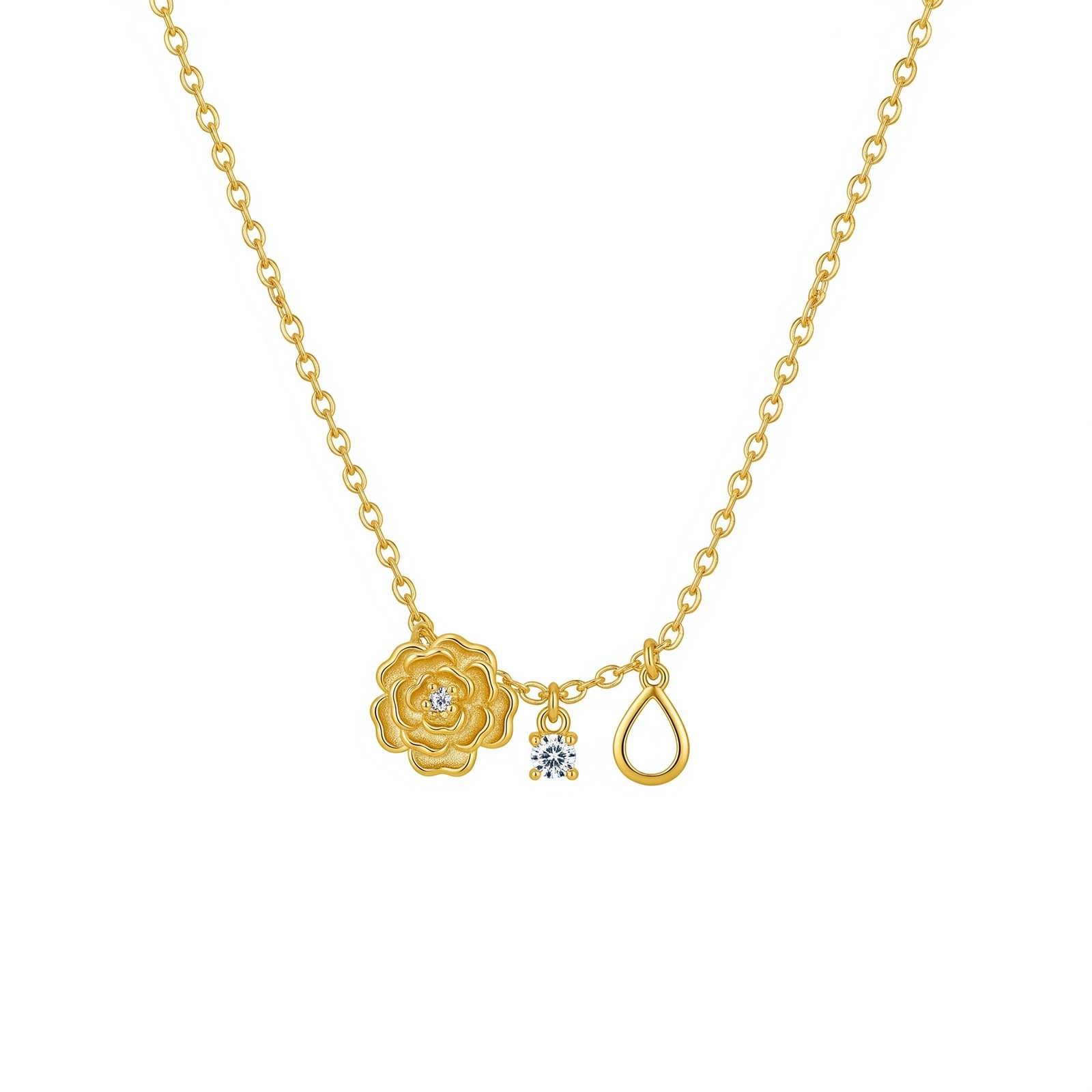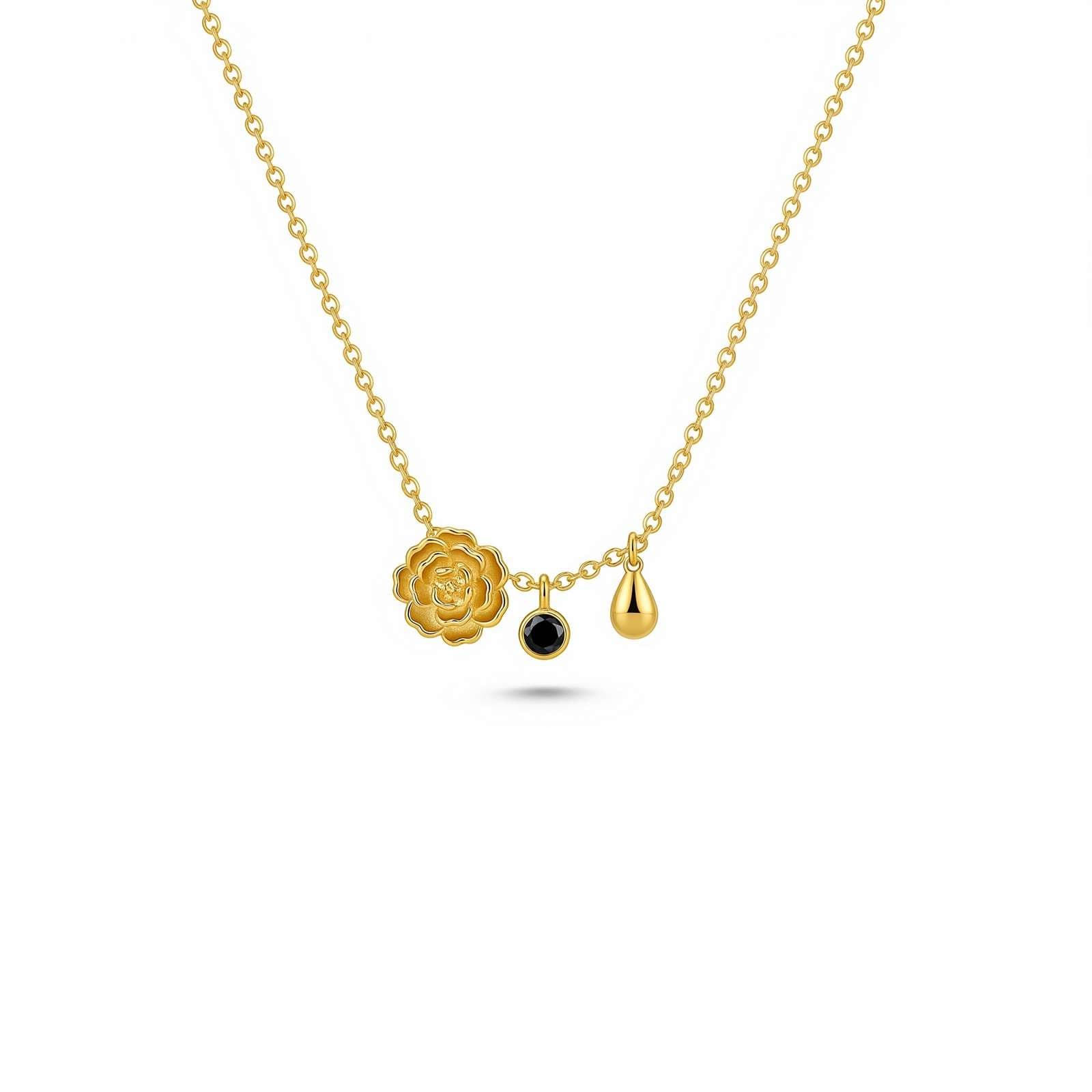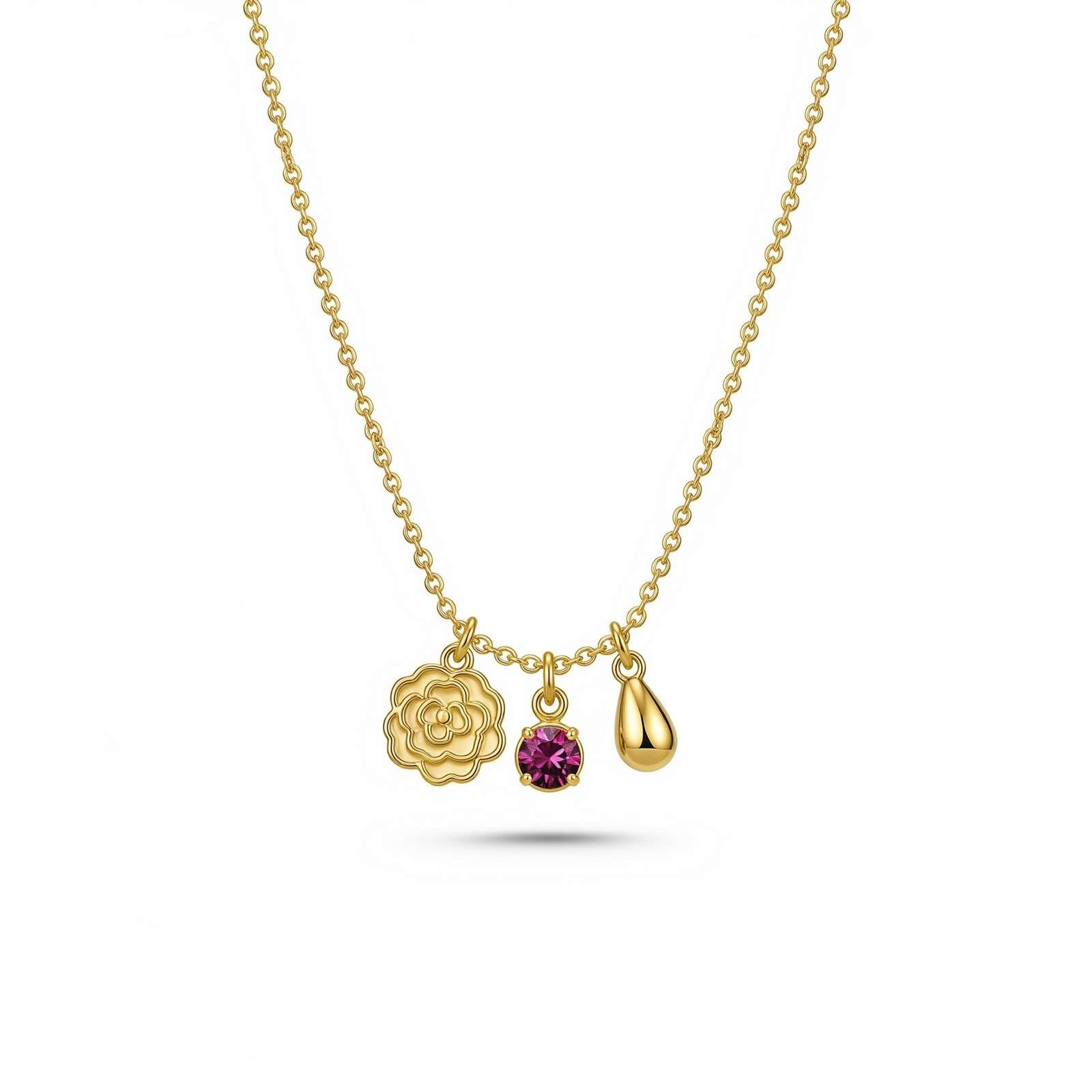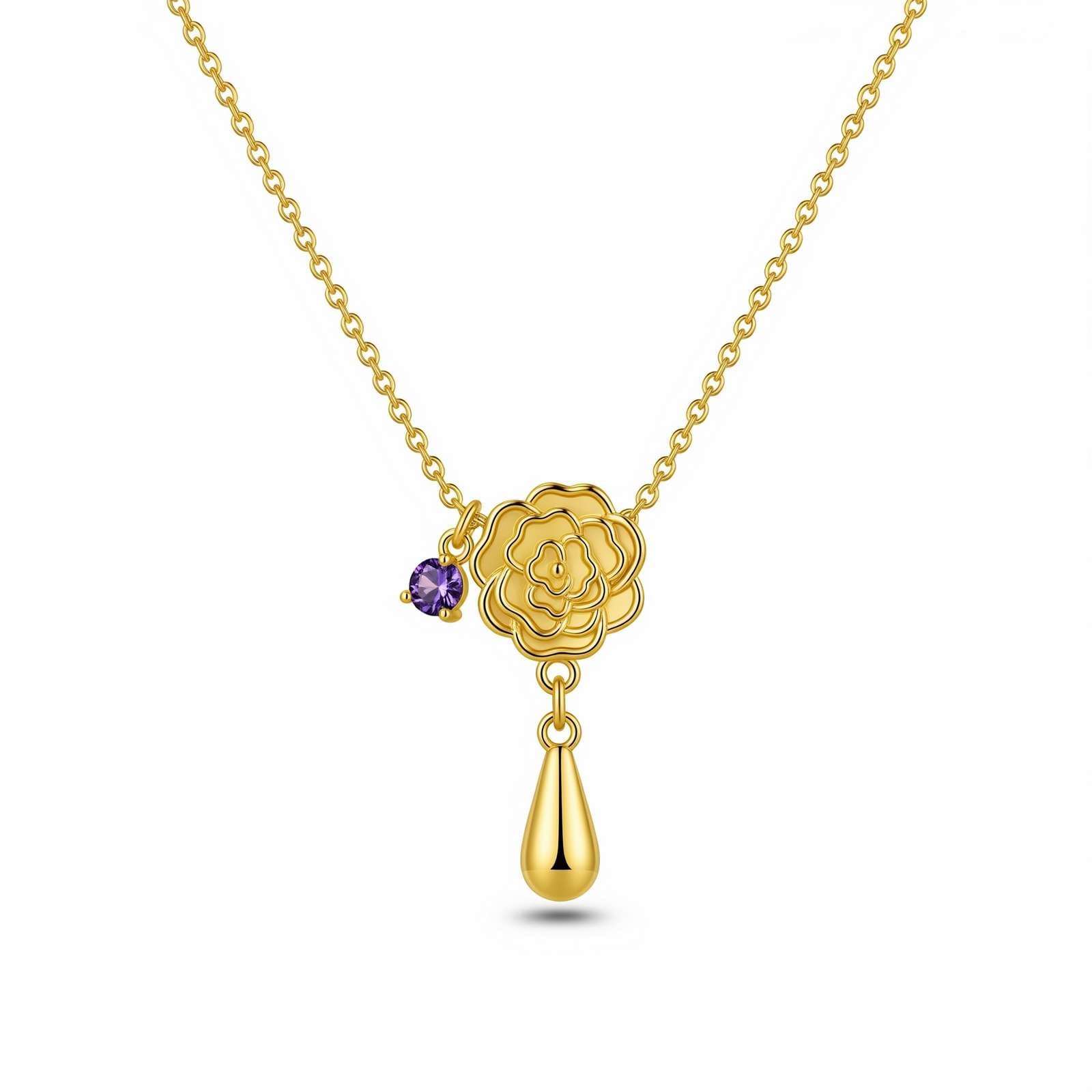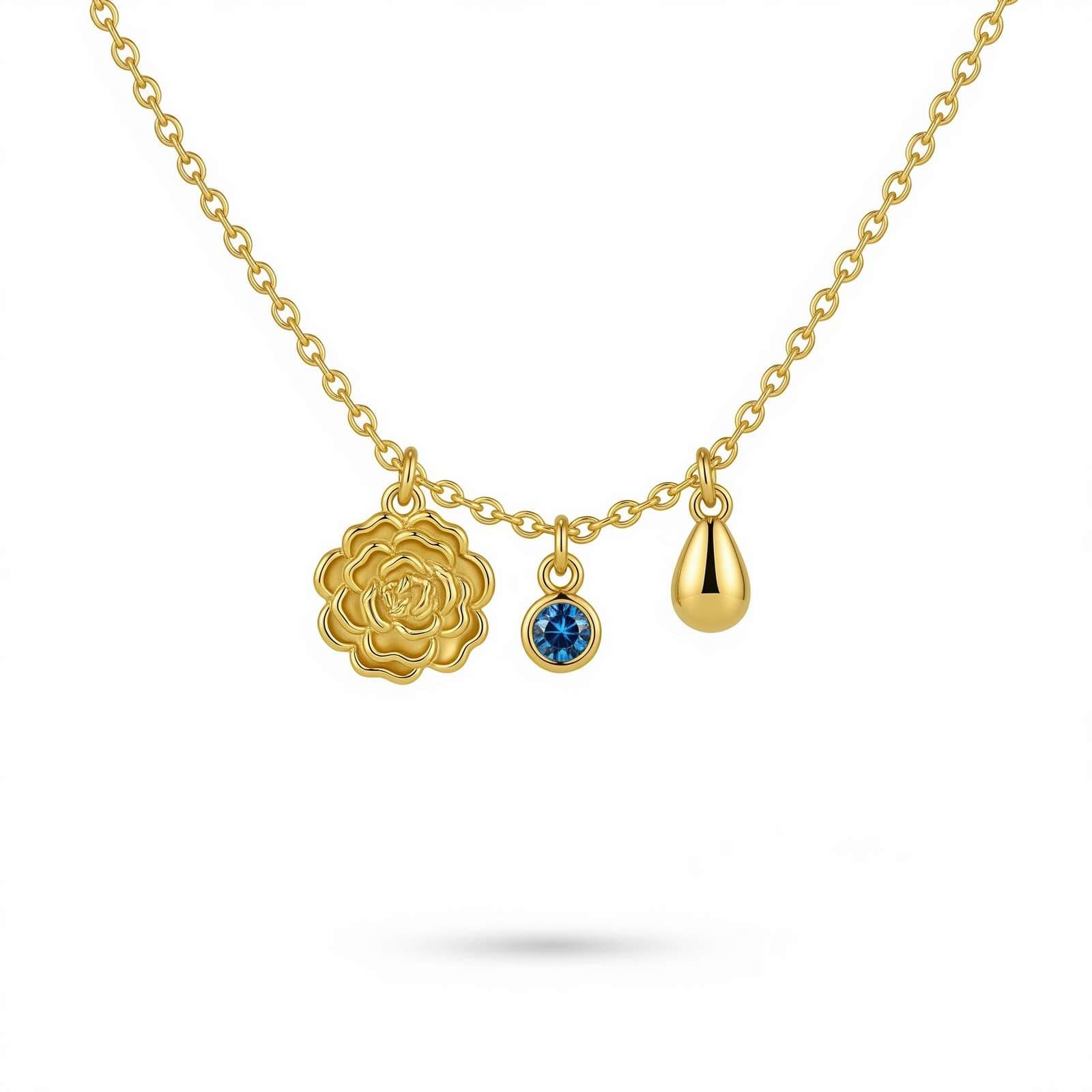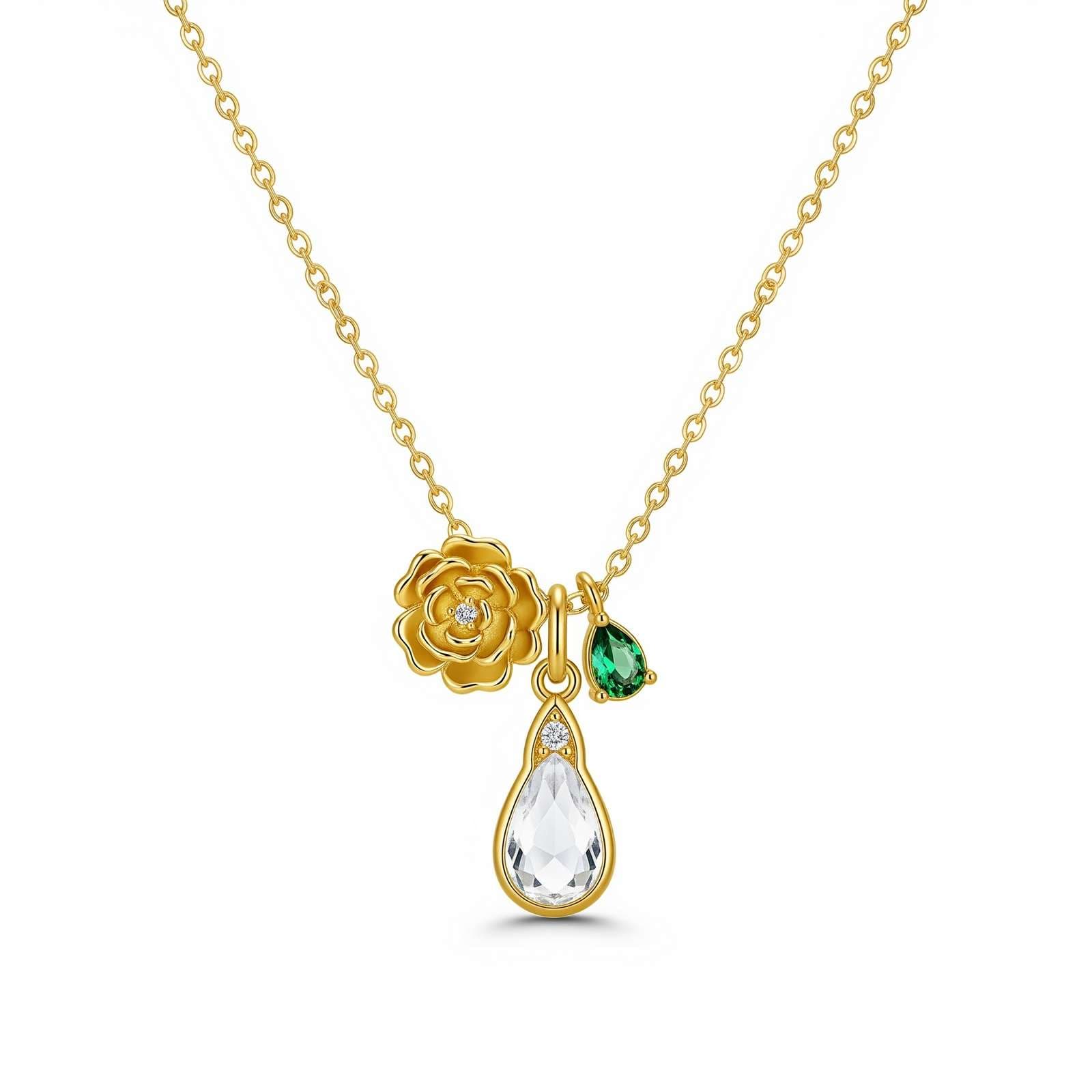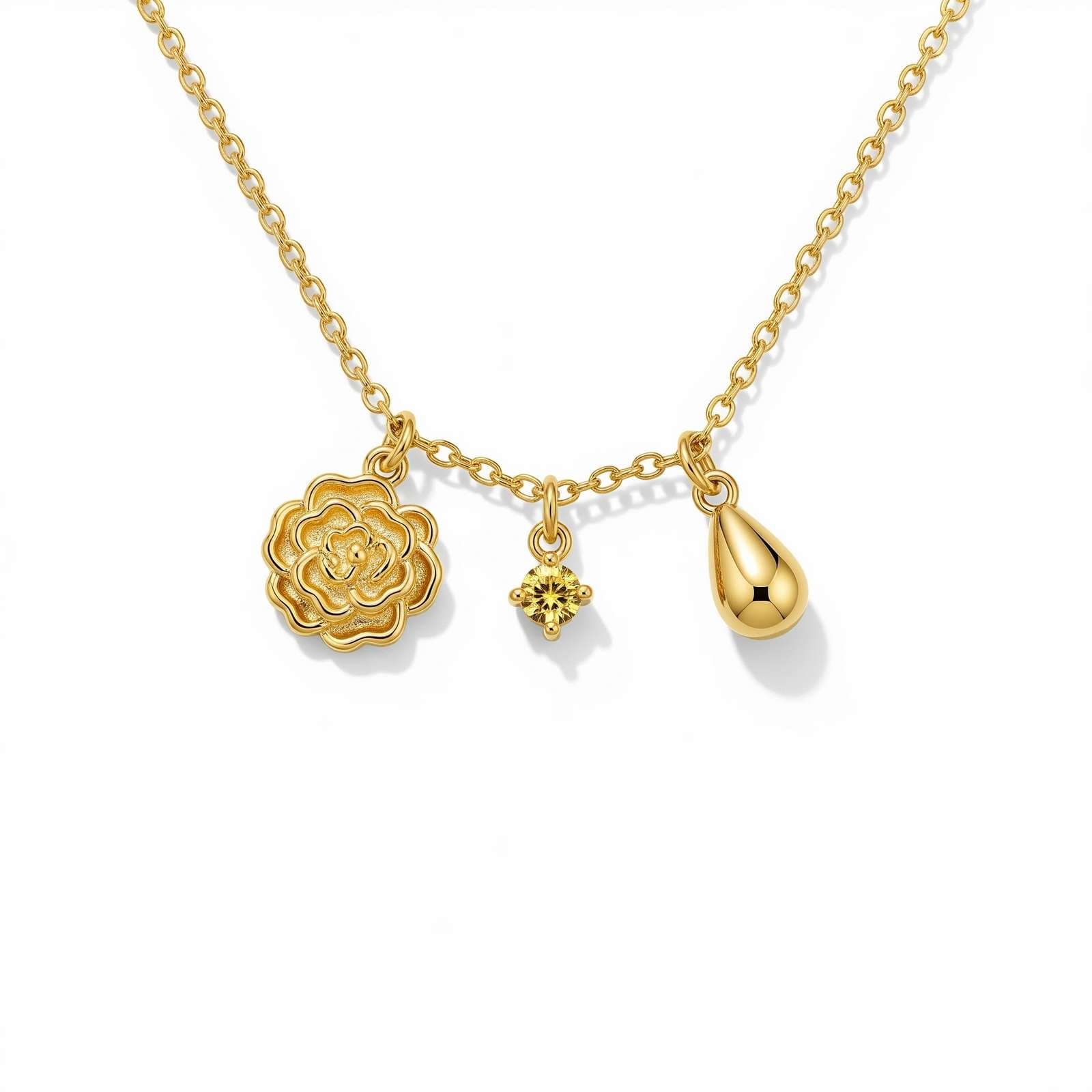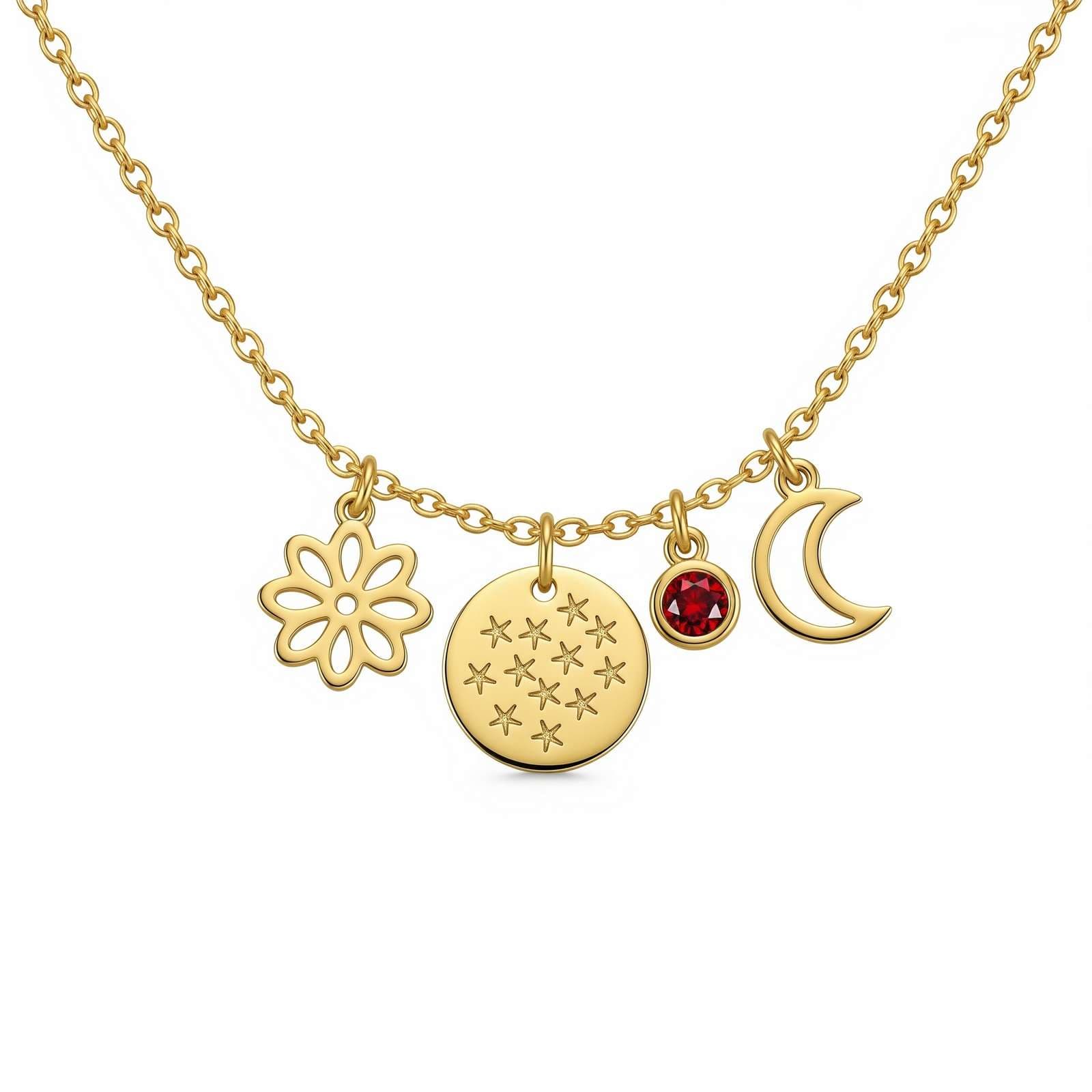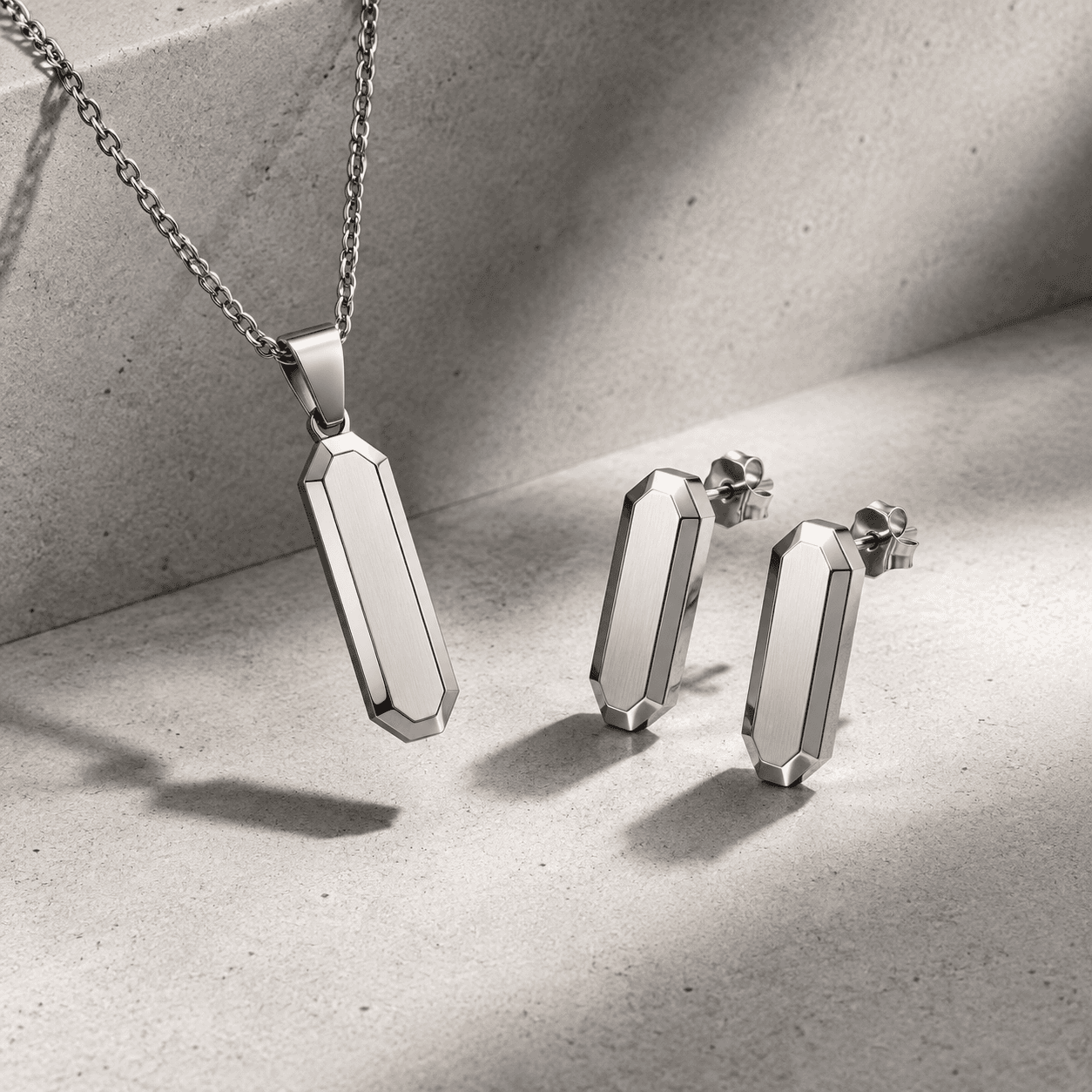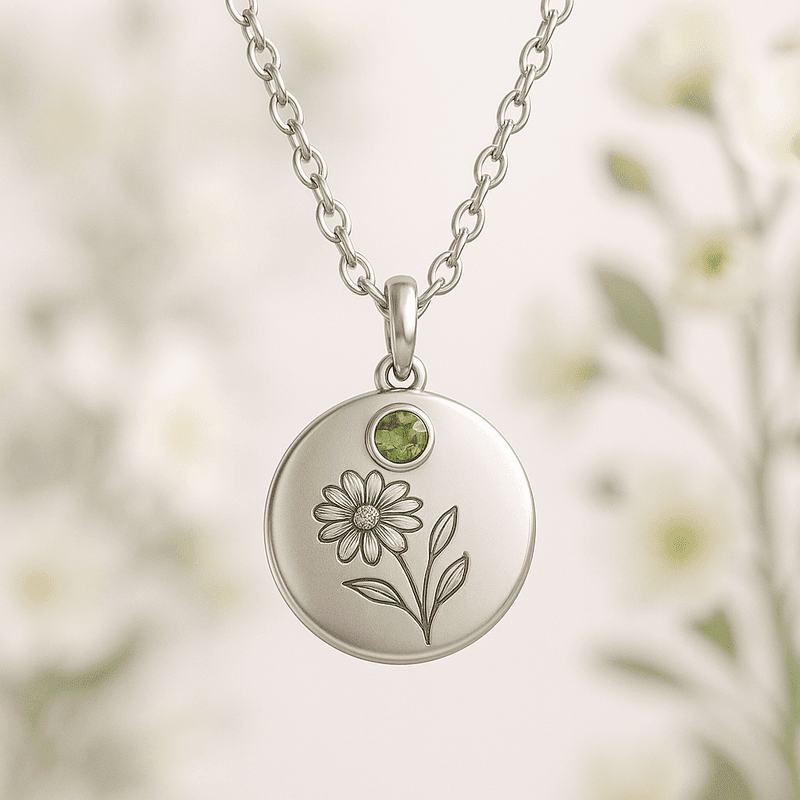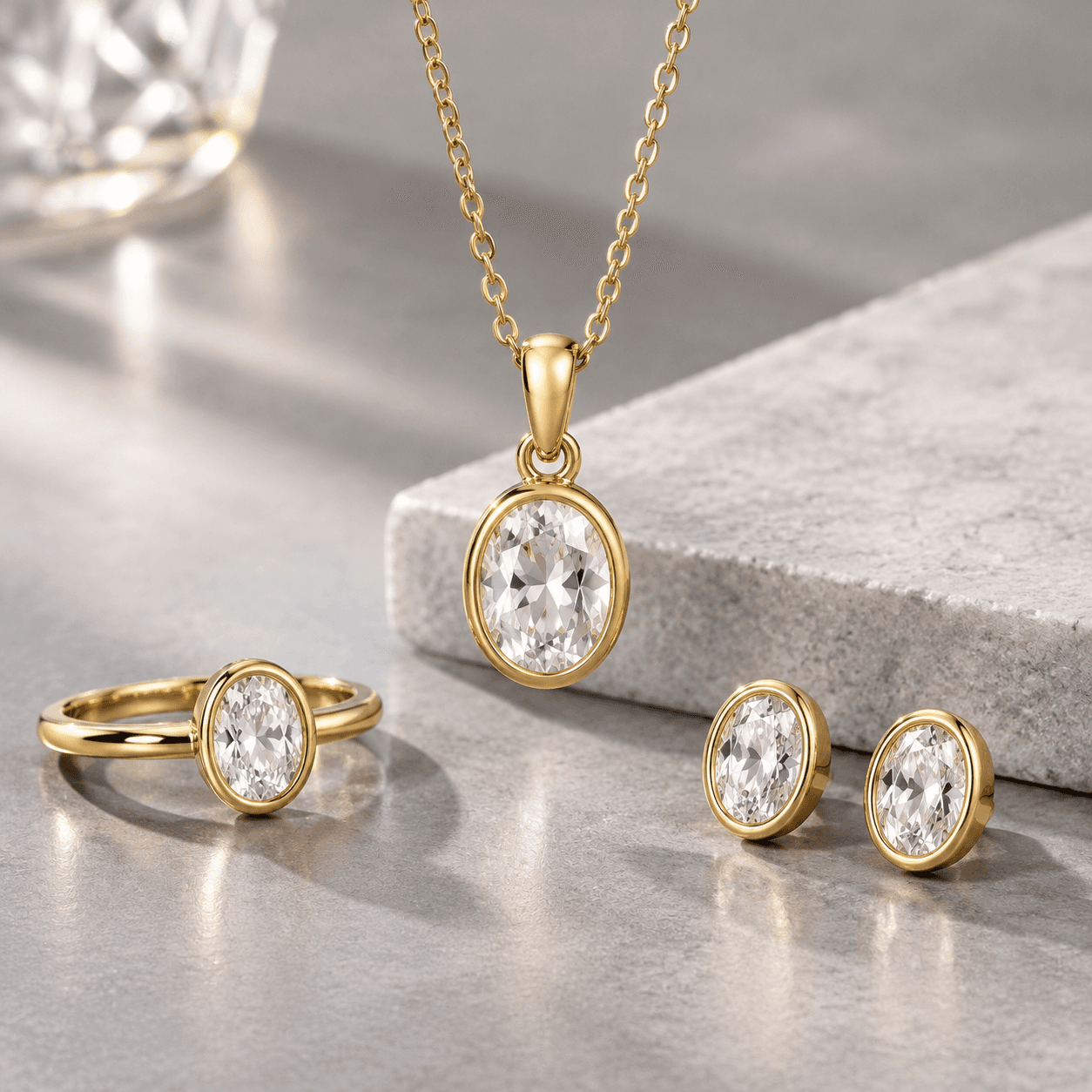
An oval bezel pendant necklace combines a distinctive gemstone silhouette with a smooth metal setting, creating a versatile design for contemporary jewelry collections. Understanding the relationship between pendant geometry, metal selection, bezel construction, and surface finishing helps jewelry designers develop pieces that balance visual character with practical manufacturing requirements.
For designers developing private label jewelry, the oval bezel pendant necklace offers multiple customization opportunities, including pendant proportions, setting depth, stone selection, chain configuration, and gold-tone finishes. As an experienced OEM jewelry manufacturer, Lefeng Jewelry supports concept development, material selection, jewelry sample development, CNC and laser processing, polishing, PVD plating, stone setting, and quality control. This guide explains the technical considerations behind developing an oval bezel pendant necklace from an initial design concept to a production-ready specification.
Understanding Oval Bezel Pendant Necklace Construction
An oval bezel pendant necklace consists of several interconnected components: an oval decorative stone or configured insert, a surrounding metal bezel, a pendant body, an attachment point, and a necklace chain with its closure. Each component influences the overall appearance, structural integrity, and manufacturing complexity. The oval silhouette creates a continuous visual outline, while the bezel setting frames the central element with a metal perimeter. Unlike settings that rely on multiple individual prongs, a bezel uses a surrounding metal structure to retain the selected insert.
For jewelry designers, the first consideration is the relationship between the stone dimensions and the external pendant dimensions. A wider bezel produces a more substantial metal border, while a narrower border creates greater visual emphasis on the central stone. Pendant thickness, edge curvature, and setting depth also influence the finished profile. These dimensions should be defined during design development rather than left entirely to production interpretation. An OEM jewelry manufacturer can review drawings, reference samples, and dimensional requirements to identify practical construction considerations before sampling begins.
The attachment system deserves equal attention. A pendant may connect to the necklace through an integrated bail, a separate bail, or a side loop with a jump ring. These elements should be designed as distinct functional components with sufficient clearance for the chain to move naturally. The chain, extension chain, and lobster clasp form the necklace assembly and should be evaluated independently from the pendant setting. For additional design options, explore the stainless steel necklace collection and new jewelry designs.
Selecting 316L Stainless Steel and Other Configured Materials
Material selection determines the manufacturing approach, surface appearance, component dimensions, and finishing options of an oval bezel pendant necklace. 316L stainless steel is an important material option for contemporary jewelry because it offers a durable metal base and supports precision manufacturing and different surface treatments. Its material characteristics make it suitable for pendant bodies, necklace chains, and other configured jewelry components. Designers should consider the intended product structure and finishing requirements when specifying the grade rather than selecting a material based on appearance alone.
304 stainless steel is another configured option for selected jewelry components. The choice between 316L stainless steel and 304 stainless steel should account for the intended application, component requirements, and confirmed project specifications. Other configured material options include 925 sterling silver, copper, and zinc alloy. Each material requires appropriate consideration of forming, polishing, assembly, and finishing processes. For an oval bezel pendant, the selected base metal should be evaluated together with the dimensions of the bezel wall and the method used to retain the decorative element.
The central decorative component can also influence the material specification. Depending on the approved design, configured options include zircon, crystal, and pearl. Enamel can provide additional color and surface differentiation. These options should be assessed according to their dimensions, appearance, setting requirements, and intended position within the pendant. Lefeng Jewelry develops projects using the configured material range of 316L stainless steel, 304 stainless steel, 925 sterling silver, copper, zinc alloy, and applicable decorative elements. Buyers can discuss material requirements through OEM/ODM manufacturing services before confirming a sample specification.
Bezel Geometry, Stone Retention, and Precision Craftsmanship
The bezel is the defining technical feature of an oval bezel pendant necklace. Its primary function is to create a continuous metal boundary around the selected decorative element. Important design variables include the internal opening, bezel wall height, wall thickness, edge profile, and setting depth. These measurements must correspond to the actual dimensions and shape of the insert. If the opening is too large, the setting may not retain the insert as intended. If the surrounding structure is insufficiently proportioned, the pendant can lose its intended visual balance or become difficult to assemble consistently.
Oval geometry requires particular attention because the curved ends and elongated sides create different dimensional relationships. A symmetrical oval should maintain a balanced outline, with consistent transitions between the two ends and the longer sides. The bezel perimeter should follow the selected insert geometry without unwanted gaps or irregular edges. Designers should also specify whether the finished setting has a flat border, rounded edge, raised rim, or another defined profile. CNC processing can support dimensional development, while laser processing may be incorporated where the approved design requires precise detailing or component work.
Stone setting should be considered a separate manufacturing operation rather than an automatic consequence of completing the pendant body. The selected decorative element, bezel structure, and assembly method must work together. During sample review, examine whether the insert sits evenly, whether the bezel edge is visually consistent, and whether the surrounding metal has an appropriate finish. For projects involving zircon or crystal, the approved design should identify the exact decorative component and its placement. These details help an ODM jewelry supplier translate creative direction into a manufacturable construction specification.
PVD Gold Plating and Surface Finish Development
Surface finishing has a major influence on the visual character of an oval bezel pendant necklace. A polished stainless steel surface creates a reflective metallic appearance, while other approved finishing approaches can produce different levels of visual contrast and surface definition. PVD gold plating is a configured finishing option for projects requiring a gold-tone appearance. Rose gold plating provides another available color direction. The selected finish should be considered across the pendant, chain, bail, and other visible metal components to maintain a coherent product specification.
For PVD development, designers should define the intended color, surface appearance, and components that require treatment. A polished base surface and a carefully controlled finishing sequence are important considerations because surface irregularities can remain visible after the finishing operation. The bezel edge, pendant back, chain links, and attachment points should all be reviewed for their intended appearance. If the design includes enamel or decorative stone elements, the production sequence should account for how these components relate to the metal finishing process.
Finish approval should be based on an actual production-intent sample wherever practical. Buyers should compare the sample with their approved reference for color consistency, reflective appearance, edge definition, and the transition between different components. They should also clarify whether the chain and pendant require the same finish specification. Lefeng Jewelry coordinates polishing, PVD and plating processes, enamel application, and stone setting according to configured project requirements. Buyers can review finish expectations during factory and company discussions and incorporate the approved details into their RFQ documentation.
Customizing Pendant Proportions, Chains, and Design Details
Customization allows an oval bezel pendant necklace to become a distinctive element within a broader jewelry collection. Designers can begin by defining the pendant silhouette, length-to-width ratio, border proportions, overall thickness, and central decorative element. A vertically oriented oval creates a different visual impression from a wider horizontal oval. The bezel can be designed with a minimal border or a more pronounced metal frame. Additional design variables include the pendant back profile, engraved details, surface texture, and the relationship between the pendant and its chain.
Chain selection should follow the weight, dimensions, and attachment arrangement of the pendant. The chain style, link dimensions, overall length, extension chain, and closure should be specified as part of the necklace design. An integrated bail may create a streamlined connection, while a separate bail can introduce another design detail. If a jump ring is used, it should be positioned and sized to support the intended movement of the pendant. The lobster clasp should remain a distinct closure component at the rear chain ends, not an attachment directly to the pendant. These physical details are important when evaluating a drawing or prototype.
Logo engraving and custom packaging can extend the customization beyond the jewelry itself. A private label jewelry project may specify a discreet logo position on the pendant back, an approved mark on a suitable component, or coordinated packaging for a boutique jewelry collection. The design brief should distinguish between essential functional requirements and optional decorative features. Lefeng Jewelry supports OEM and ODM design development, custom logo work, sampling, and packaging coordination. Designers developing a broader product range can also review stainless steel bracelets, stainless steel rings, and stainless steel earrings.
Jewelry Sample Development: From Design Concept to Production Specification
Jewelry sample development is an essential stage for translating an oval bezel pendant necklace concept into a physical product. A useful starting package includes a dimensioned drawing, pendant reference images, material requirements, decorative element specifications, chain details, finish preferences, and packaging expectations. Designers should identify which dimensions are fixed and which can be adjusted during development. This distinction helps the manufacturing team evaluate the design without changing important visual characteristics or functional requirements.
The sampling process should address the pendant body, bezel profile, attachment structure, and complete necklace assembly. An initial sample provides an opportunity to assess proportions, construction, and visual appearance. Designers can then review the central insert, bezel alignment, edge smoothness, chain movement, and closure operation. If changes are necessary, feedback should identify the exact component and requested adjustment. For example, a designer may request a narrower bezel border, a different pendant thickness, a revised bail opening, or a specific chain length. Clear revision notes make subsequent sample evaluation more useful.
Once the design is approved, the sample and its specifications should provide a reference for production discussions. Material grades, finish requirements, component dimensions, logo placement, and packaging instructions should be documented rather than relying on informal descriptions. Lefeng Jewelry provides in-house design development, sampling, CNC and laser processing, polishing, PVD and plating, stone setting, quality inspection, and export coordination. This integrated manufacturing approach helps designers communicate technical requirements throughout the development process. Explore manufacturing services or review the jewelry sourcing insights for additional guidance.
Quality Control Checkpoints for Oval Bezel Pendant Necklaces
Quality control for an oval bezel pendant necklace should evaluate the product as a complete functional assembly rather than focusing exclusively on its appearance. At the incoming specification stage, the manufacturing team should confirm the selected material, dimensions, decorative component, finish, and approved design reference. During processing, relevant checkpoints can include pendant geometry, bezel consistency, surface condition, component alignment, and the condition of the attachment points. These checks provide a practical framework for identifying deviations before the complete necklace reaches final inspection.
During assembly inspection, the bezel should be examined for consistent edges and appropriate positioning around the decorative element. The pendant attachment should be checked for secure construction and natural chain movement. Chain links should be reviewed for consistent connections, while the extension chain and lobster clasp should be checked for their intended function. Surface inspection should cover the pendant front, reverse, edges, chain, and visible connecting components. For PVD gold plating or rose gold plating, the approved reference sample should be used to assess the intended color and overall finish appearance.
Final inspection can include checking the necklace dimensions against the approved specification, reviewing the complete assembly, confirming logo details, and examining packaging presentation. Buyers should define any project-specific acceptance criteria before production so that inspection expectations are clear. Documentation relating to a particular material, certification, test, or destination-market requirement should be reviewed or arranged according to the confirmed specification. No general material description should be treated as proof of a particular certification or compliance result. Lefeng Jewelry incorporates quality inspection checkpoints into its manufacturing workflow and can coordinate specification and packaging reviews with B2B buyers before shipment.
Designing a Commercially Practical Private Label Necklace Collection
An oval bezel pendant necklace can serve as an individual product or become the foundation of a coordinated necklace collection. For jewelry designers, collection planning involves more than selecting different decorative elements. A consistent design language can be established through shared pendant proportions, bezel profiles, chain structures, surface finishes, and logo placement. Variations can then be introduced through approved insert colors, pendant dimensions, and finishing options. This approach creates recognizable product organization while allowing individual designs to maintain their own visual character.
From a wholesale planning perspective, buyers should evaluate which design features can be standardized across multiple products and which require individual development. Shared chain specifications, common attachment components, and coordinated packaging can simplify specification management. However, differences in pendant dimensions and decorative elements may require separate sampling and inspection references. Buyers should also confirm the MOQ for each proposed configuration rather than assuming that several variations can automatically share one quantity requirement. Material, finish, packaging, and assembly differences should be clearly identified in the RFQ.
A practical product development plan begins with a defined assortment, approved technical references, and a realistic sampling sequence. Designers can group products by material, finish, pendant shape, or intended retail assortment. A gift program may prioritize coordinated packaging, while a boutique jewelry collection may emphasize a consistent visual profile across necklaces and matching earrings. Lefeng Jewelry supports private label jewelry development through design consultation, sampling, manufacturing, custom logo work, quality inspection, and packaging coordination. Buyers can use the new design collection to explore available product directions and the contact page to discuss their project requirements.
Frequently Asked Questions About Oval Bezel Pendant Necklaces
Develop Your Custom Oval Bezel Pendant Necklace
Ready to develop an oval bezel pendant necklace for your next private label jewelry collection? Lefeng Jewelry offers OEM/ODM support for design development, sampling, CNC and laser processing, polishing, PVD and plating, stone setting, quality inspection, custom logo work, packaging, and export coordination.
To begin your RFQ, prepare your reference images or technical drawings, preferred pendant dimensions, material grade, bezel profile, decorative element specifications, finish requirements, chain style and length, clasp configuration, logo artwork, estimated order quantity, and destination market. If you have a physical reference sample, include its dimensions and the specific features you want to retain or adjust. Also identify any documentation, inspection, or packaging requirements that need to be reviewed for your project.
The Lefeng Jewelry team can review your design information, discuss suitable material and manufacturing options, and coordinate sample development according to the confirmed specification. For related product directions, explore the stainless steel necklace collection and stainless steel jewelry sets. Visit OEM/ODM services or contact Lefeng Jewelry to discuss your project and request a quotation.
Related resources
Related resources
- Oval Bezel Pendant Blank: Custom OEM Jewelry Manufacturing Guide
- What Buyers Should Know About Minimalist Stainless Steel Necklace Styling for OEM/ODM Partnerships
- Oval Bezel Pendant Blank: OEM Stainless steel Charm | Lefeng
- Oval Bezel Pendant Blank: OEM Stainless Steel Jewelry Manufacturing
- Why Is Stainless Steel Heart Charm Waterproof? 316L Guide
- Best Stainless Steel Heart Charm Ideas: A Buyer's Design Guide
- Oval Bezel Pendant Blank for OEM Jewelry | Lefeng Supplier
- Why stainless steel rings outfit ideas Are Shaping Design Trends
- Oval Bezel Pendant Blank: A Practical OEM Solution for Jewelry Manufacturing
- Stainless steel jewelry gift ideas: Retail design trends guide