Stainless steel rings can serve customers looking for understated everyday jewelry, statement designs, or coordinated stacking combinations. For North American e-commerce sellers, selecting products involves more than appearance: material, finishing, construction, photography, packaging, and clear product information all matter.
This guide connects ring styling ideas with a practical B2B quality checklist. Use it to define product requirements, review samples, and prepare questions for a prospective OEM/ODM supplier.
Stainless Steel Ring Outfit Ideas and Product Considerations
Styling concepts can help buyers plan a balanced collection. Each design also has requirements that should be documented and checked before bulk production.
Minimalist rings for everyday collections
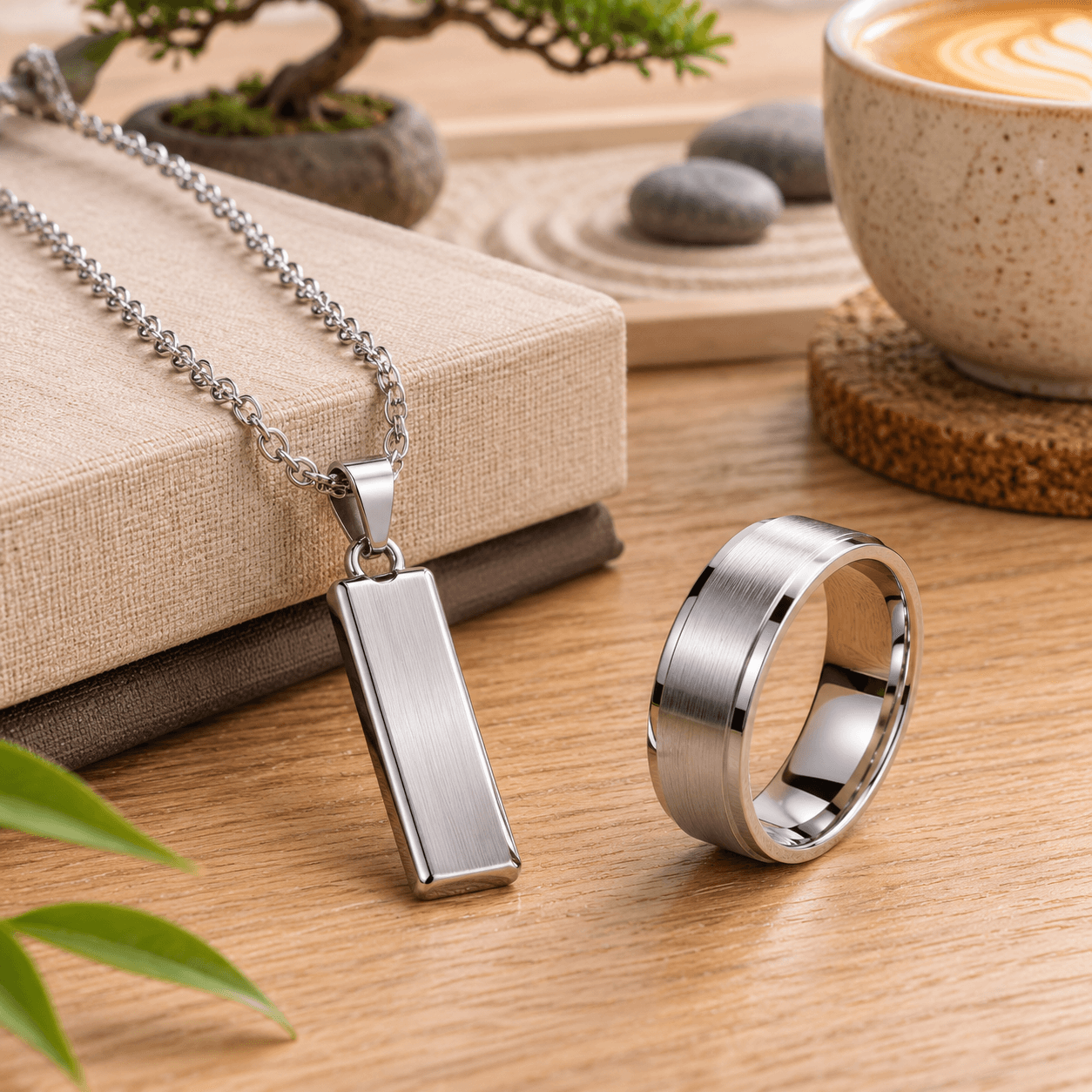
Simple bands, smooth profiles, and understated geometric details can suit everyday collections. When reviewing a sample, inspect the inner and outer surfaces, edge transitions, band thickness, and symmetry. A polished appearance should reflect consistent finishing, not just favorable photography.
Stacking rings for coordinated purchases
Narrow bands, varied profiles, and complementary textures can be presented as individual products or coordinated sets. Check dimensions and edge finishing for each ring. If a listing shows a set, make clear how many rings are included and confirm that the supplied products match the approved sample and listing specifications.
Statement rings for distinctive collections
Wider bands, sculptural profiles, and decorative settings call for careful inspection of structural consistency, detailed-area polishing, and decorative components. For zircon or crystal settings, check alignment and visible damage, and agree on sample approval before production.
Coordinated rings for gift programs
Matching designs can support seasonal collections and gift programs. Define shared requirements for color, finish, sizing information, and packaging so that products marketed together have a consistent presentation.
Material and Finish Considerations for Buyers
Choose material for the intended product
316L stainless steel is commonly selected for jewelry and is known for corrosion resistance. The performance of a finished ring also depends on construction, surface treatment, use, and care. A material description alone does not establish the results of a particular finished product.
Depending on design and project requirements, possible options may include 316L or 304 stainless steel, PVD gold or rose-gold finishes, enamel, zircon, or crystal. Confirm the options available for the specific design with the manufacturer, and document the base material and each decorative or surface treatment separately in the RFQ.
Compare options using sample and specification references
| Option | Buyer considerations | Sample or inspection checkpoints |
|---|---|---|
| 316L stainless steel | Material specification and intended use | Dimensions, surface condition, and finishing |
| 304 stainless steel | Material selection for the intended product | Material confirmation and surface inspection |
| PVD gold finish | Color expectations and agreed finish requirements | Coverage, visible defects, and agreed wear evaluation |
| Rose-gold finish | Color reference and consistency expectations | Compare with an approved physical sample |
| Enamel details | Color placement and decorative construction | Coverage, edges, and visible gaps |
| Zircon or crystal settings | Stone appearance and setting construction | Alignment, visible damage, and setting security |
Wear Resistance: Define the Evaluation
Do not assume that a base material or finish guarantees a specific service life. Before production, agree with the supplier on relevant evaluation methods and acceptance criteria for the selected product.
- Surface: Inspect for scratches, uneven polishing, discoloration, and other visible defects.
- Finish: Compare color and coverage with the approved sample.
- Wear: Agree on an appropriate abrasion or wear evaluation for the specified finish.
- Corrosion: Where relevant, confirm the method and conditions for evaluation.
- Decorative components: Inspect stone settings and enamel details for visible defects or movement.
- Dimensions: Check ring size, band width, thickness, and profile against the agreed specification.
Request any laboratory report or certificate needed for the specific product and review it against the confirmed specification. Do not treat a general material description as evidence that a finished item has passed a particular test.
Wholesale Ring Quality Checklist
1. Document the product requirements
Specify the base material, dimensions, size range, finish, decorative elements, and packaging. Include drawings or reference images where available. For private-label products, document logo placement and packaging requirements too.
2. Approve a physical sample
Review the actual ring rather than relying only on digital images or drawings. Check the shape, size, band profile, edge smoothness, polish, color, decorative settings, and logo placement. Record requested changes and approve the revised sample before production.
3. Agree on inspection checkpoints
| Production stage | Inspection focus | Useful reference |
|---|---|---|
| Material preparation | Material specification and dimensions | Approved product specification |
| Processing | Shape, profile, and dimensional consistency | Technical drawing and size reference |
| Polishing | Surface smoothness and workmanship | Approved appearance sample |
| Plating or decoration | Color, coverage, and decorative details | Finish specification and sample |
| Final inspection | Appearance, dimensions, and workmanship | Agreed inspection checklist |
| Packaging | Protection, labeling, and quantity | Approved packaging requirements |
4. Define acceptance criteria
Specify acceptable appearance, dimensions, finish consistency, and any relevant evaluation methods. If a supplier offers a warranty or longevity commitment, request its written terms, conditions, exclusions, and supporting evidence. A material specification by itself is not a lifetime guarantee.
Product Photography and Listings
Show the product accurately
Use clear lighting and a clean background to show the ring’s silhouette, band profile, finish, and decorative details. Consider front, side, and inner-band views, plus close-ups where relevant. Images should represent the product rather than exaggerate its surface quality or color.
Make variations and set contents clear
Organize options around meaningful differences such as band width, profile, finish, and available sizes. If a stacking combination is shown, state whether the listing includes one ring or multiple pieces. Accurate images and specifications help customers understand what they are selecting.
Provide accurate material and care information
Identify the confirmed base material, finish, size information, and care guidance. Avoid unsupported claims such as “completely scratch-proof,” “permanent plating,” or “lifetime color.” For US and Canadian sales, verify applicable product-safety, labeling, and chemical-content requirements for the intended market. Obtain product-specific documentation where needed and seek professional regulatory guidance; requirements may differ between the United States and Canada.
Packaging and Shipping Considerations
Include packaging in the product specification. Suitable protection can help reduce contact between items during shipping, while retail packaging may support presentation and inventory handling.
| Packaging element | Purpose | Buyer check |
|---|---|---|
| Individual protective packaging | Separates products | Confirm protection and separation |
| Jewelry card or presentation box | Retail presentation | Review size, layout, and logo placement |
| Outer shipping carton | Protects packaged goods in transit | Confirm packing strength and quantity |
| Product identification | Supports inventory handling | Check SKU and size information |
Businesses seeking individual-order fulfillment, customized packaging, or direct shipping should confirm whether those services are available for the specific project. Do not assume they are part of a standard bulk order.
Choosing an OEM/ODM Jewelry Manufacturer
Evaluate how a prospective supplier handles specifications, sampling, production, inspection, packaging, and export coordination. Ask whether the manufacturer can develop samples from buyer-supplied references, document material and finish requirements, and discuss quality checkpoints for the chosen design.
Also confirm whether logo work and private-label packaging can be discussed during development, and establish project-specific MOQ and production arrangements. These details depend on the design and order scope, so request confirmation in the RFQ.
A physical approved sample can provide a practical reference for quality review and product photography. Before proceeding, prepare your design references, material and finish requirements, estimated quantity, and packaging needs.
Frequently Asked Questions
Are stainless steel rings suitable for everyday collections?
They can be a practical option for everyday jewelry collections. 316L stainless steel is known for corrosion resistance, but performance depends on construction, surface treatment, use, and care.
How can buyers evaluate a PVD gold finish?
Review color consistency, coating coverage, visible defects, and the approved sample. Agree on suitable wear-evaluation criteria for the product and request relevant documentation for the confirmed specification rather than assuming a universal performance result.
What should a buyer request before placing a wholesale order?
Request material and finish specifications, a physical sample, confirmed dimensions, inspection criteria, packaging details, and commercial information such as MOQ and production arrangements. Confirm any necessary testing or regulatory documentation before approving production.
Can Lefeng Jewelry support custom private-label rings?
Contact Lefeng Jewelry to discuss whether OEM/ODM development, sampling, logo work, finishing, inspection, packaging, and export coordination are available for your project. Confirm the scope, specifications, MOQ, and arrangements through an RFQ.
Plan Your Stainless Steel Ring Collection
A well-planned collection balances design appeal with documented materials, finish requirements, inspection criteria, and practical packaging. A structured sourcing process helps buyers reduce misunderstandings and make informed purchasing decisions.
Prepare your preferred designs, material and finish references, estimated order quantity, and packaging requirements when contacting a manufacturer. Ask for project-specific confirmation of available options and production arrangements.
Contact Lefeng Jewelry to submit an RFQ and discuss your stainless steel ring project.
Explore Stainless Steel Rings | OEM/ODM Manufacturing Services | About Lefeng Jewelry | Contact Us for an RFQ